
Generator Inlet Box Installation: Step-by-Step Guide + Wiring Diagram
A generator inlet box gives a portable generator a safer, cleaner way to connect to your home’s electrical system. Instead of running extension cords through windows and doors, an inlet box allows generator power to enter the house through a dedicated exterior connection.
Important safety note: This guide is for educational purposes only. Generator inlet box installation involves electrical panel work, permits, grounding, breaker sizing, and local code requirements. Always follow local electrical code and hire a licensed electrician when needed. Never backfeed a house through a dryer outlet or homemade cord.
What Is a Generator Inlet Box?
A generator inlet box is a weatherproof electrical connection point installed on the outside of a home. During an outage, you plug your generator cord into the inlet box, and power is routed to the electrical panel through a properly installed breaker, interlock kit, or transfer switch.
Think of it as the safe “entry point” for generator power. The generator stays outside where exhaust can vent safely, while the inlet box provides a dedicated connection to the home.
Cleaner Setup
No extension cords running through doors, windows, hallways, or across wet ground.
Panel Connection
Power can be routed to selected circuits through a transfer switch or interlock-protected panel setup.
Safer Generator Use
The generator remains outdoors, away from living spaces, reducing carbon monoxide risk.
How a Generator Inlet Box Works
A typical portable generator inlet setup follows a simple path. The generator produces power, the generator cord carries that power to the inlet box, and the inlet box feeds the electrical panel through properly sized wiring and overcurrent protection.
Basic Generator Inlet Box Power Flow
The inlet box itself does not automatically make a generator connection safe. It must be paired with the correct transfer equipment, such as a manual transfer switch or an approved interlock kit, so utility power and generator power cannot feed the panel at the same time.
Common Generator Inlet Box Sizes
Most residential portable generator inlet boxes are either 30 amp or 50 amp. The right size depends on your generator output, plug type, panel setup, and the loads you want to run during an outage.
| Inlet Size | Common Plug Type | Typical Use | Common Generator Range |
|---|---|---|---|
| 30 Amp | NEMA L14-30 | Most portable backup setups | 5,000–9,500 watts |
| 50 Amp | CS6365 / SS2-50 style | Larger portable generators | 10,000+ watts |
Tip: Do not choose an inlet box by guesswork. Match the inlet box, generator cord, breaker size, wire size, and generator outlet type as a complete system.
Tools and Materials Commonly Used
The exact materials depend on your house, panel, distance from the inlet box to the panel, amperage, local code, and whether you are using an interlock kit or transfer switch.
- Weatherproof generator inlet box
- Generator power cord
- Properly sized copper conductors
- Conduit and weatherproof fittings
- Double-pole breaker
- Approved interlock kit or manual transfer switch
- Drill, fasteners, sealant, and basic electrical tools
- Voltage tester or meter
Step-by-Step Generator Inlet Box Installation
Step 1: Choose the Inlet Box Location
The inlet box is usually installed on an exterior wall near the main electrical panel. A shorter wire run can reduce complexity and material cost. The location should also allow the generator to sit outside in a safe area away from windows, doors, vents, and enclosed spaces.
A good location should be:
- Outside and weather-accessible
- Close enough to the electrical panel to keep the wire run practical
- Far enough from openings to reduce carbon monoxide risk
- Accessible during bad weather or nighttime outages
Step 2: Plan the Transfer Method
Before the inlet box is wired, you need to know how generator power will be safely transferred to the home. The two most common options are an interlock kit or a manual transfer switch.
An interlock kit works with a compatible electrical panel and prevents the main breaker and generator breaker from being on at the same time. A manual transfer switch is a separate device that moves selected circuits between utility power and generator power.
Helpful Related Guides
Before installing an inlet box, it helps to understand your connection method.
Step 3: Turn Off Power and Verify
Electrical panel work should not begin until power is safely shut off and verified. Turning off the main breaker may not de-energize every part of the panel, especially the service conductors and main lugs. This is one of the biggest reasons homeowners should use a licensed electrician for panel work.
Warning: Parts of an electrical panel may remain energized even when the main breaker is off. Contact with energized components can cause severe injury or death.
Step 4: Mount the Inlet Box
The inlet box is mounted to the exterior wall using appropriate fasteners for the wall material. The box should be secure, weather-resistant, and positioned so the generator cord can connect without strain.
Weatherproofing matters. Any wall penetration should be sealed properly to prevent water intrusion, drafts, and insect entry.
Step 5: Run Conduit and Wire
Wiring is run from the inlet box to the electrical panel or transfer switch. The wire size must match the amperage of the inlet box and breaker. The conduit type and routing must meet local code.
| Inlet Rating | Common Copper Wire Size | Typical Breaker | Common Use |
|---|---|---|---|
| 30 Amp | 10 AWG copper | 30A double-pole breaker | Medium portable generators |
| 50 Amp | 6 AWG copper | 50A double-pole breaker | Large portable generators |
These are common examples, not a substitute for code review. Wire type, temperature ratings, conduit fill, distance, voltage drop, and local requirements can change what is appropriate.
Step 6: Connect the Inlet Box Wiring
A 120/240V generator inlet typically has four conductors:
- Hot leg 1
- Hot leg 2
- Neutral
- Equipment ground
The hot conductors feed the generator breaker or transfer switch. The neutral and ground must be handled according to the system design and code requirements.
Generator Inlet Box Wiring Diagram
Here is a simplified wiring layout for a common generator inlet box setup using a 120/240V portable generator, exterior inlet box, double-pole breaker, and panel interlock.
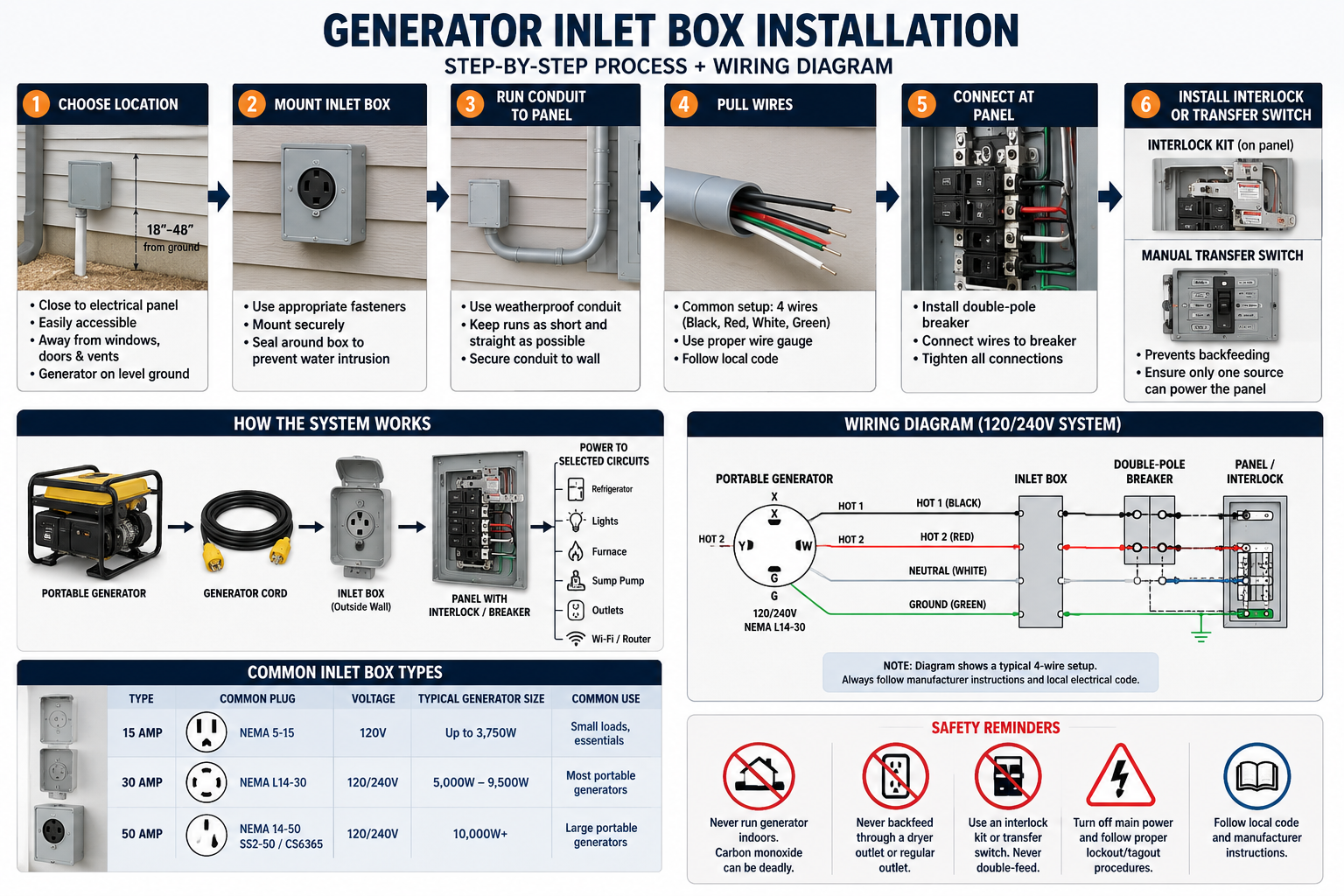
Example overview of a generator inlet box installation using a portable generator, exterior inlet box, double-pole breaker, and panel interlock setup.
Simplified Wiring Diagram
120/240V Output
Hot / Hot / Neutral / Ground
H1 / H2 / N / G
Diagram note: This is a simplified educational diagram. Actual wiring depends on your panel, generator, transfer equipment, grounding/bonding arrangement, local code, and manufacturer instructions.
Interlock Kit vs Transfer Switch
A generator inlet box is usually used with either an interlock kit or a manual transfer switch. Both are designed to prevent unsafe backfeeding, but they work differently.
| Option | How It Works | Best For |
|---|---|---|
| Interlock Kit | Uses a mechanical plate on the panel so the main breaker and generator breaker cannot be on together. | Homeowners who want flexibility to choose panel circuits during an outage. |
| Manual Transfer Switch | Uses a separate switch box to transfer selected circuits between utility and generator power. | Homeowners who want a dedicated, clearly controlled set of backup circuits. |
The best choice depends on your panel compatibility, budget, generator size, local code, and how many circuits you want to power.
Common Generator Inlet Box Installation Mistakes
Most serious generator setup problems come from improper wiring, poor planning, or unsafe shortcuts. Avoid these mistakes:
- Backfeeding through a dryer outlet: This is dangerous and can energize utility lines.
- Using the wrong wire size: Undersized wire can overheat under load.
- Skipping the interlock or transfer switch: The inlet box alone does not prevent utility and generator power from connecting at the same time.
- Using the wrong breaker: Breakers must match the panel and installation requirements.
- Running the generator too close to the house: Carbon monoxide can enter through windows, doors, vents, and soffits.
- Overloading the generator: Large appliances, well pumps, sump pumps, and HVAC equipment can exceed generator capacity quickly.
Can You Install a Generator Inlet Box Yourself?
Some experienced homeowners may be comfortable mounting an inlet box or planning the location, but the electrical panel work is where the risk increases. The final installation needs to be code-compliant, safely grounded, properly protected, and compatible with your panel and generator.
In many areas, permits and inspections may be required. If you are unsure, the smarter move is to hire a licensed electrician. A generator inlet box is not the place to gamble with guesswork.
Recommended Generator Inlet Box Setup
For many homeowners, a practical setup looks like this:
- 30A or 50A weatherproof generator inlet box
- Matching generator cord
- Properly sized copper wiring
- Approved double-pole breaker
- Panel-specific interlock kit or manual transfer switch
- Clear load plan for refrigerators, sump pump, furnace blower, lights, internet, and essentials
Not Sure What Size Generator You Need?
Before buying an inlet box or transfer equipment, make sure your generator can actually support the circuits you want to run.
Final Thoughts
A generator inlet box is one of the cleanest ways to connect a portable generator to a home during an outage. It keeps the generator outside, reduces extension cord clutter, and creates a dedicated connection point for backup power.
But the inlet box is only one part of the system. The real safety comes from proper wiring, correct breaker sizing, an approved interlock kit or transfer switch, and a generator that is matched to your home’s load requirements.
If you are planning a generator inlet box installation, take the time to design the entire setup correctly. Done right, it can make outage prep much safer, cleaner, and easier to use.