30 Amp vs 50 Amp Generator Setup: Which One Does Your House Need?
When homeowners start planning for backup power, one of the biggest questions is whether a 30 amp or 50 amp generator setup makes more sense. The difference affects more than just plug size — it impacts generator capacity, inlet boxes, wiring, breaker size, extension cords, appliance limits, and how much of your home you can realistically power during an outage.
Quick Answer
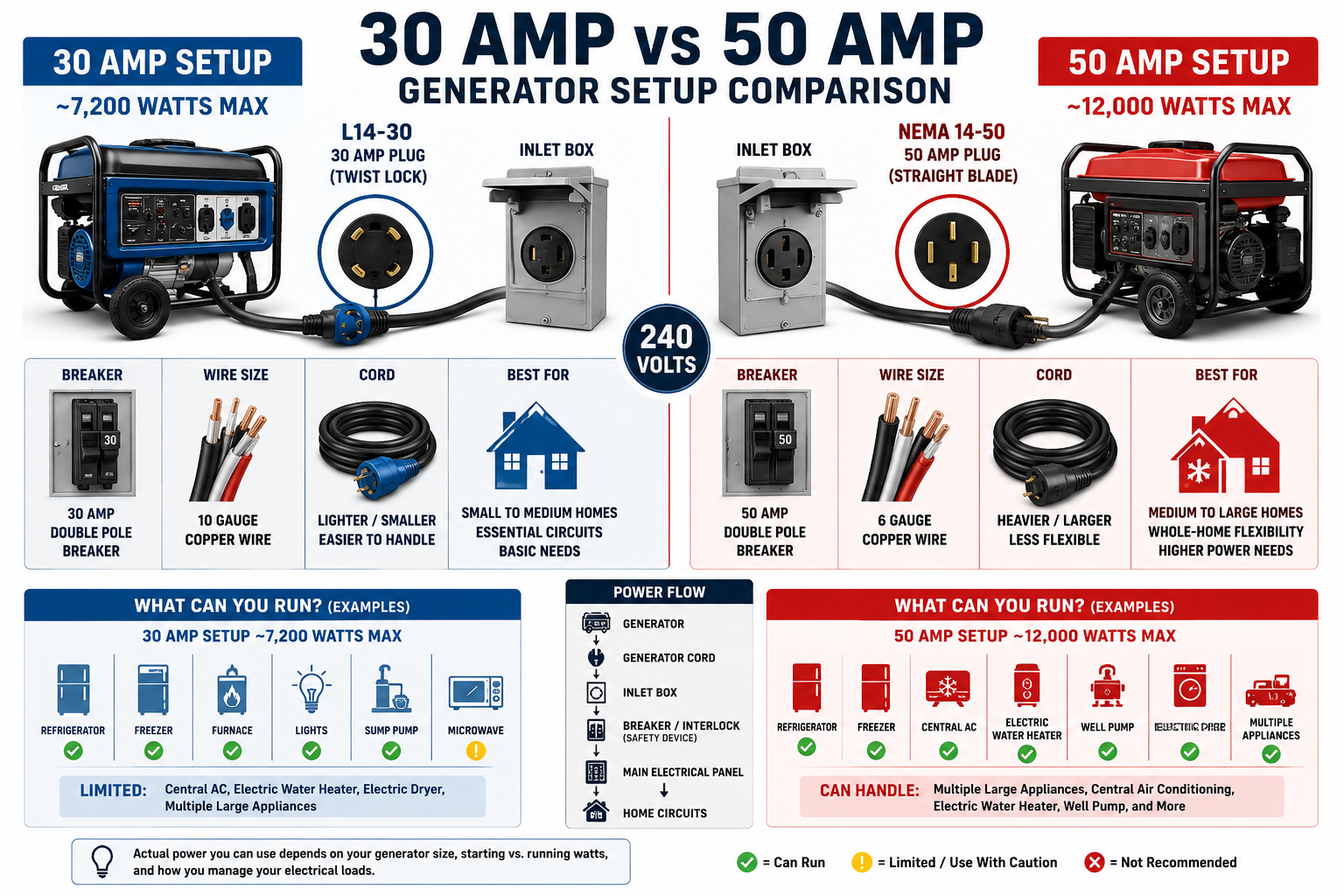
A 30 amp generator setup can provide up to about 7,200 watts at 240 volts and is usually best for essential circuits. A 50 amp generator setup can provide up to about 12,000 watts at 240 volts and is better for larger homes, central air conditioning, well pumps, electric water heaters, and more whole-home flexibility.
What Does 30 Amp or 50 Amp Mean?
The amp rating tells you how much electrical current the generator connection can safely carry. In a 120/240-volt generator setup, this directly affects how many watts can be delivered to your home.
30 Amp Setup
240V × 30A = 7,200 watts
Best for essential backup loads like refrigeration, lights, furnace blowers, sump pumps, and basic outlets.
50 Amp Setup
240V × 50A = 12,000 watts
Better for larger loads, central air conditioning, electric water heaters, well pumps, and more whole-home flexibility.
30 Amp vs 50 Amp Generator Plug Types
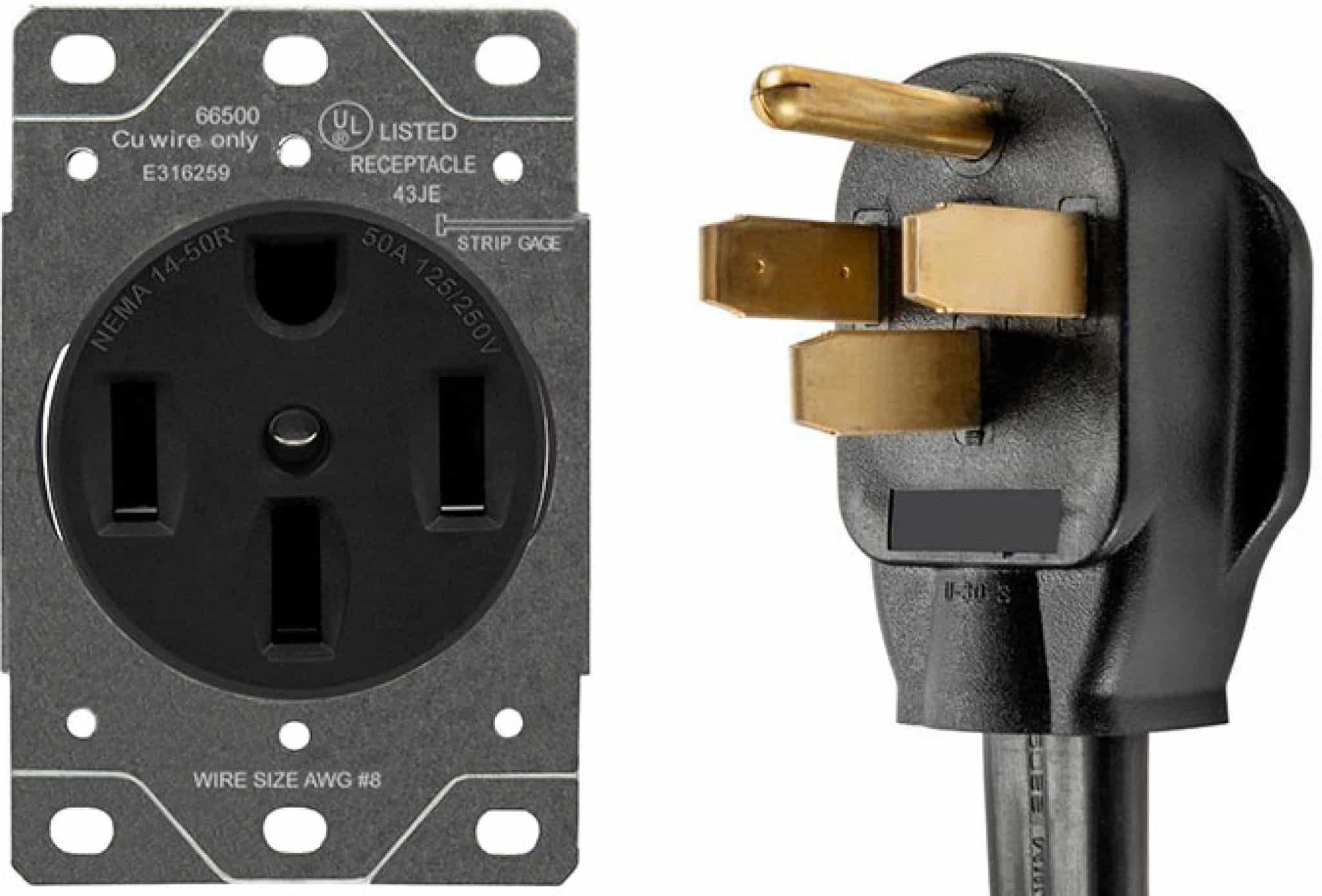
One of the easiest ways to tell the difference between setups is by looking at the generator plug and inlet. A 30 amp generator setup commonly uses an L14-30 twist-lock connector. A 50 amp setup commonly uses a NEMA 14-50 connector.
What Can You Run on a 30 Amp Generator Setup?
A 30 amp setup is often enough for emergency backup power, especially if your home uses natural gas or propane for heat, cooking, or water heating. It is usually a practical setup for keeping the basics running.
- Refrigerator
- Freezer
- Gas furnace blower
- Lights
- Internet router
- Sump pump
- Small well pump
- Microwave, if loads are managed carefully
What Can You Run on a 50 Amp Generator Setup?
A 50 amp setup gives you more breathing room. It does not mean you can run every appliance at once, but it gives you much more flexibility and can support larger loads when paired with a properly sized generator.
- Refrigerator and freezer
- Central air conditioning, depending on generator size and startup surge
- Well pump
- Electric water heater, if managed carefully
- More lighting and outlets
- Multiple appliances with better load management
- Larger HVAC loads
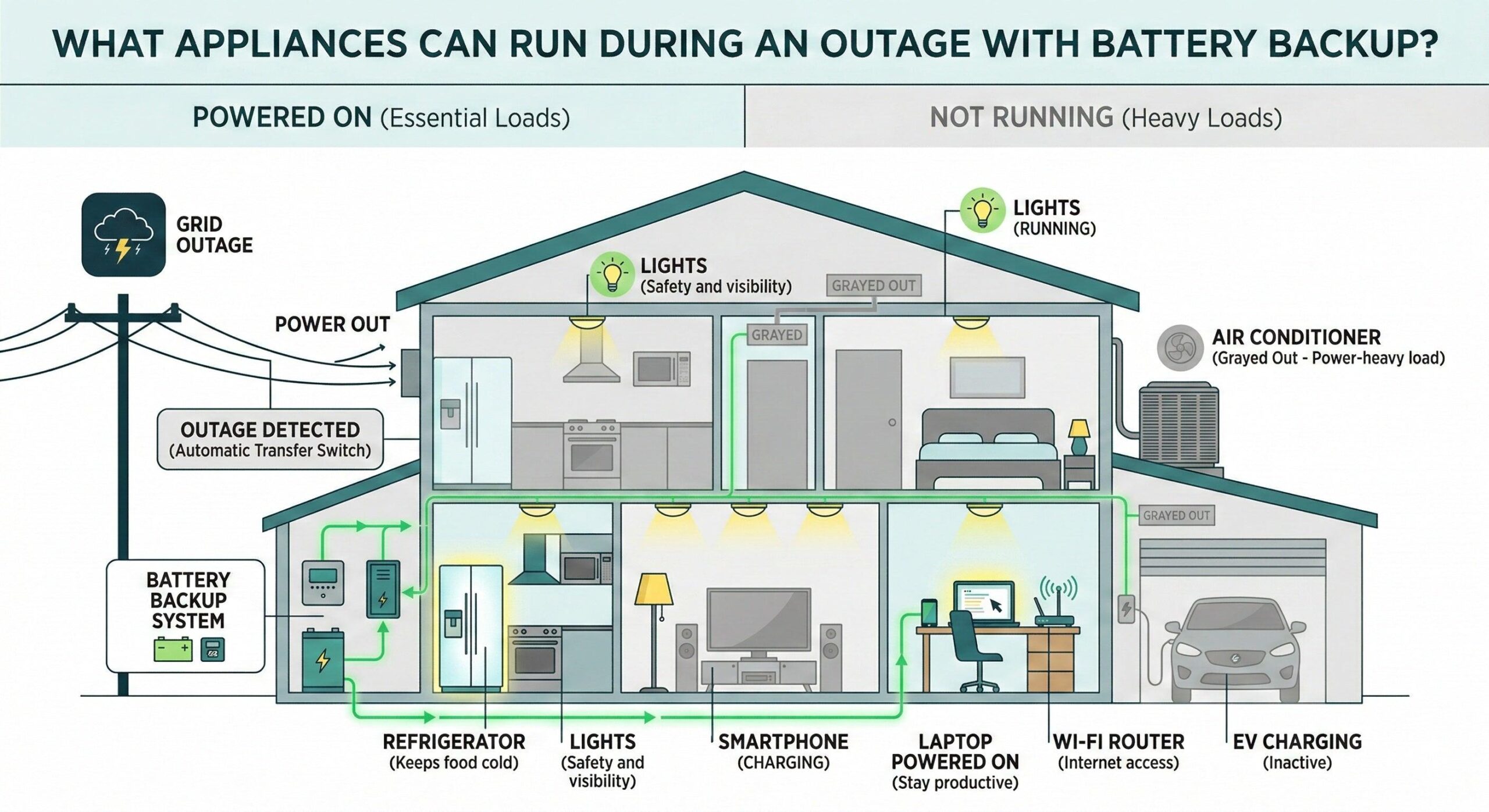
30 Amp vs 50 Amp Comparison Table
| Feature | 30 Amp Setup | 50 Amp Setup |
|---|---|---|
| Maximum Power at 240V | About 7,200 watts | About 12,000 watts |
| Common Plug Type | L14-30 twist lock | NEMA 14-50 |
| Typical Wire Size | 10 gauge copper | 6 gauge copper |
| Breaker Size | 30 amp double-pole breaker | 50 amp double-pole breaker |
| Best For | Essential circuits and smaller homes | Larger homes and higher power needs |
| Central AC | Usually limited | More realistic, if generator is sized correctly |
Wiring and Cord Differences
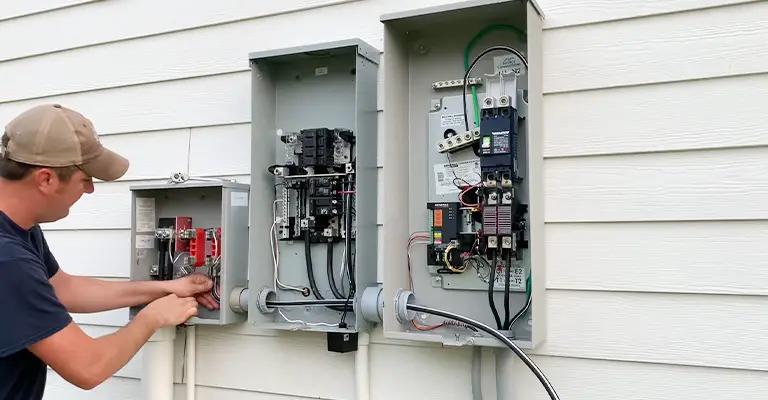
A 50 amp setup is not just a bigger plug. It usually requires heavier wiring, a larger breaker, a larger inlet box, and a heavier generator cord. This is one reason 50 amp installations cost more.
Important: You should not install a 50 amp inlet using wiring or equipment rated only for 30 amps. The breaker, wire, inlet box, cord, and generator output all need to match the system design.
Interlock Kit vs Transfer Switch
Both 30 amp and 50 amp generator setups can be used with either an interlock kit or a manual transfer switch. The right choice depends on your panel, budget, local code requirements, and how much flexibility you want.
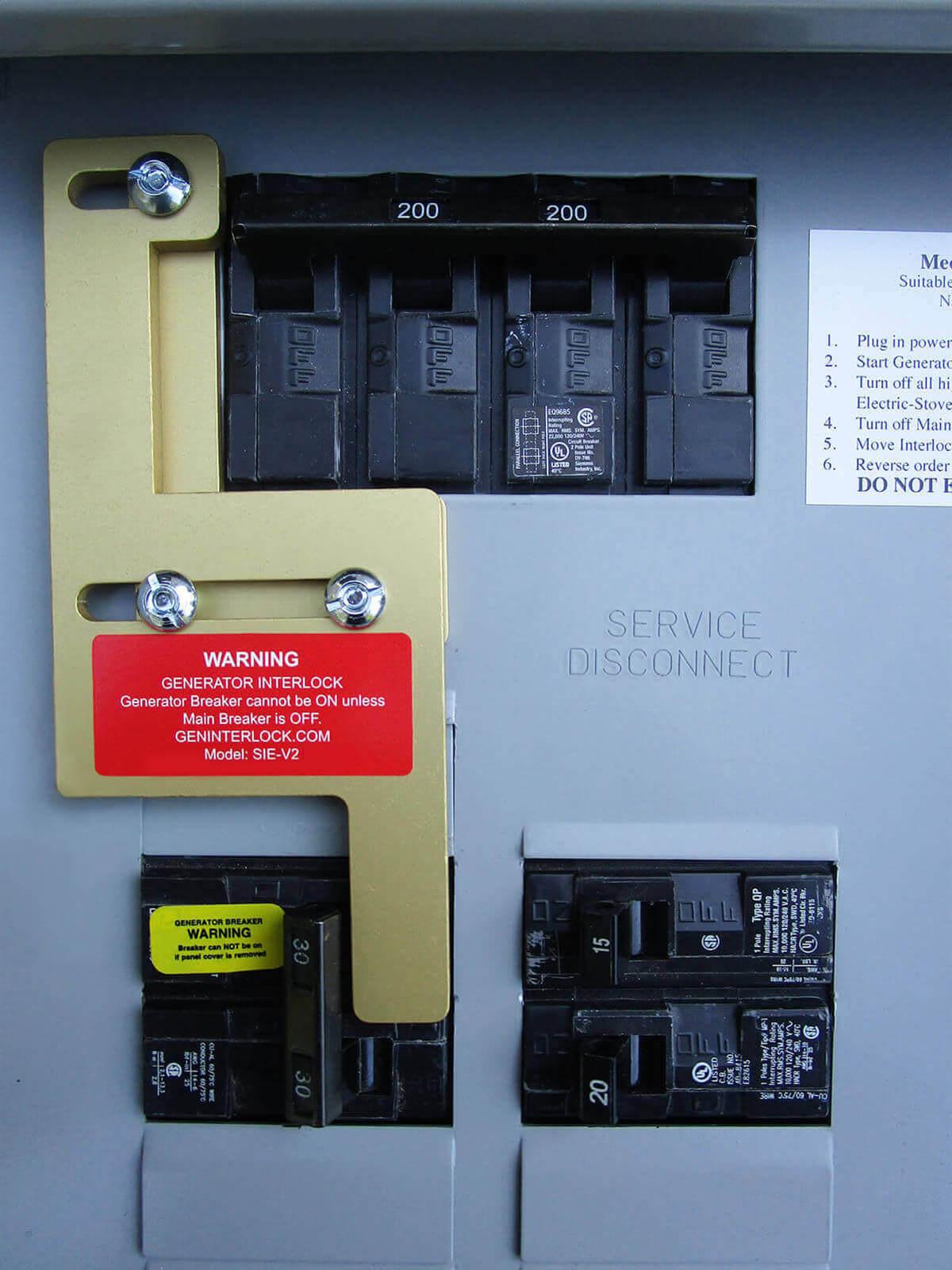
Interlock Kit
An interlock kit allows you to feed power into your main electrical panel through a generator breaker, while mechanically preventing the main breaker and generator breaker from being on at the same time. This gives you flexibility to choose which circuits to power.
Manual Transfer Switch
A manual transfer switch usually powers selected circuits only. This can be a clean and simple option, especially for smaller 30 amp setups where the goal is essential backup power rather than whole-panel flexibility.
Is a 30 Amp Setup Enough for a House?
Yes, a 30 amp setup can be enough for many homes if the goal is basic outage survival. It can keep food cold, run lights, power a furnace blower, operate a sump pump, and keep phones, internet, and small appliances working.
The main limitation is that you may need to avoid running multiple large appliances at the same time. Electric water heaters, central air conditioning, electric dryers, and electric ranges can quickly exceed what a 30 amp setup can safely handle.
Is a 50 Amp Setup Worth It?
A 50 amp setup is worth considering if you want more comfort during outages or you plan to use a larger portable generator. It gives you more available wattage, better flexibility, and more room for startup surges from motors and compressors.
For homeowners who eventually want to run central air, larger well pumps, electric water heating, or multiple large loads, a 50 amp setup is usually the more future-proof option.
Can You Use a 30 Amp Generator With a 50 Amp Inlet?
In some cases, a 30 amp generator can be connected to a 50 amp inlet using the proper adapter, but the generator still only provides 30 amps. The adapter does not increase power output.
Never use homemade cords, dryer outlet backfeeding, or unsafe adapters. Generator connections should use properly rated equipment, a safe transfer method, and installation that follows local electrical code.
Which Setup Should You Choose?
Choose 30 Amp If…
- You only need essential backup power
- You have natural gas or propane appliances
- You want a lower-cost setup
- You have a smaller generator
- You are comfortable managing loads manually
Choose 50 Amp If…
- You want more whole-home flexibility
- You plan to run central air
- You have larger electric loads
- You own or plan to buy a larger generator
- You want more future-proof backup power
Final Thoughts
The simplest way to think about the decision is this: 30 amp is usually survival power. 50 amp is closer to comfort power.
A 30 amp setup can be excellent for keeping the essentials running during an outage. A 50 amp setup gives you more capacity, more flexibility, and better support for larger appliances. The right choice depends on your generator size, your home’s electrical loads, and how much comfort you want during an extended power outage.