Quick answer: Yes—a portable generator can run a gas furnace if it supplies the required voltage, running power, and startup demand, and connects through a properly designed backup-power setup. The gas supplies the heat; electricity operates the blower, ignition, controls, and other components.
A winter outage can stop your heat even when natural gas or propane remains available. Without electricity, a modern forced-air gas furnace cannot complete its heating cycle or move warm air through your home.
A portable generator can keep that equipment operating, but choosing enough watts is only part of the job. You also need a safe connection, compatible electrical output, and a plan for fuel and outdoor operation.

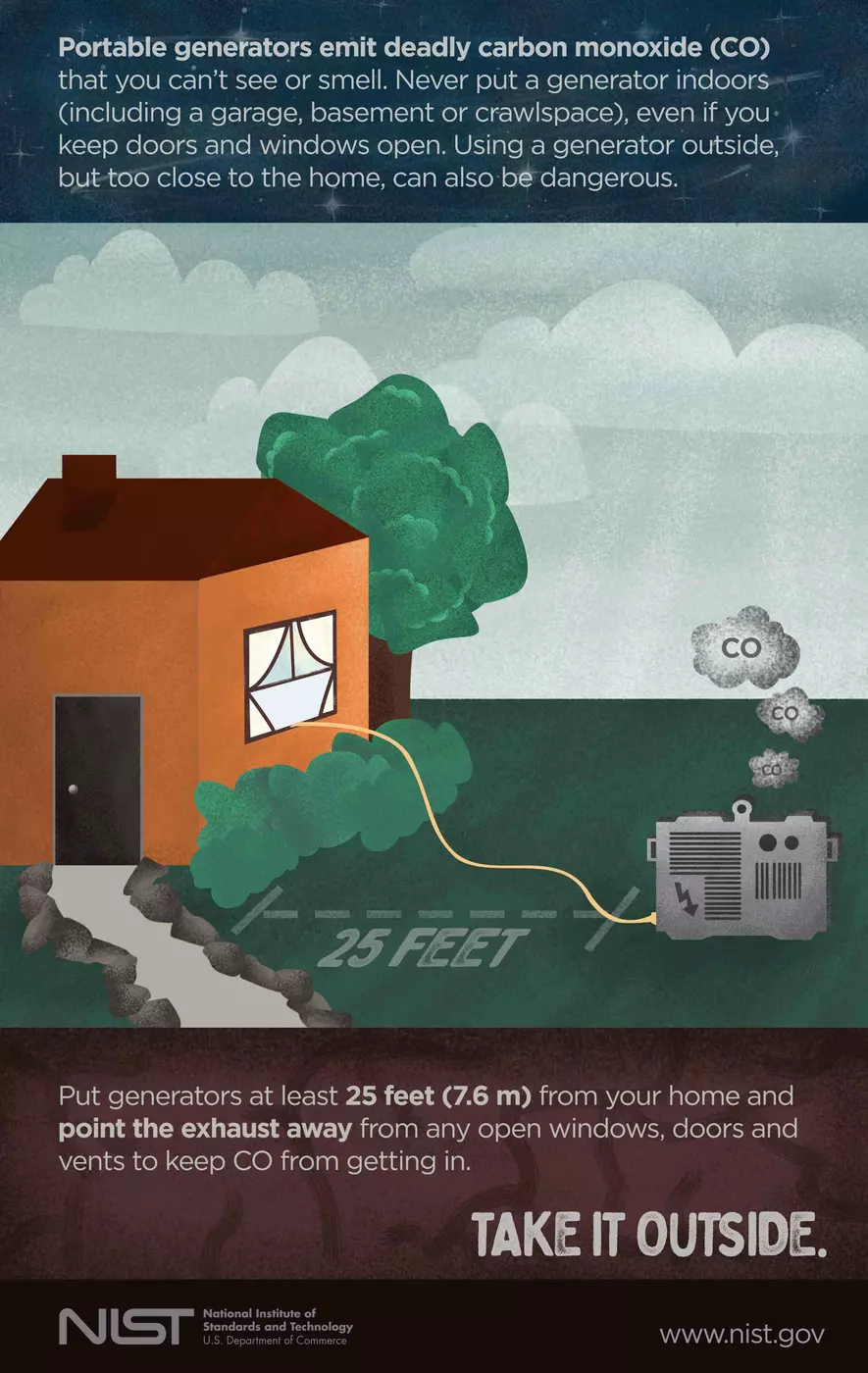
Generator safety: Operate a fuel-burning generator outdoors, at least 20 feet from the home and away from doors, windows, and vents, with exhaust directed away from buildings. NIST recommends at least 25 feet from the home. Follow the greater distance required by your equipment instructions or site conditions.
Never operate a generator in a garage, basement, shed, or other enclosed space—even with the doors open. Use CO alarms with battery backup. Have a qualified electrician install transfer equipment and verify compatibility with your furnace and generator.
Why Does a Gas Furnace Need Electricity?
Burning gas produces heat, but the furnace still needs electrical power to operate. Depending on the model, electrical components include:
- The circulating blower that moves heated air through the ducts.
- The combustion-air inducer.
- The igniter.
- The gas valve and control board.
- The thermostat transformer.
If your installation uses a condensate pump, zoning controls, or other powered accessories, those may also need backup power. A furnace supplied with electricity can still shut down if an essential accessory loses power.
This guide covers forced-air natural-gas and propane furnaces. Electric resistance furnaces and heat pumps have different electrical demands. Do not use a gas-furnace sizing example to select backup power for electric heat.


What Size Generator Do You Need for a Gas Furnace?
Start with the furnace model number, nameplate, and installation manual. Confirm the required supply voltage, then determine the demand of the complete heating cycle—not just the blower motor.
Do not size the generator from the furnace’s BTU rating. A rating such as 80,000 BTU/h describes heating input or output, not the generator watts needed to operate its electrical components.
Likewise, a furnace connected to a 15-amp circuit does not necessarily consume 1,800 watts continuously. The circuit rating and actual operating demand are different things.
Running Power Versus Starting Power
Running power is what equipment uses while operating. Startup demand is the brief additional burden when a motor or another component starts.
Some generator-sizing charts list total starting watts. Others list additional surge watts. Check the heading before adding the numbers.
For perspective, Honda’s wattage estimation chart lists these approximate furnace-fan loads:
| Furnace fan | Running watts | Total starting watts |
|---|---|---|
| 1/3 horsepower | 700 W | 1,400 W |
| 1/2 horsepower | 875 W | 2,350 W |
These are fan estimates, not measurements of your complete furnace. Verify the actual voltage and electrical requirements of your equipment.
A qualified technician can measure the installed furnace through startup, ignition, and steady operation, including each heating stage. For hardwired equipment, have that measurement performed professionally rather than opening electrical compartments to attach a household plug-in meter.
Example: Furnace Plus Essential Loads
The following figures are hypothetical planning values. Replace them with your equipment’s actual requirements. “Starting total” includes that appliance’s running power.
| Load | Running power | Starting total |
|---|---|---|
| Complete gas furnace | 700 W | 1,800 W |
| Refrigerator | 200 W | 1,200 W |
| LED lights and router | 100 W | 100 W |
All three loads running would require:
700 + 200 + 100 = 1,000 watts
If the furnace starts while the refrigerator and smaller loads are running, demand becomes:
1,800 + 200 + 100 = 2,100 watts
If the furnace and refrigerator start together, demand could reach:
1,800 + 1,200 + 100 = 3,100 watts
Choose a generator whose continuous and surge capabilities cover the expected load combinations, with practical reserve. Verify how long its surge rating lasts.
Automatic furnace and refrigerator cycles can overlap. Manually staggering the initial startup does not prevent every later overlap.
Will a 2,000-Watt Generator Run a Furnace?
Possibly—but not every furnace.
A generator advertised as “2,000 watts” may have a lower continuous rating. Check:
- Continuous output.
- Startup capacity and surge duration.
- Output voltage.
- Ratings on the fuel you plan to use.
- Receptacle limits.
- Any altitude derating.
- The furnace manufacturer’s power-quality requirements.
For a broader household load plan, see our home generator sizing guide.
How Do You Safely Connect a Generator to a Furnace?
The right connection depends on how the furnace is installed and which other circuits need backup power. Discuss these options with your electrician before buying adapters or transfer equipment.
| Connection option | Best fit | What to verify |
|---|---|---|
| Dedicated furnace transfer switch | Backing up one hardwired furnace circuit | Voltage, circuit rating, neutral arrangement, and accessory loads |
| Selected-circuit transfer switch | Furnace plus several essential circuits | Individual and combined load limits; generator compatibility |
| Compatible panel interlock and inlet | Selecting essential circuits at the panel | Panel compatibility, supply configuration, load management, and neutral bonding |
| Existing approved cord-and-plug connection | A furnace already installed for this connection method | Manufacturer instructions, local approval, grounding, and cord requirements |
Dedicated Furnace Transfer Switch
A single-circuit transfer switch can provide a convenient way to power a hardwired furnace without backing up the whole electrical panel.
Honda’s transfer-switch recommendations include a one-circuit furnace option. Reliance Controls also manufactures dedicated furnace transfer equipment.
These are examples of equipment categories, not a guarantee that a particular switch suits your installation. An electrician should verify the circuit rating, generator compatibility, and neutral arrangement.
Transfer Switch or Panel Interlock
If you want heat, refrigeration, lighting, and other essentials, a selected-circuit transfer switch or compatible panel interlock may make more sense.
Transfer equipment must prevent utility power and generator power from energizing the system together.
A 120-volt-only generator is not automatically compatible with a typical 120/240-volt panel inlet. Do not use an adapter that bridges panel legs as a shortcut. Shared-neutral circuits and other loads require a properly designed supply arrangement.
For more information, read:
Can You Just Use an Extension Cord?
Only if the furnace already has a manufacturer-permitted, locally approved cord-and-plug installation and the complete backup arrangement is suitable.
A hardwired furnace is not an invitation to cut wires and attach a plug.
Any permitted extension cord must have an equipment-grounding conductor and be rated for outdoor use, load, and distance. Keep connections dry using an approved arrangement, protect the cord from damage, and follow equipment instructions.
Our generator inlet wire-size guide addresses permanent inlet wiring. Extension-cord selection is a separate task.
Never backfeed a wall or dryer outlet. Do not use a male-to-male cord. Turning off the main breaker by hand does not replace proper transfer equipment. Do not bypass a furnace safety switch, remove a grounding pin, or defeat generator GFCI protection.
Why Won’t My Furnace Run on Generator Power?
If other appliances work but the furnace does not, the issue may involve more than generator size.
Record the furnace’s diagnostic code and the stage at which it stops. Avoid repeated resets that erase useful information or trigger another lockout.
1. Voltage Drops During Startup
An overloaded generator, unsuitable cord, or poor connection can cause a voltage drop when a motor starts.
Remove optional loads through normal operating controls and follow the approved startup procedure. Stop if a cord or connection becomes hot, damaged, or discolored.
2. Power Quality Does Not Meet Furnace Requirements
Check the furnace manual for voltage, frequency, and waveform limits.
For example, the Lennox SL280DFV installation manual specifies generator waveform distortion below 5% total harmonic distortion, or THD, and calls for checks of grounding and polarity.
That is a model-specific requirement, not a universal specification for every furnace.
An inverter generator with documented suitable output can be a useful choice, but the word “inverter” alone does not establish compatibility.
3. Grounding, Polarity, or Neutral Bonding Is Incompatible
Some ignition and flame-sensing problems relate to the electrical reference or polarity. Rheem’s flame-sensing troubleshooting guidance includes improper grounding and incorrect polarity among possible causes.
Whether the generator needs a bonded or floating neutral depends on the complete installation, including whether the transfer equipment switches the neutral. A panel interlock generally does not switch it.
Have an electrician verify the arrangement using both manufacturers’ instructions.
Do not add a bonding plug or remove a factory bond as a trial-and-error repair. The wrong arrangement can create unwanted current paths or protection problems.
Generac explains bonded and floating neutrals here.
4. An Accessory or the Furnace Has a Fault
Check whether an essential condensate pump or zone controller has power.
Snow-blocked intake or exhaust openings, ignition faults, and other furnace problems can also prevent heating. Keep furnace panels installed and arrange HVAC service if the diagnostic code indicates a fault.
If a breaker trips, read our generator breaker-tripping guide.
Can a Portable Power Station Run a Gas Furnace?
Yes, if its AC inverter can handle the complete furnace load and startup demand, its output meets the furnace’s requirements, and the connection and neutral arrangement are suitable.
A hardwired furnace still requires an approved connection method.
Battery capacity determines how long it can run. A power station rated at 2,000 watts describes output power. A capacity of 2,000 watt-hours describes stored energy. These ratings are not interchangeable.
Battery Runtime Example
Assume:
- A 2,048 Wh battery.
- An illustrative 85% usable AC-energy allowance.
- A furnace drawing 600 watts while operating.
The allowance represents assumed losses and reserve, not a specification for a particular product.
2,048 Wh × 0.85 ÷ 600 W ≈ 2.9 hours of furnace operation
If the furnace ran half the time, that simplified estimate would translate to roughly 5.8 elapsed hours.
Actual runtime can be shorter because of inverter idle draw, standby loads, accessories, battery temperature, aging, and changing furnace demand. During severe cold, the furnace may run nearly continuously.
Keep a power station within its specified operating and charging temperature ranges. Do not assume it can charge below freezing.
An overnight plan needs enough usable capacity for the expected duty cycle, rather than a battery selected only by its peak-watt rating.
How Long Will a Generator Run a Furnace?
Use the generator manufacturer’s fuel-consumption or runtime data at a comparable total load.
A published runtime at 25% load does not promise the same runtime at 50% load. Furnace cycling, other appliances, weather, and the selected fuel all affect the result.
For example, if the manual states eight hours at a specified load on a full tank, use that as a planning reference only when your operating conditions are comparable.
Allow time for shutdown, cooling, and refueling according to the manual. Never refuel a running or hot generator.
The furnace also needs its own fuel supply. Generator electricity cannot compensate for interrupted natural-gas service or an empty propane tank.
Before-the-Outage Furnace Backup Checklist
- Identify the furnace. Record its model, supply voltage, electrical requirements, and any generator restrictions.
- Include accessories. Account for the condensate pump, zone controls, and other essential equipment.
- Plan the connection. Have an electrician choose and install suitable transfer equipment and verify neutral bonding.
- Check the full load. Include startup overlap with refrigerators, freezers, and pumps.
- Choose a safe outdoor location. Maintain required separation, direct exhaust away, and use only weather protection approved for operation.
- Test a complete heating cycle. Confirm ignition, blower operation, accessory operation, and repeated cycling before an emergency.
- Plan fuel and monitoring. Test CO alarms and establish a workable shutdown, cooling, and refueling schedule.
Frequently Asked Questions
Will a 2,000-Watt Generator Run a Gas Furnace?
It may run some models, but check continuous output, startup capability, voltage, and furnace compatibility. The headline wattage alone is not enough.
Do I Need a 240-Volt Generator?
Check the furnace nameplate and transfer setup. Many residential gas furnaces use 120 volts, but that does not mean a 120-volt-only generator can safely supply a conventional 120/240-volt panel inlet.
Can I Run My Furnace and Refrigerator Together?
Yes, if the generator and connection support their combined running demand and possible overlapping starts. Include other loads sharing that supply.
Can I Leave the Generator Running Overnight?
Plan around the manual’s operating instructions, fuel limits, weather, placement, CO protection, and monitoring needs.
Do not assume a generator is suitable for unattended operation or move it closer to the house for convenience. A correctly sized and connected battery system may cover a quiet overnight period.
Will a Generator Keep My House Warm if the Gas Goes Out?
A gas furnace needs both electricity and fuel. Restoring electricity alone will not restore heat without an available gas supply.
Sources and Further Reading
- CPSC: Carbon Monoxide and Portable Generator Safety
- NIST: Generator Safety
- Honda: Generator Wattage Estimation Guide
- Honda: Transfer Switch Recommendations
- Reliance Controls: Furnace Transfer Switch Instructions
- Lennox: SL280DFV Installation Instructions
- Rheem: Furnace Does Not Sense Flame
- Generac: Bonded and Floating Neutrals