
SOLAR CHARGING & POWER STATION COMPATIBILITY
Series vs. Parallel Solar Panels for a Portable Power Station: Which Connection Should You Use?
Two solar panels can have the same combined wattage but produce very different voltage and current depending on how they are connected. The right arrangement is the one that matches your power station’s solar-input specifications—not simply the one that fits the connectors.
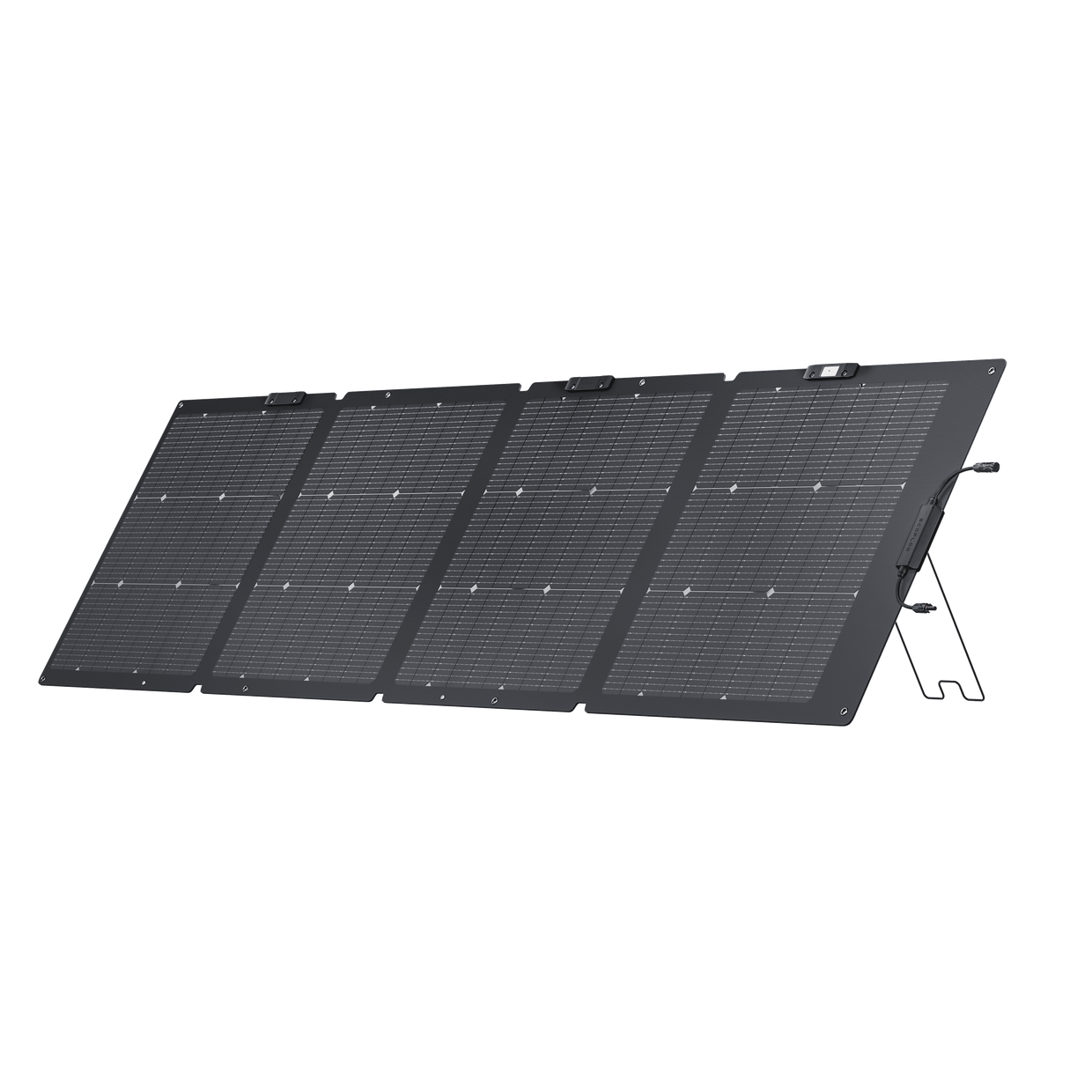
1. Read Both Sets of Specifications
Start with your power station’s manual and each panel’s label. “12V panel” and advertised watts are not enough to establish compatibility.
| Rating | Why it matters |
|---|---|
| Panel Voc: open-circuit voltage | Used to check the array’s maximum voltage, including cold-weather correction. |
| Panel Vmp: voltage at maximum power | Helps assess operation within the input’s tracking range. |
| Panel Imp and Isc | Operating current and short-circuit current are separate values; check the applicable limits. |
| Power-station input specifications | Find minimum/startup voltage, operating range, maximum voltage, current limits, and allowed array power. |
| Connector and cable specifications | Confirm polarity, approved mating parts, current capacity, and connection method. |
Some stations have multiple solar inputs. Determine whether they are independent MPPT channels and what each port permits. Do not assume two sockets share one combined rating.
2. What Changes in Series and Parallel?
| Arrangement | Vmp | Imp | Voc | Isc |
|---|---|---|---|---|
| One panel | 20V | 5A | 24V | 5.5A |
| Two in series | 40V | 5A | 48V | 5.5A |
| Two in parallel | 20V | 10A | 24V | 11A |
At these stated operating values, both two-panel arrangements represent about 200W before real-world losses and limitations. Wiring does not create extra energy from the same sunlight.
Series: voltage adds
Conceptually, the positive lead of one panel connects to the negative lead of the next. The remaining leads form the array output. Higher voltage can reduce current-related cable loss for the same power, but total Voc can exceed the station’s limit.
Parallel: current adds
Conceptually, positive leads combine together and negative leads combine together through approved branch equipment. Voltage stays near one panel’s voltage, but the combined cable carries more current. Parallel branches may require additional protection.
These descriptions explain electrical behavior; use the equipment manuals for actual connection instructions.
3. Compare the Array With the Input
Suppose a hypothetical station permits an operating range of 15–60V, a 60V absolute maximum, 12A operating input, 15A maximum array short-circuit current, and 300W of connected panels.
The two-panel series and parallel examples above appear compatible with those simplified room-temperature numbers. That is only a preliminary check: cold voltage, hot operating voltage, cables, and manufacturer restrictions still need review.
Now consider three panels in series. Their combined rated Voc is 72V, already above the 60V maximum. Do not connect that arrangement. A cloudy day or low displayed charging watts does not make it acceptable.
If a manual does not clearly permit the proposed array, ask the manufacturer before buying adapters or connecting it.
4. Check Cold-Weather Open-Circuit Voltage
Solar-panel open-circuit voltage generally rises as cells get colder. Adding label Voc values alone can underestimate the highest voltage your station may encounter.
Use the panel’s Voc temperature coefficient and the design temperature method specified by the manufacturer or applicable requirements.
Panel Voc at 25°C: 24V.
Voc coefficient: −0.30% per °C.
Assumed cell temperature: −10°C.
Temperature difference: −35°C.
Voltage increase: 10.5%.
Corrected panel Voc: 24 × 1.105 = 26.52V.
Two in series: 53.04V, before any additional required tolerance or margin.
Do not copy that coefficient or temperature into a different panel’s design. A string that seems acceptable at room temperature may be unsuitable on a cold morning. In hot conditions, also verify that operating voltage remains high enough for the station.
5. Shading and Mismatched Panels Complicate the Choice
Series strings can be limited by a lower-current panel. Parallel branches operate at a common voltage and need compatible voltage characteristics. Matching advertised wattage alone is insufficient.
Partial-shading behavior depends on the panel layout, bypass diodes, array arrangement, and MPPT behavior. Parallel is not automatically immune to shade, and series does not always lose all output when one section is shaded.
Use matching panels where practical and follow approved combinations. If separate MPPT inputs are available, they may offer another supported way to keep electrically different arrays separate.
For output expectations, use our Solar Recharge Reality Check Calculator .
6. Check Connectors, Polarity, and Protection
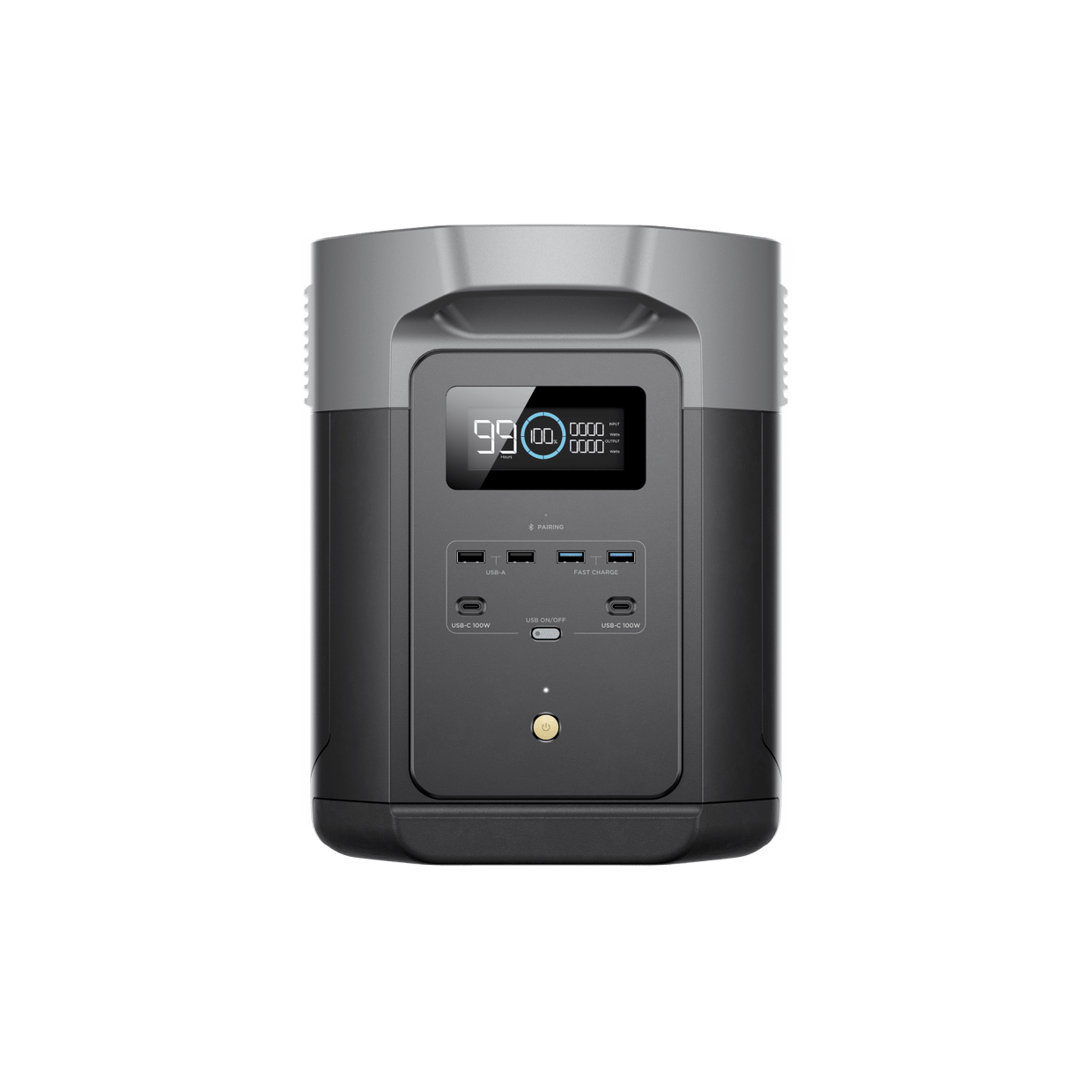
- Use approved solar cables, adapters, branch connectors, and mating connector families.
- Confirm polarity from markings and documentation, not connector appearance alone.
- Do not assume connectors from different brands are safe to cross-mate because they fit.
- Size wiring and any required branch protection for the array and installation.
- Keep the station dry and protect connections as instructed.
Complex arrays, permanent installations, or uncertain protection requirements need a qualified solar professional. A portable power station is not a reason to omit required protection.
Before-You-Connect Checklist
- Identify the exact station input and panel models.
- Record Voc, Vmp, Isc, Imp, and the Voc temperature coefficient.
- Calculate the proposed array’s voltage and current.
- Verify cold Voc and the operating voltage range.
- Check current, short-circuit current, and permitted array power.
- Confirm connectors, polarity, cable capacity, and required protection.
- Follow the approved connection procedure.
If charging is intermittent, see Why Does My Power Station Stop Charging From Solar?
Frequently Asked Questions
Is series always better for a power station?
No. It can help meet operating voltage needs but can exceed maximum voltage. Input specifications decide.
Can I combine different wattage panels?
Only after checking their electrical characteristics and approved combinations. Wattage alone does not show whether they match.
Can I exceed the current rating if the controller clips output?
Only when the manufacturer permits the specific array. Accepted operating current and maximum allowed array short-circuit current can be different limits.
Do I need a separate solar controller?
Many power stations have a built-in controller. Use the specified solar-input arrangement; do not add another controller unless the manufacturer supports it.
Can I connect panels to two different solar ports?
Possibly. Check whether the inputs are independent and follow each port’s individual limits and wiring instructions.
Sources and photo credits
- EcoFlow: Array behavior and power-station compatibility
- Renogy: Series and parallel fundamentals
- Victron Energy: Temperature effects and MPPT matching
- Stäubli: PV connector cross-mating risks
- Stäubli: Connector isolation and handling instructions
- EcoFlow portable panel photo
- EcoFlow power-station photo
Worked examples are hypothetical. Use the exact equipment specifications and applicable installation requirements for your own array.