GENERATOR SAFETY & OVERNIGHT POWER PLANNING
Can You Run a Generator Overnight? Safety, Fuel, and Monitoring
When an outage lasts into the night, keeping a furnace, refrigerator, or sump pump working becomes a practical concern. But a generator advertised to run for eight or twelve hours is not automatically approved to operate unattended while everyone sleeps.

1. Long Runtime Is Not the Same as Unattended Operation
A runtime claim applies to a particular fuel supply and electrical load. For example, a figure measured at 25% load does not predict the same runtime at a much heavier load.
Read your exact model’s operating instructions for supervision, continuous-use limits, shutdowns, oil checks, and service intervals. If unattended operation is prohibited, operating after dark does not create an exception.
| Question | What determines the answer? |
|---|---|
| How long can it run on its fuel supply? | Model, fuel, usable supply, load, and operating conditions. |
| When must it stop for maintenance? | The manual’s hour-based and time-based requirements. |
| May it operate unattended? | The manufacturer’s instructions and applicable requirements. |
| Can I maintain safe conditions all night? | Placement, weather, supervision, connections, and access. |
Related guide: How Long Can You Run a Generator Continuously?
2. Carbon Monoxide Remains the Main Placement Hazard
CPSC advises operating portable generators outdoors at least 20 feet from homes and buildings, with exhaust directed away from windows, doors, and vents. Never run one in a garage, basement, shed, crawlspace, or other enclosed area, even with openings left open.
Consider neighboring buildings and sleeping areas too. A short cord is a reason to revise the connection plan, not to move the generator closer.
If a CO alarm sounds, get everyone outside into fresh air and call 911. Do not stay inside to find the source or silence the alarm.
See How Far Should a Generator Be From Your House?
3. Plan for Fuel Stops and Maintenance
Estimate fuel demand using your actual load and the manufacturer’s runtime information. Leave a margin rather than planning for the engine to run until the tank is empty.
If refueling will be necessary, plan a shutdown and cooling period. Turn the generator off and let it cool before adding gasoline. Never top off a running generator, improvise an auxiliary fuel feed, or assume a cover’s refueling flap makes hot refueling safe.
Check oil and service requirements before a long run. A low-oil shutdown does not replace scheduled checks. Follow the manual for checking the oil with the engine stopped and for any required maintenance breaks.
Plan supplies with our three-day outage fuel guide .
4. Darkness Does Not Change Weather or Connection Requirements
Rain, snow, standing water, and shifting wind can change conditions during the night. Use only weather protection approved for operation with your equipment, installed within its stated limits and with required airflow and clearances.
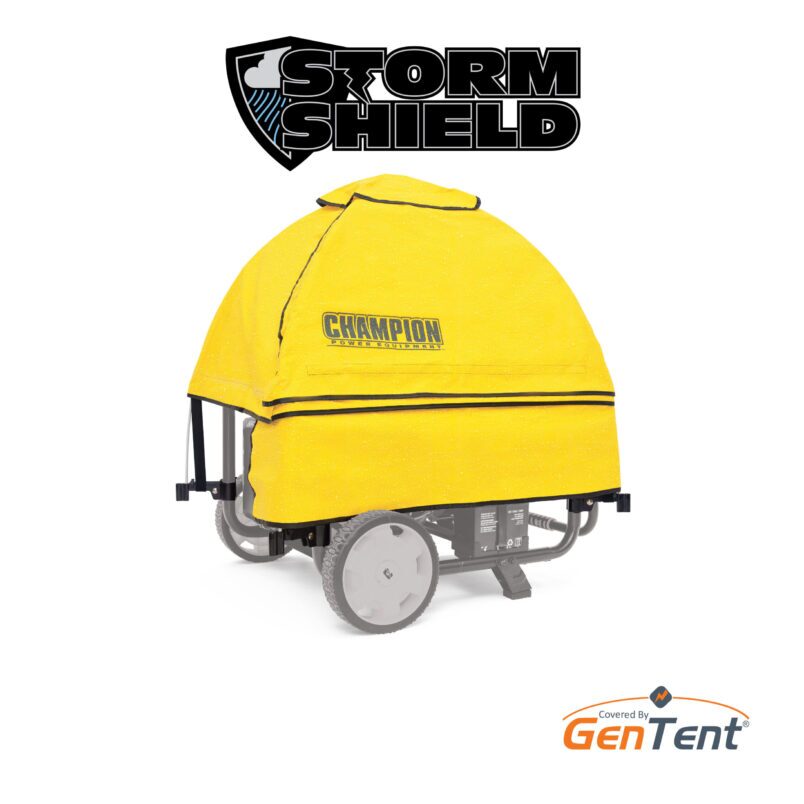
Never operate under an ordinary fitted storage cover, inside a makeshift enclosure, or in floodwater. If conditions exceed the equipment’s limits, stop operation safely.
Use properly rated, undamaged outdoor cords for directly connected appliances. Permanent house wiring requires suitable installed transfer equipment that prevents backfeeding. Never connect through a household receptacle or use a male-to-male cord.
Keep a flashlight available and protect cords from vehicle traffic, trip hazards, and standing water. A camera or remote display cannot detect every hazardous condition or replace required supervision.
Related guides: generator running covers and generator cord selection .
5. Decide Which Loads Really Need Overnight Power
List essential equipment and what happens if its power supply stops. Avoid assuming every household appliance must run continuously.
| Load | Planning concern |
|---|---|
| Refrigerator or freezer | Monitor food temperatures and follow food-safety guidance. Do not assume an overnight shutdown is always harmless. |
| Furnace | Starting demand, connection compatibility, and the indoor temperature if backup power fails. |
| Sump pump | Motor starting demand, pumping frequency, and an appropriate backup pump or power source. |
| Router, lights, or charging devices | These may suit a smaller battery supply after checking actual demand. |
| Essential medical equipment | A device-specific backup and relocation plan agreed with the equipment provider. |
FDA says an unopened refrigerator generally keeps food cold for about four hours; a full freezer about 48 hours, or 24 hours if half full. These are outage estimates, not permission to ignore temperatures or the food’s prior outage history.
If losing heat, pumping, or medical-device power would make staying unsafe, arrange another location before the situation becomes urgent.
6. Consider a Battery for Smaller Overnight Loads
A compatible battery system can supply selected loads while the fuel-powered generator is shut down. Choose it by usable energy, inverter output, starting demand, and the equipment’s requirements.
Illustrative calculation: A steady 60-watt load over eight hours uses 480 watt-hours at the load. The battery needs additional allowance for conversion losses, reserve, temperature effects, and other connected equipment.
A refrigerator’s compressor cycles; a pump has startup demand. Do not size either from a single running-watt number. Test the complete arrangement before relying on it.
Use the battery runtime calculator and home battery guide for planning.
Before-Dark Checklist
- Read the generator’s operating and supervision requirements.
- Confirm safe placement, exhaust direction, and working CO alarms.
- Inspect cords, connections, and approved weather protection.
- Check fuel, oil, service hours, and required shutdown times.
- Reduce demand to essential loads.
- Prepare lighting for safe access.
- Identify who will provide any required supervision.
- Have a plan if the generator stops or conditions become unsafe.
Frequently Asked Questions
Can I sleep while a portable generator runs?
Do not assume so. Check whether the manufacturer permits unattended operation and meet all operating requirements. Alarms and automatic shutoffs do not substitute for required supervision. If those conditions cannot be met, choose another overnight power plan.
Is an inverter generator safer to leave overnight?
Quieter operation does not remove exhaust, fuel, electrical, or supervision hazards. Follow its own instructions.
Does using propane make overnight operation safe?
No. Propane-powered engines still produce carbon monoxide, and the equipment still has operating and monitoring requirements.
Can I put the generator in a shed to reduce noise?
No. Never operate a portable generator inside a shed or other enclosed area. Do not reduce noise by enclosing the exhaust or blocking cooling airflow.
What about a permanently installed standby generator?
A standby system has different installation, control, and operating provisions. Follow its manual and service guidance rather than applying portable-generator procedures. It still needs maintenance and a plan for faults.
Sources and photo credits
- CPSC: Portable generator carbon monoxide and electrical safety
- American Red Cross: Generator safety, alarms, fuel, and connections
- FDA: Food safety during power outages
- Champion 201075: Product information and photo
- Champion Storm Shield: Operating-cover information and photo
This guide does not establish that a particular generator is approved for unattended operation. Your exact equipment instructions and safe site conditions determine the operating plan.