
GENERATOR CARE & OUTAGE READINESS
How to Store a Generator Between Power Outages: Fuel, Battery, and Maintenance Checklist
A generator can work perfectly during an outage and refuse to start months later. Putting it away properly means more than covering it: the fuel system, starting battery, storage location, and next startup all need attention.

1. Plan for How Long It Will Sit
Find the storage section in your exact model’s manual. Manufacturers do not all define “short-term” and “long-term” storage the same way.
| Your situation | What to plan |
|---|---|
| Another outage is possible soon | Safe shutdown, cooling, inspection, battery care, and an approved fuel-readiness plan. |
| The generator may sit for weeks or months | The manufacturer’s fuel preparation and battery maintenance routine. |
| Extended storage with no planned use | The complete long-term procedure, including any additional engine protection. |
| The next use is uncertain | Prepare for storage instead of assuming you will run it again tomorrow. |
Write down the date, running hours, and preparation method. A tag on the handle can record “fuel prepared,” “battery disconnected,” or “maintenance due.”
2. Fuel Stabilizer or Draining: Follow the Model’s Procedure
There is no single fuel-storage method for every portable generator. Some instructions allow treated gasoline in the tank while requiring attention to fuel left in the carburetor. Others call for draining the system for extended storage. Fuel-injected equipment may have different requirements.
If your manual allows stabilized gasoline
Use fresh fuel of the required grade and ethanol content. Measure an approved stabilizer according to the applicable instructions, then follow the generator’s procedure for circulating treated fuel.
Stabilizer does not turn stale gasoline back into fresh fuel. Gold Eagle, the maker of STA-BIL, specifically says its product will not restore old gasoline. Product storage claims also do not override the generator manufacturer’s limits.
If your manual requires draining
Use the specified procedure and approved fuel containers. Closing a fuel valve or running until the engine stops does not automatically prove that every part of the fuel system is empty.
If draining requires disconnecting hoses, accessing unfamiliar fittings, or carburetor work you cannot safely perform, have a service shop prepare the generator.
For reserve planning, read How Much Fuel Should You Store for a Three-Day Power Outage?
3. Maintain the Starting Battery
An electric-start battery needs its own storage plan. Check the manual for battery-switch positions, disconnection requirements, and the approved charging method.
Some generators charge the battery while running; others require an external charger. A short engine test is not a universal substitute for charging. Use a charger matched to the battery’s voltage, chemistry, and permitted charging current.
Leave a maintainer connected only when the generator, battery, and charger instructions allow it. For additional troubleshooting, see Generator Battery Keeps Dying: Causes, Charging, and Replacement .
4. Finish Due Maintenance and Clean the Generator
Check the maintenance schedule against both elapsed time and running hours. An outage can put many hours on a machine in a few days.
- Oil: Check the level and change it when the schedule or storage instructions require. Record the oil specification and service date.
- Air filter: Inspect and service it as directed. Do not assume every filter can be washed or oiled.
- Cooling and exhaust areas: Remove accessible debris once the engine is cool.
- Exterior condition: Look for leaks, loose parts, worn hoses, and damaged insulation.
- Cords: Inspect and store them dry without sharp bends or crushed connectors.
Follow the manufacturer’s cleaning method. Do not pressure-wash electrical components. Let the equipment dry before covering it, and arrange service for damage found during inspection.
If long-term instructions call for internal engine protection, use that exact procedure or have a technician do it. Do not add oil or spray products into unfamiliar openings.
5. Choose a Storage Location and the Right Cover
Choose a cool, dry, secure location that meets the generator manual and applicable fuel-storage requirements. Keep the unit upright as specified and away from ignition sources. Do not store fuel-containing equipment in living areas or near a furnace, water heater, or pilot light.
A storage location is not an operating location. Even if a manual permits storing a prepared generator in a garage or shed, it must be moved to a safe outdoor position before starting.
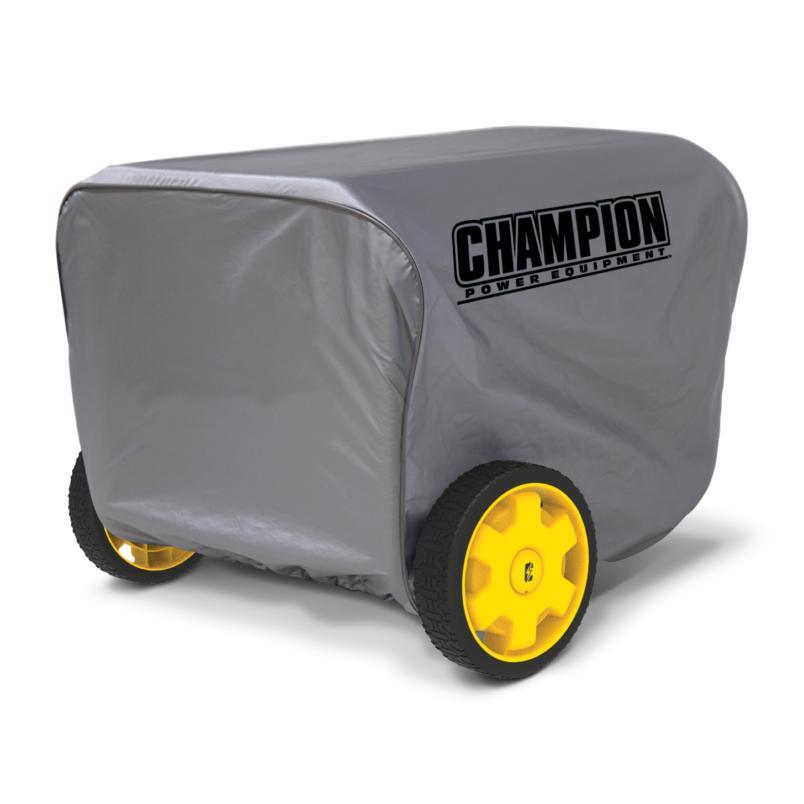
Cover only a fully cooled, dry generator. A storage cover is different from a shelter specifically designed for operation. Never run a generator under an ordinary fitted storage cover.
For operating-weather protection, see Generator Running Covers for Rain and Snow .
Store propane cylinders separately outdoors
For dual-fuel equipment, close and disconnect the cylinder according to the generator’s instructions. Store cylinders upright and secured outdoors, away from heat, ignition sources, and places where they can fall or be struck. Do not put a propane cylinder in a garage, shed, basement, or living area.
Protect the disconnected valve only as the cylinder supplier directs; valve designs differ. Cylinders that appear empty can still contain propane.
6. Check the Generator Before Returning It to Service
Read your storage tag and the manual’s return-to-service procedure. Before starting:
- Remove the cover and inspect for leaks, damage, nests, and blocked openings.
- Check the oil, air filter, and required maintenance.
- Prepare the fuel system as directed.
- Reconnect and check the starting battery if applicable.
- Inspect cords and identify your installed connection procedure.
- Move the generator to its safe outdoor operating location.
Start without connected loads as instructed. Stop for leaking fuel, abnormal operation, damaged wiring, or warning indicators. Add a modest test load only after normal operation is established and as the manual permits.
Generator Storage Checklist
- Record the date, running hours, and expected storage period.
- Complete the model-specific fuel procedure.
- Check maintenance due by time and hours.
- Prepare the battery and set storage switches correctly.
- Inspect and clean accessible areas.
- Let the generator cool and dry completely.
- Store fuel and propane safely.
- Fit the storage cover and keep the manual accessible.
- Schedule readiness checks according to the manual.
Frequently Asked Questions
Should I store a generator with a full or empty gas tank?
Follow your model’s instructions. Do not use a universal “always full” or “always empty” rule. If fuel remains, respect the generator’s fill limit and required expansion space.
Should I run the generator every month?
Use the exercise and storage schedule specified for your model. Any exercise run must happen outdoors in a safe operating location, followed by the required storage preparation.
Does propane-only operation eliminate storage maintenance?
No. The engine, battery, hoses, and electrical equipment still need care. If gasoline was previously used, its remaining fuel also needs the prescribed storage treatment.
Can I leave it outside under a tarp?
A tarp alone is not a complete storage plan. Follow the manual’s location and weather-protection requirements, and avoid trapping moisture against the machine.
What if it will not start after storage?
Check the documented fuel preparation, battery, and normal starting controls. Stop if you find leaks or damage. Do not keep adding fuel treatment or repeatedly cranking an engine that needs service.
Sources and photo credits
- Champion: Generator and inverter storage
- Briggs & Stratton: Generator care and storage tips
- Gold Eagle: STA-BIL directions and fuel limitations
- Generac: Model-specific battery charging
- NC Agriculture: Propane cylinder storage
- CPSC: Generator safety
This guide covers portable generators. Follow your exact equipment manual for storage durations, fuel preparation, maintenance, and return-to-service instructions.