Extension Cord vs Interlock vs Transfer Switch: Which One Should You Actually Use?
When the power goes out, most homeowners end up asking the same question: What is the best way to connect a generator to the house? That is where things get confusing fast.
Some people use extension cords. Others install an interlock kit. Some go with a transfer switch. All three can work — but they are not equal in cost, convenience, flexibility, or long-term practicality.
Quick answer: If you only need a few plug-in items, extension cords can work. If you want to power house circuits with the best balance of cost and flexibility, an interlock kit is often the best choice. If you want a dedicated and organized backup setup for selected circuits, a transfer switch is a strong option.
Why This Comparison Matters
A lot of homeowners assume all three methods basically do the same thing. They do not.
Extension cords are a temporary plug-in solution. Interlock kits and transfer switches connect generator power to your home more like a real backup system.
Extension Cord vs Interlock vs Transfer Switch: Which One Should You Actually Use?
When the power goes out, most homeowners end up asking the same question: What is the best way to connect a generator to the house? That is where things get confusing fast.
Some people use extension cords. Others install an interlock kit. Some go with a transfer switch. All three can work — but they are not equal in cost, convenience, flexibility, or long-term practicality.
Quick answer: If you only need a few plug-in items, extension cords can work. If you want to power house circuits with the best balance of cost and flexibility, an interlock kit is often the best choice. If you want a dedicated and organized backup setup for selected circuits, a transfer switch is a strong option.
Why This Comparison Matters
A lot of homeowners assume all three methods basically do the same thing. They do not.
Extension cords are a temporary plug-in solution. Interlock kits and transfer switches connect generator power to your home more like a real backup system.
Is an Interlock or Transfer Switch Overkill?
It can feel that way at first. A lot of people assume backup power is only needed for a few hours — so running extension cords seems like the obvious choice.
And in some cases, that’s true.
If your outages are short and you only care about keeping a refrigerator running, charging phones, and maybe powering a few lights, extension cords can absolutely get the job done.
But this is where things change:
- Outages last longer than expected (12–24+ hours)
- You want to run a furnace in winter
- You need a sump pump to cycle automatically
- You want lights and outlets working normally
That is when extension cords start to feel limiting — and when a panel-connected setup becomes much more practical.
Simple way to think about it:
Extension cords = basic survival
Interlock = your house actually functions
Transfer switch = clean, structured setup
The biggest mistake: trying to make extension cords do the job of a proper home backup setup. That usually works for a refrigerator and a few lamps — but falls apart when you want furnace circuits, sump pumps, kitchen outlets, or a cleaner long-term solution.
The biggest mistake: trying to make extension cords do the job of a proper home backup setup. That usually works for a refrigerator and a few lamps — but falls apart when you want furnace circuits, sump pumps, kitchen outlets, or a cleaner long-term solution.
Wrong vs Right Setup
This is where a lot of homeowners change their mind. A temporary setup can work for a short outage — but a panel-connected setup usually feels much more practical once you need heat, sump pump protection, or normal circuit access.
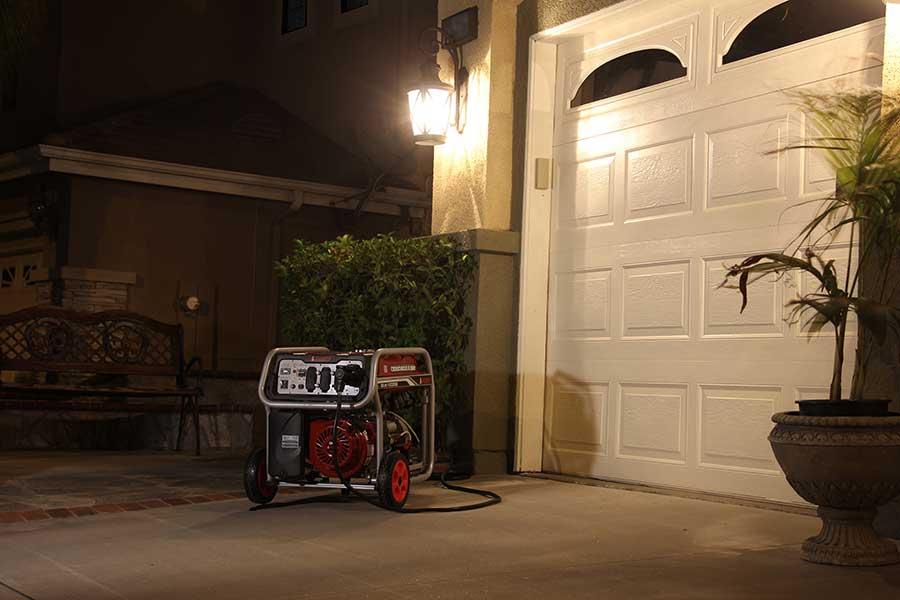
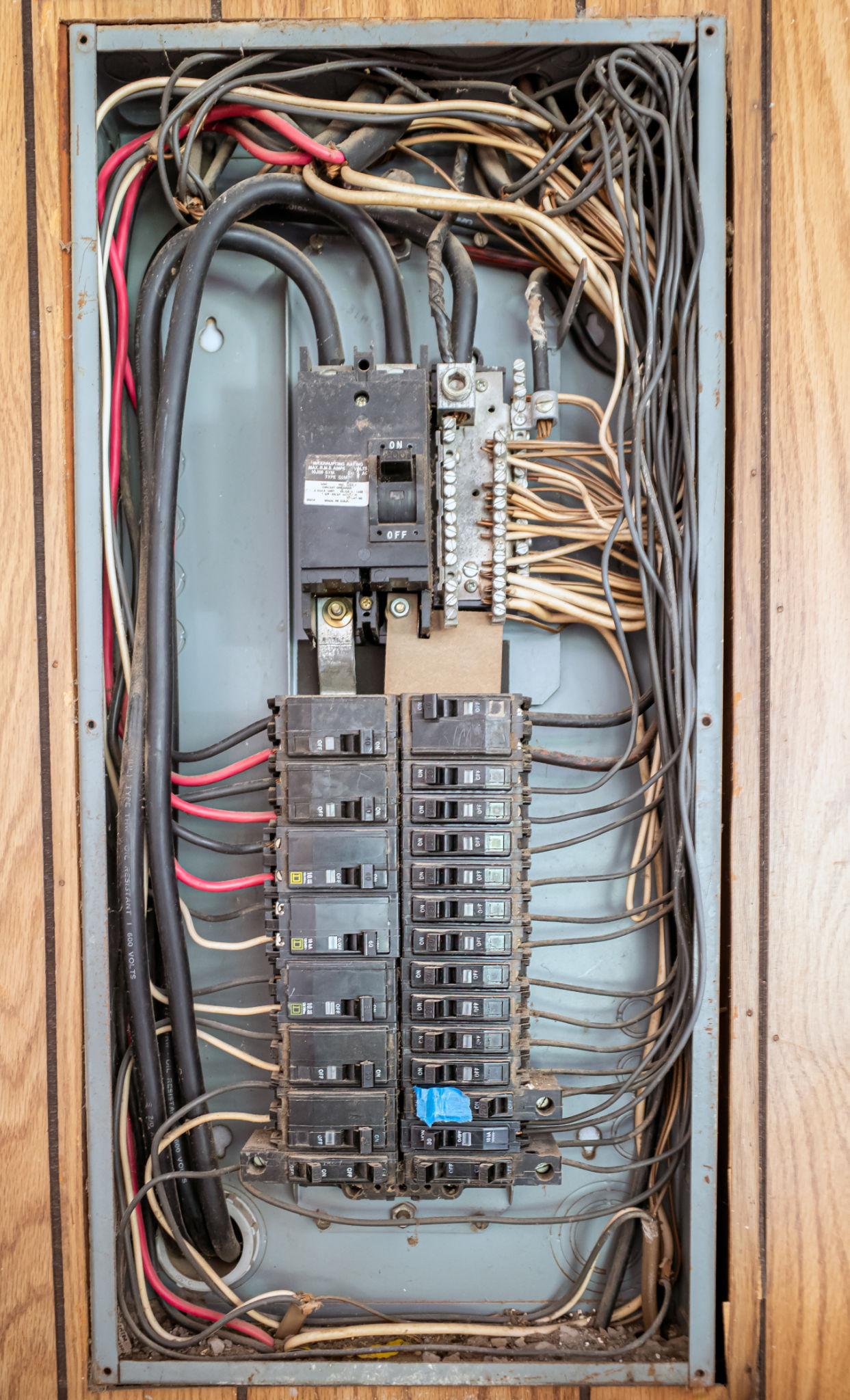
Simple takeaway: If you only want to get through a short outage with a few essentials, a temporary setup may be enough. If you want your home to function more normally during an outage, a panel-connected setup is usually the better path.
Side-by-Side Comparison
Option 1: Extension Cords
Extension cords are the simplest way to use a portable generator. You place the generator outside, start it, and run heavy-duty cords directly to the items you want to power.
Best for:
- Short outages
- Renters
- Basic emergency backup
- Powering only a few appliances
Pros
- Lowest upfront cost
- No electrician required
- Easy to understand
- Works for simple plug-in needs
Cons
- Messy and inconvenient
- Does not power house circuits through the panel
- Limited to whatever you can plug in directly
- Not ideal for furnaces, built-in lighting, or hardwired systems
Honest take: Extension cords are fine for a basic survival setup. But if you want your generator backup to feel like part of your house instead of a temporary workaround, they get old fast.
Option 2: Interlock Kit
An interlock kit lets you connect a portable generator to your electrical panel through a proper inlet box and breaker setup. It prevents the main breaker and generator breaker from being on at the same time.
Best for:
- Homeowners who want real circuit control
- Portable generator owners
- People who want the best balance of cost and capability
Pros
- Lets you power circuits through your panel
- More flexible than many transfer switch setups
- Cleaner and more practical than cords everywhere
- Often the best overall value
Cons
- Requires proper installation
- You still need to manage loads carefully
- Panel compatibility matters
- Can be confusing if you do not understand your circuits
Honest take: For many homeowners, an interlock kit is the sweet spot. It gives you a real backup power setup without the clutter and limitations of extension cords.
Option 3: Transfer Switch
A transfer switch is a dedicated setup that lets you move selected household circuits from utility power to generator power. It is often chosen for a clean, organized backup system focused on key essential circuits.
Best for:
- Homeowners who want a structured setup
- People backing up a fixed set of essentials
- Those who prefer simplicity over flexibility
Pros
- Clean and organized
- Easy to operate once installed
- Good for dedicated essential circuits
- Common professional solution
Cons
- Usually costs more
- Often limited to selected circuits only
- Less flexible if your priorities change later
- Expanding later may require more work
Honest take: A transfer switch is a good choice if you want a cleaner, more guided setup and already know exactly which circuits matter most.
Which One Should You Actually Use?
Use Extension Cords If…
- You only need temporary emergency power
- You are powering just a few plug-in items
- You want the lowest-cost option
- You are not ready for a permanent install
Use an Interlock Kit If…
- You want to power house circuits properly
- You want more flexibility during outages
- You want the best mix of value and capability
- You are serious about home backup with a portable generator
Use a Transfer Switch If…
- You want a dedicated and organized setup
- You only care about selected essential circuits
- You prefer straightforward operation
- You do not mind paying more for a cleaner install
How Long Will You Actually Run Your Generator?
One of the most overlooked factors when choosing a setup is runtime. Not just how powerful your generator is — but how long you realistically expect to use it during an outage.
Short Outages (A Few Hours)
If your outages are usually brief, and your goal is just to keep a refrigerator running, charge devices, and power a few essentials, extension cords are often enough.
Longer or Frequent Outages
If you live in an area with longer outages or want your home to function more normally during a blackout — running heat, sump pump, lights, and outlets — a panel-connected setup like an interlock kit becomes much more practical.
Simple rule:
Short outages → Extension cords
Longer or frequent outages → Interlock kit
Best Overall Choice for Most Homeowners
For most homeowners using a portable generator, the best overall option is usually:
Interlock Kit
Best mix of cost, circuit access, flexibility, and long-term usability.
Extension cords are fine for a basic emergency setup. Transfer switches are solid, but often less flexible. Interlocks usually land in the middle — and that is exactly why they work so well for so many homes.
One Important Reality Check
No connection method increases your generator’s wattage. Even if you choose the best setup, your generator still needs to be sized correctly for the loads you want to run.
A lot of “connection problems” are really generator sizing problems in disguise.
Related Guides
FAQ
Are extension cords safe for generator use?
They can be safe if you use properly rated heavy-duty cords and only power a few direct-plug items. They are not a replacement for a proper panel-connected home backup setup.
Is an interlock kit better than a transfer switch?
For many homeowners, yes. Interlocks often provide more flexibility and better value, while transfer switches are more structured and circuit-specific.
Can an interlock power the whole house?
It can give you access to many house circuits through the panel, but your generator still limits how much you can run at once.
What is the cheapest way to run a generator during an outage?
Extension cords are usually the cheapest option, but they are also the most limited and least convenient.