
Why Your Generator Isn’t Powering Your House (7 Common Mistakes + Fixes)
Written for homeowners using portable and standby generators — based on real-world troubleshooting scenarios.
Your generator is running… but nothing in your house works.
No lights. No fridge. No outlets.
This is one of the most common (and fixable) problems homeowners run into during outages. In this guide, we’ll break down exactly why your generator is running but not powering your house — and how to fix it safely.
- No connection to your electrical panel
- Main breaker not turned OFF
- No transfer switch or interlock installed
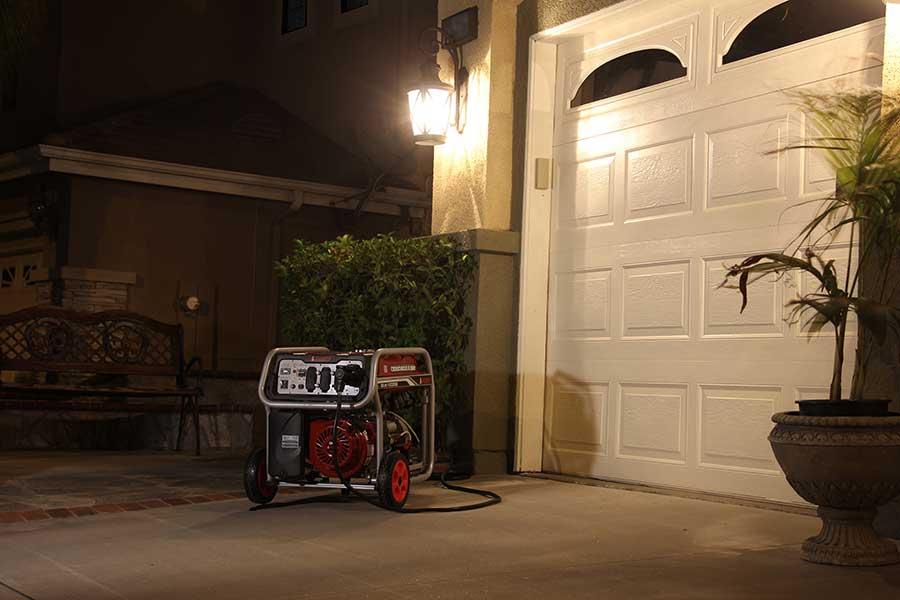
A generator may be running — but without proper setup, your house won’t receive power.
- Not connected to your electrical panel
- No transfer switch or interlock
- Breaker not switched correctly
- Generator overloaded
- Wrong extension cords
- Tripped breaker or GFCI
- Wiring or inlet issue
Here’s what a correct generator setup looks like:
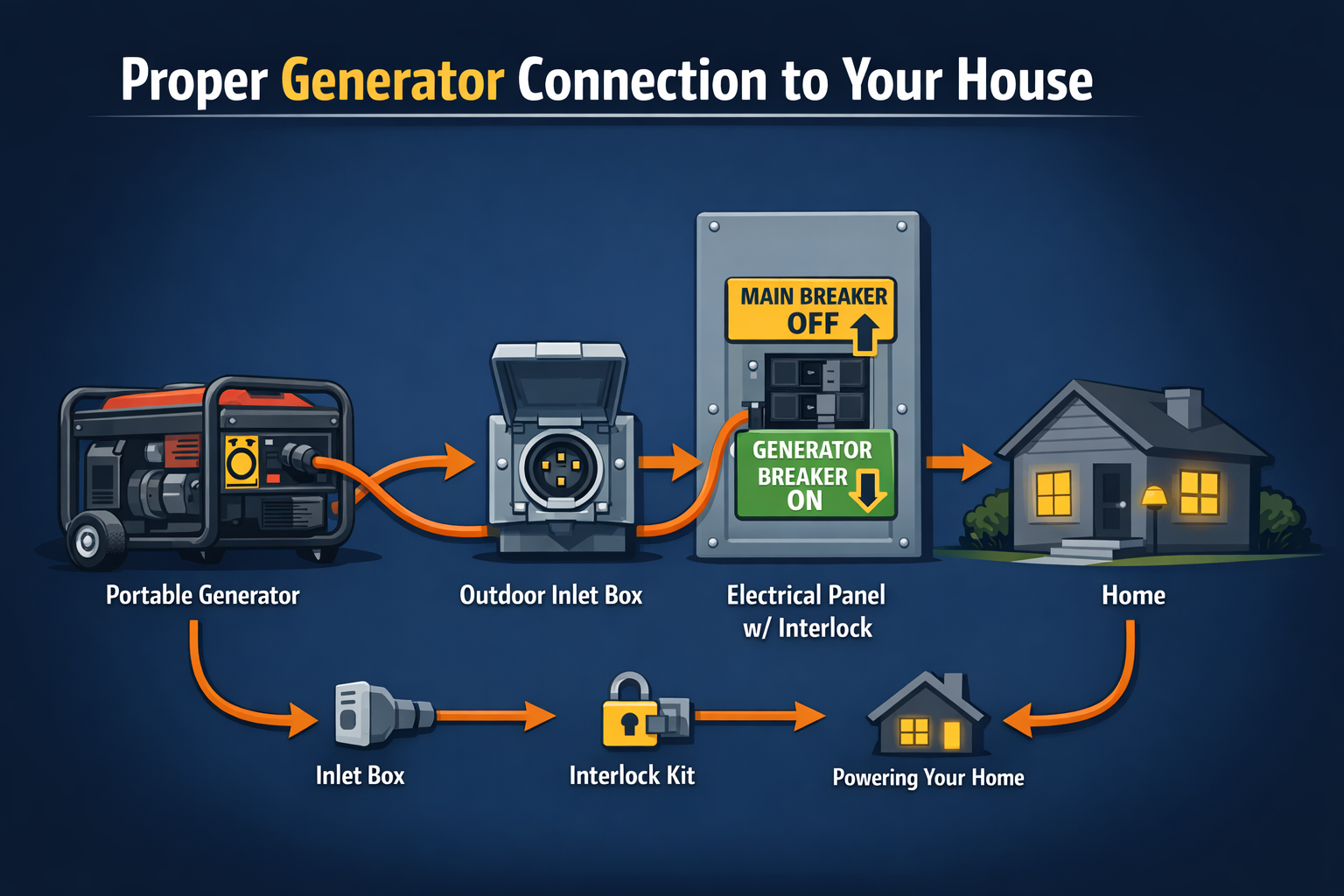
Correct setup: generator → inlet box → panel (interlock) → home circuits.
Wrong setup vs correct setup:
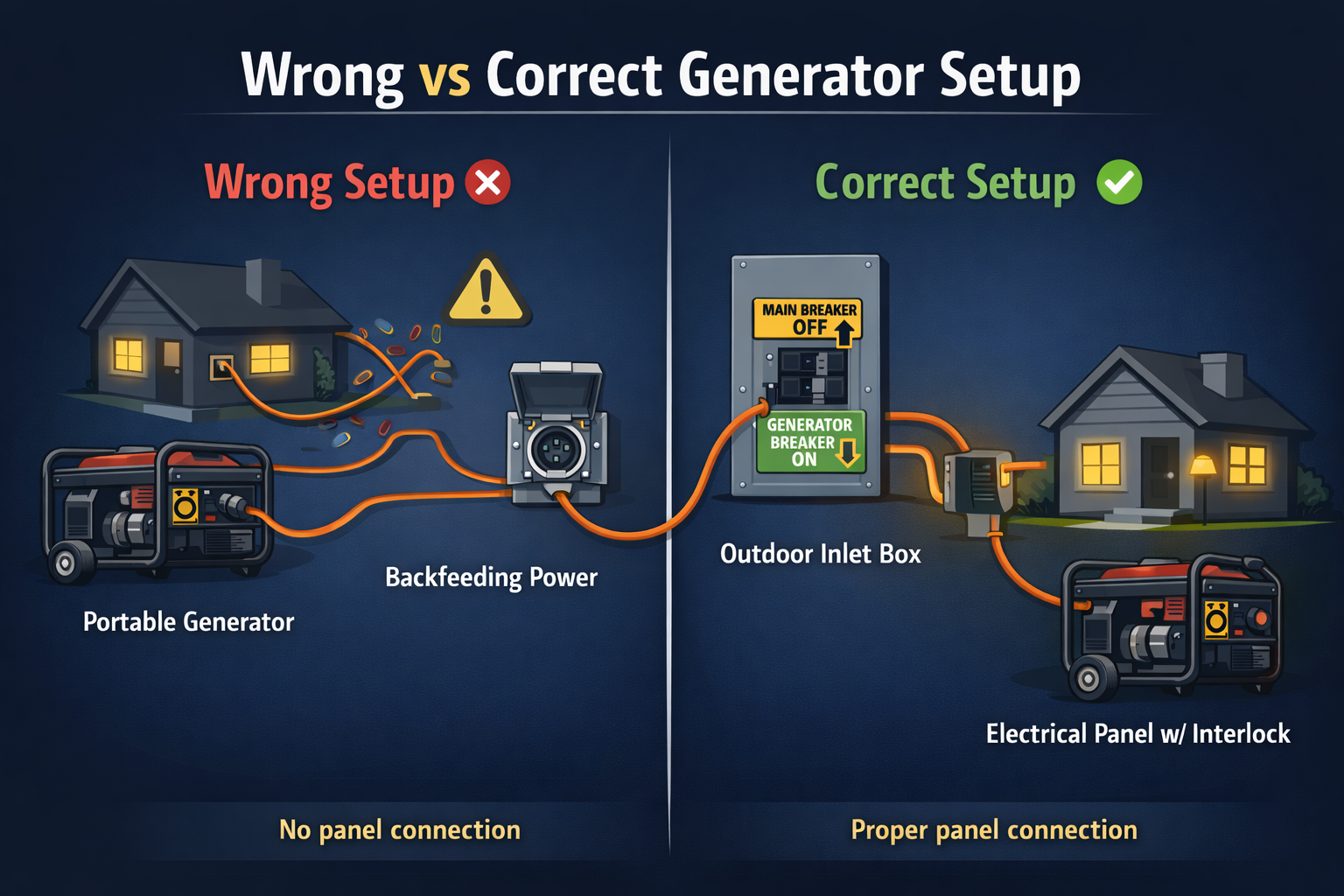
Left: incorrect setup (no panel connection or unsafe backfeeding). Right: correct setup powering your home safely.
If your setup looks like the left side, your house will not receive power — even if your generator is running.
| Setup Type | Powers House? | Safe? |
|---|---|---|
| Extension Cords | No | Yes |
| Interlock Kit | Yes | Yes |
| Backfeeding Without Proper Equipment | Sometimes | No |
Most “generator not working” issues come down to connection setup — not the generator itself.
7 Common Reasons Your Generator Isn’t Powering Your House
1. You’re Not Connected to Your Electrical Panel
Running extension cords only powers individual appliances — not your home.
Fix: Use an interlock kit, transfer switch, or inlet box to connect your generator properly.
Learn how to properly connect your generator here: How to Connect a Portable Generator to Your House
2. No Transfer Switch or Interlock Installed
Without a proper system, your generator can’t send power into your home circuits.
Fix: Install an interlock (budget-friendly) or transfer switch.
Still deciding between the two? Compare transfer switches vs interlocks here
If you’re leaning toward an interlock setup, read this interlock kit guide
Warning: Never backfeed power — it’s dangerous and illegal in most areas.
For the homeowner safety side of this, read: Start Here: Backup Power Safety & Codes
3. Breakers Are in the Wrong Position
This is one of the most common issues.
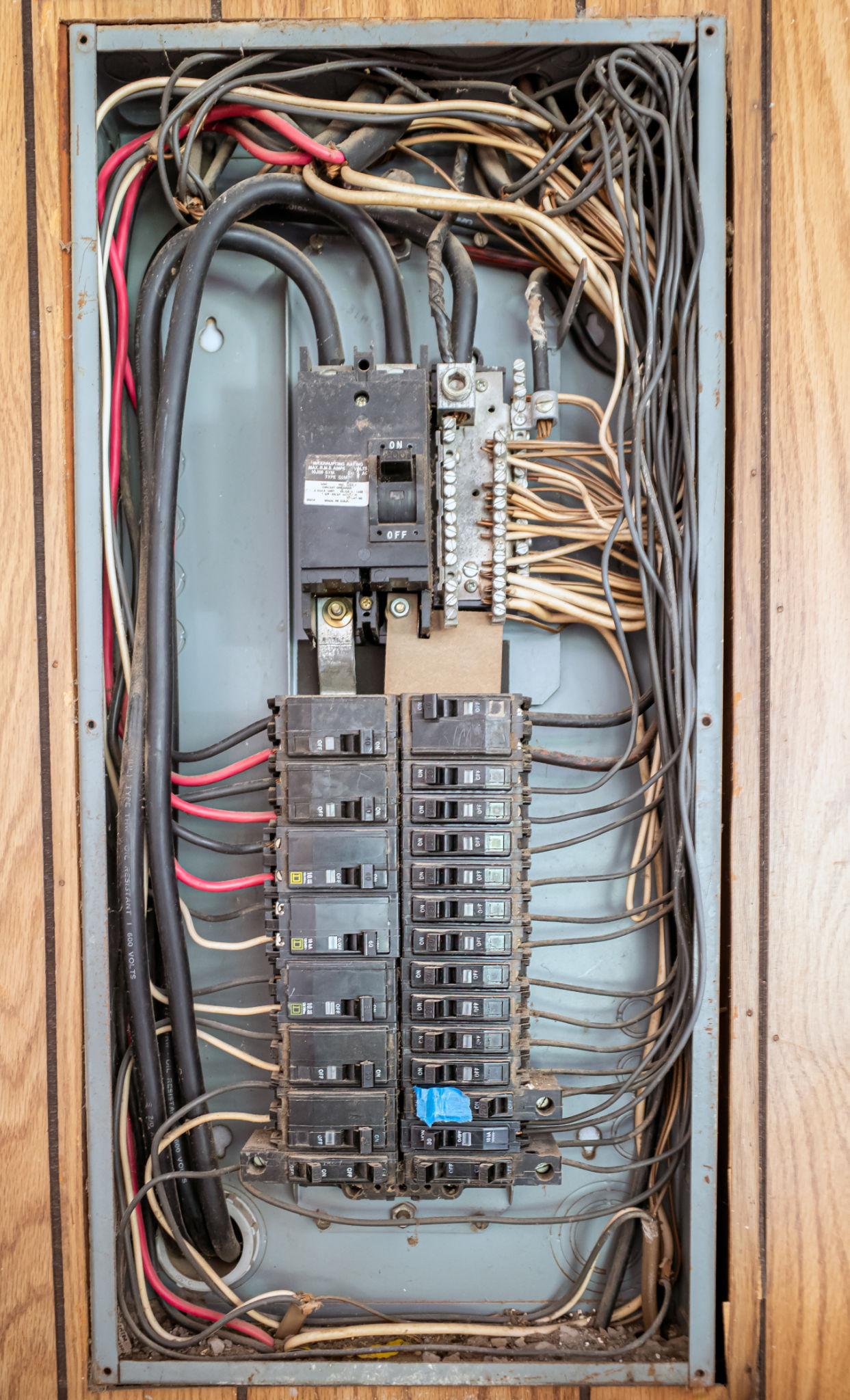
Correct breaker positioning is critical — main OFF, generator breaker ON.
Fix:
- Turn OFF your main breaker
- Turn ON your generator breaker
4. Your Generator Is Overloaded
Too many appliances can prevent your system from working properly.
Fix: Prioritize essential loads like your fridge, furnace, and lights.
Not sure how much power you need? Use this generator sizing guide
5. You’re Using the Wrong Extension Cords
Thin or long extension cords can cause voltage drop and prevent appliances from running properly.
Fix: Use heavy-duty 10-gauge or thicker cords and keep them as short as possible.
6. A Breaker or GFCI Has Tripped
Your generator may be running, but a tripped breaker or GFCI outlet can stop power from reaching your home.
Fix: Reset all breakers and GFCI outlets on both your generator and panel.
7. Faulty Inlet Box or Wiring Issue
Loose connections or incorrect wiring can block power transfer completely.
Fix: Inspect your inlet box and wiring, or contact an electrician if you are not sure what you’re looking at.
If your generator is running but nothing works, the issue is usually:
- You’re not connected through your panel
- Your breaker setup is incorrect
Quick Troubleshooting Checklist
- Is your generator running properly?
- Is it connected to your panel or just extension cords?
- Is your main breaker OFF?
- Is your generator breaker ON?
- Are you overloading it?
- Have any generator breakers or GFCI outlets tripped?
- Does your inlet box or panel wiring look loose or damaged?
Still stuck? Go through the full backup power troubleshooting triage guide .
Fix This the Right Way
If your generator isn’t powering your house, the issue is almost always the connection setup — not the generator itself. Fix it properly with a correct panel connection.
- ✔ Install an interlock kit (best value option)
- ✔ Use a proper inlet box connection
- ✔ Size your generator correctly to avoid overload
Still Not Working? Describe Your Setup
If your generator is running but your house still isn’t getting power, your issue is likely specific to your setup.
Post your situation below and include:
- Generator model and wattage
- How you’re connected (extension cords, inlet, interlock, transfer switch)
- What is or isn’t working
- Any breaker positions or errors you’re seeing
I review real scenarios and update this guide based on common issues — your question may help others too.