
Choosing the correct breaker for a generator inlet is not as simple as matching it to the generator’s advertised wattage. The breaker, inlet box, generator cord, conductors, panel, and generator output must all work together as one properly rated system.
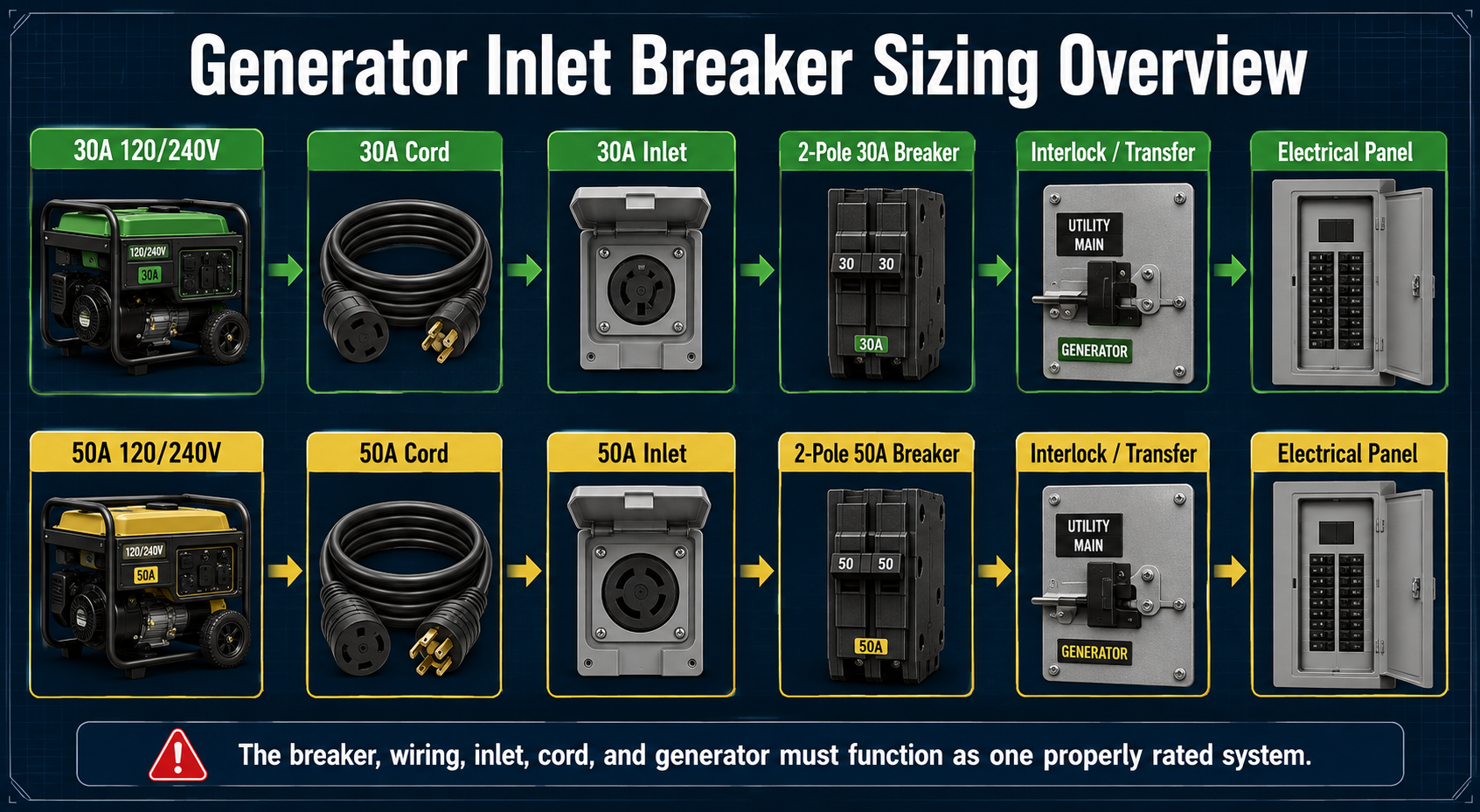
Generator Inlet Breaker Size Chart
| Generator Inlet | Typical Breaker | Maximum Theoretical Power | Common Connection |
|---|---|---|---|
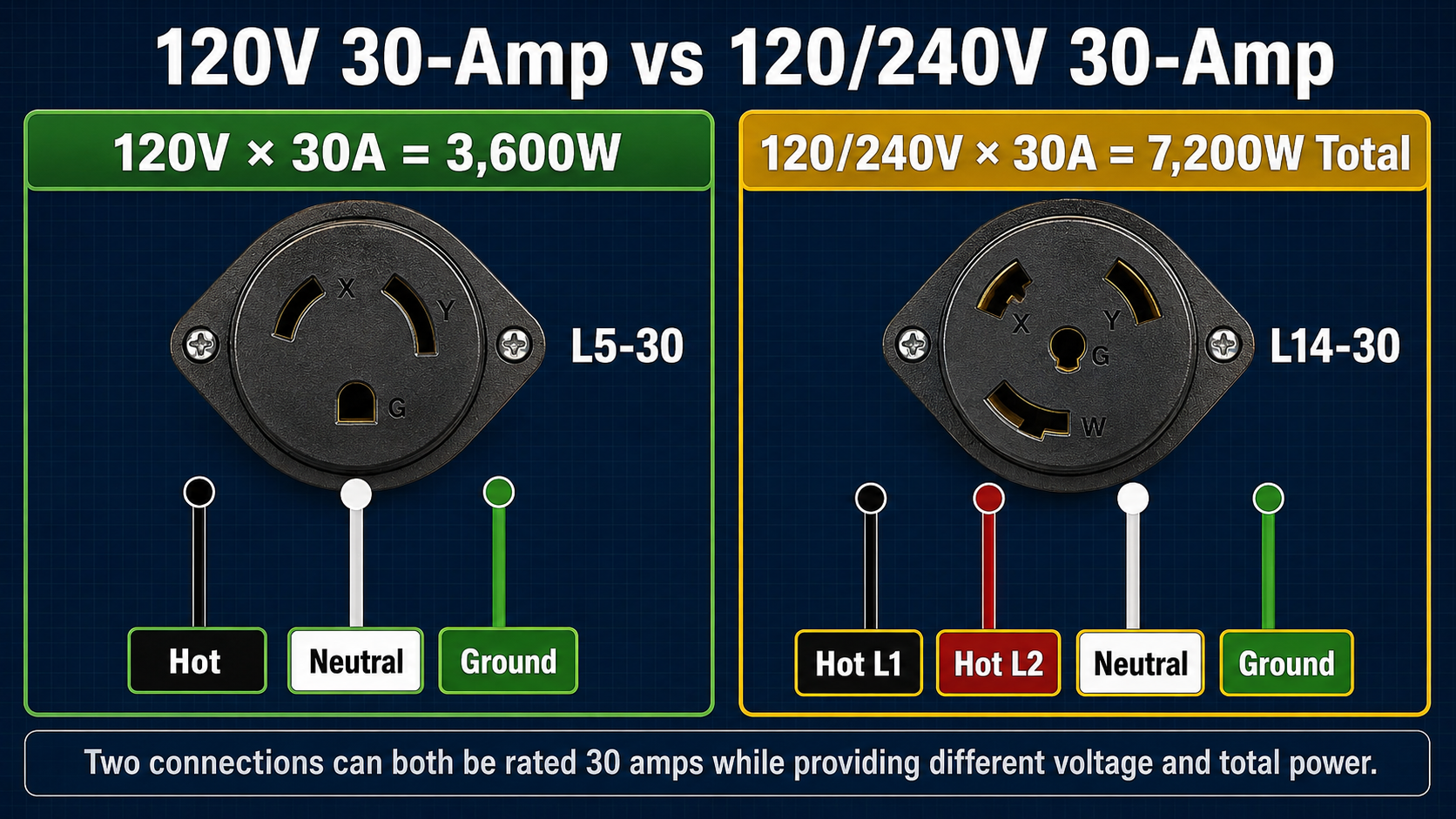
| 30A, 120V | Single-pole 30A | 3,600 watts | L5-30 |
| 30A, 120/240V | Two-pole 30A | 7,200 watts | L14-30 |
| 50A, 120/240V | Two-pole 50A | 12,000 watts | 14-50 or listed 50A configuration |
These wattage figures represent the mathematical maximum based on voltage multiplied by amperage. Your generator may produce less power than the inlet and breaker can theoretically carry.
What Size Breaker Is Used With a 30-Amp Generator Inlet?
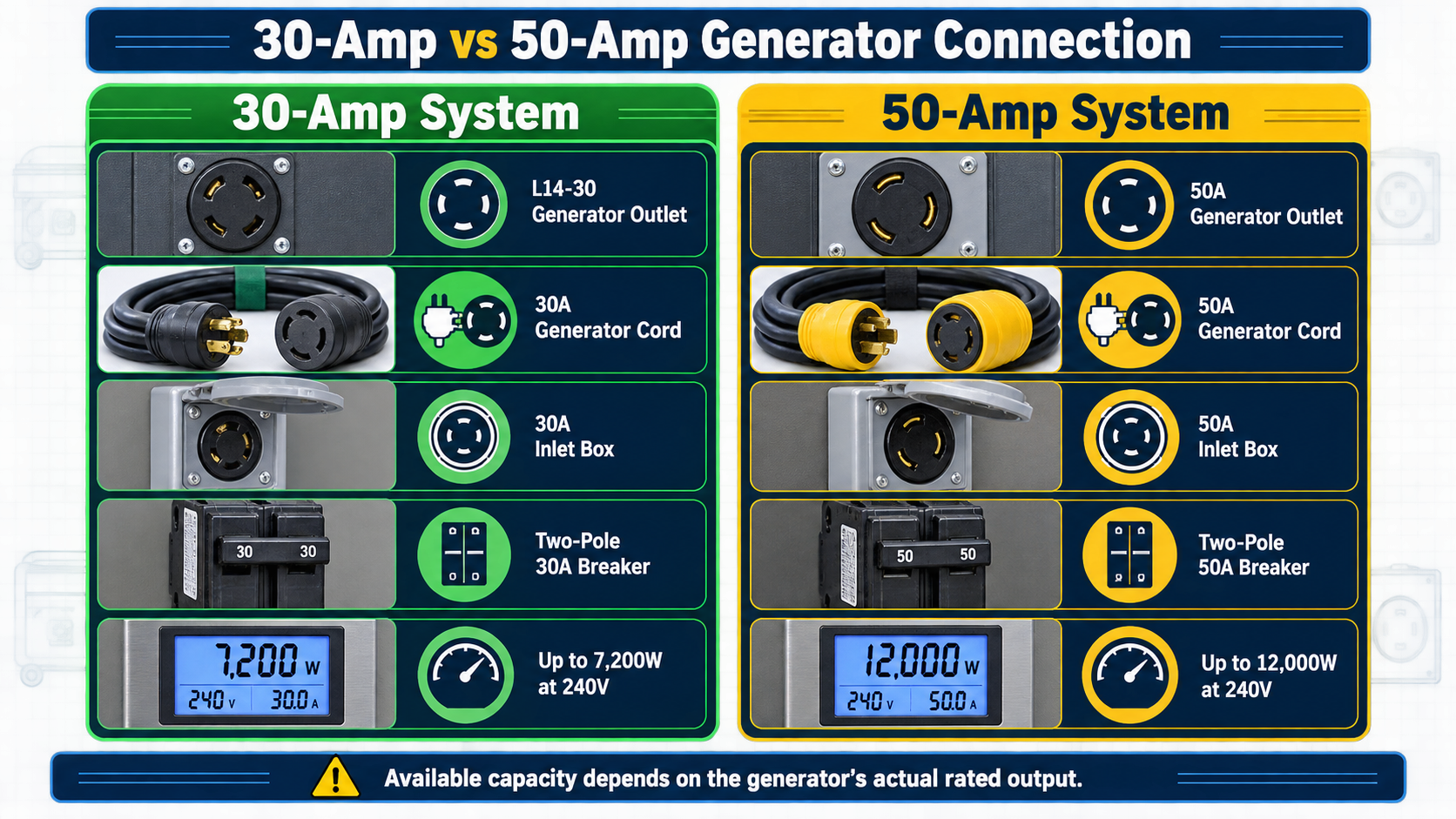
A four-wire, 30-amp, 120/240-volt generator inlet is normally connected to a two-pole 30-amp breaker. This configuration is commonly associated with an L14-30 generator connection.
Because the connection provides two 120-volt legs, it can supply both 120-volt and 240-volt household loads when used with compatible transfer equipment and a generator that produces 120/240-volt split-phase power.
240 volts × 30 amps = 7,200 watts
This does not mean every 30-amp generator can continuously produce 7,200 watts. Always use the generator’s rated running wattage—not only its starting or surge wattage—to plan your normal loads.
What Size Breaker Is Used With a 50-Amp Generator Inlet?
A 50-amp, 120/240-volt generator inlet is normally connected to a two-pole 50-amp breaker. At its full rating, this type of connection can carry up to 12,000 watts.
240 volts × 50 amps = 12,000 watts
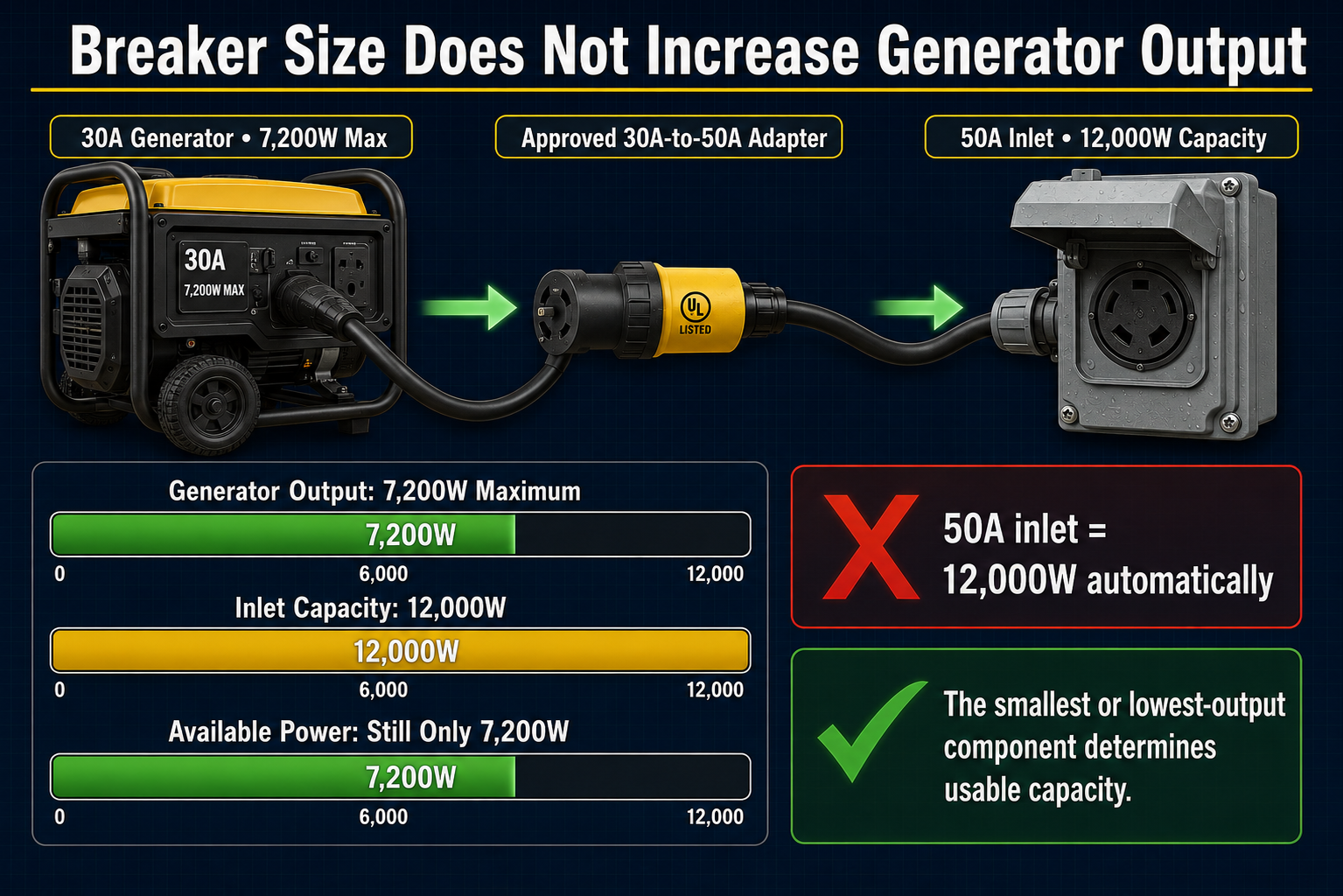
Installing a 50-amp inlet does not automatically provide 12,000 watts. The generator must actually be capable of supplying that amount of power. A 7,500-watt generator connected to a 50-amp inlet is still limited to approximately 7,500 watts.
Should the Breaker Match the Generator or the Inlet?
The generator breaker is part of a complete electrical system. Its rating must be coordinated with all of the following:
- The generator inlet rating
- The conductor ampacity
- The generator cord and plug configuration
- The generator’s output receptacle and onboard protection
- The transfer switch or interlock arrangement
- The electrical panel manufacturer and breaker type
- Local electrical-code and inspection requirements
A breaker must never be oversized beyond what the connected conductors and equipment can safely carry. For example, a 50-amp breaker should not be used to protect wiring and an inlet rated for only 30 amps.
Does a Generator Breaker Need to Be Two-Pole?
A generator breaker normally needs to be two-pole when the generator supplies 120/240-volt split-phase power to both sides of a residential electrical panel.
A two-pole breaker connects the generator’s two hot conductors to the two panel bus legs. This allows properly configured 120-volt loads on either leg and compatible 240-volt loads to receive power.
A 120-volt-only generator is different. It should not be treated as a 120/240-volt source or connected in a way that improperly energizes both panel legs. Special equipment or a different backup-power design may be required.
Can a 30-Amp Generator Connect to a 50-Amp Inlet?
It may be possible to connect a 30-amp generator to a properly installed 50-amp inlet using a correctly wired, listed adapter. The generator will still be limited by its own output rating and onboard overcurrent protection.
The adapter does not turn a 30-amp generator into a 50-amp generator. It merely allows two differently configured connections to interface.
Avoid homemade adapters, missing conductors, improper neutral connections, or cables that connect incompatible 120-volt and 120/240-volt systems. The complete arrangement should be reviewed by a qualified electrician.
What Wire Size Is Used for a Generator Inlet?
You may see simplified recommendations stating that 30-amp circuits use 10-gauge copper and 50-amp circuits use 6-gauge copper. Those numbers can be useful starting points, but they should not be treated as universal installation instructions.
The correct conductor size depends on:
- The conductor material
- The insulation and temperature rating
- The terminal ratings of the connected equipment
- The wiring method and cable type
- The length of the circuit and possible voltage drop
- Whether conductors are grouped with other current-carrying conductors
- Local code amendments and manufacturer instructions
Why Does the Generator Breaker Keep Tripping?
A generator breaker may trip even when the listed running wattages appear to fit within the generator’s capacity. Common causes include:
- Too many loads running simultaneously
- High starting surge from a well pump, sump pump, refrigerator, furnace blower, or air conditioner
- Uneven loading between the two 120-volt legs
- A short circuit or ground fault
- A damaged or incorrectly wired generator cord
- A loose connection inside the inlet, panel, or transfer equipment
- An incorrect breaker installed in the electrical panel
Turn off large loads before transferring to generator power. After the generator is connected and stable, restore essential circuits one at a time.
Common Generator Breaker Mistakes
- Installing a breaker based only on generator surge wattage
- Using a 50-amp breaker with 30-amp wiring or equipment
- Assuming every breaker fits every panel from the same brand
- Connecting a 120-volt-only generator as though it produces 120/240 volts
- Using a homemade male-to-male generator cord
- Installing a generator breaker without an approved transfer switch or panel-specific interlock
- Ignoring neutral and grounding requirements
- Increasing breaker size because the original breaker keeps tripping
Breaker Compatibility Matters
The breaker must be specifically compatible with the electrical panel. Breakers that appear physically similar are not necessarily interchangeable.
Check the panel label, manufacturer documentation, breaker series, and interlock instructions before purchasing equipment. A generator interlock also depends on the correct breaker location and panel configuration.
30-Amp vs 50-Amp Generator Setup
| Feature | 30-Amp System | 50-Amp System |
|---|---|---|
| Maximum at 120/240V | 7,200 watts | 12,000 watts |
| Typical breaker | Two-pole 30A | Two-pole 50A |
| Common use | Essential household loads | Larger loads and greater flexibility |
| Load management | More important | Still required |
| Typical generator class | Mid-sized portable generator | Large portable generator |
Frequently Asked Questions
Can I use a 50-amp breaker with a 30-amp generator?
A 30-amp generator may sometimes supply a professionally designed 50-amp inlet system through a listed adapter, but it remains limited by its own output and onboard protection. A 50-amp breaker must not be used to protect 30-amp conductors or a 30-amp inlet.
Will a larger breaker give my generator more power?
No. A larger breaker cannot increase generator output. It can create a dangerous condition if the conductors or equipment are not rated for the larger breaker.
Is a 30-amp generator connection 3,600 or 7,200 watts?
A 30-amp connection at 120 volts is 3,600 watts. A 30-amp connection supplying 120/240-volt split-phase power can provide up to 7,200 watts across both legs.
Do I need an interlock with a generator breaker?
When a generator breaker feeds the main electrical panel, an approved transfer method is required to prevent the utility supply and generator supply from energizing the panel simultaneously. This is commonly accomplished with a panel-specific interlock or a transfer switch.
Can I install the generator breaker myself?
Installing a generator breaker involves work inside an electrical panel, where dangerous voltage may remain present even when the main breaker is switched off. Permits and inspections may also be required. A licensed electrician can verify breaker compatibility, conductor sizing, grounding, neutral handling, and the required transfer equipment.
Final Answer
A standard 30-amp, 120/240-volt generator inlet normally uses a two-pole 30-amp breaker. A standard 50-amp inlet normally uses a two-pole 50-amp breaker.
However, the breaker cannot be selected independently. It must be compatible with the panel and properly coordinated with the inlet, conductors, generator cord, generator output, and transfer equipment.