
Generator Extension Cord vs Interlock vs Transfer Switch: Which One Should You Actually Use?
When the power goes out, most homeowners want the same thing: keep the refrigerator cold, keep the lights on, and maybe run the furnace, sump pump, or well pump. But the way you connect your generator matters just as much as the generator itself.
The three most common options are extension cords, a generator interlock kit, or a transfer switch. Each one has a different cost, safety level, installation method, and practical use.
| Method | Best For | Approx. Cost | Powers Hardwired Circuits? | Main Advantage | Main Drawback |
|---|---|---|---|---|---|
| Extension Cords | Small emergency loads | Lowest | No | Simple and cheap | Limited and messy |
| Interlock Kit | Portable generator powering selected home circuits | Medium | Yes | Flexible circuit control | Must match your panel exactly |
| Transfer Switch | Dedicated emergency circuits | Medium to high | Yes | Simple operation | Less flexible than an interlock |
Cheapest
Extension cords are usually the lowest-cost way to use a portable generator for basic appliances.
Best Value
An interlock kit is often the best balance of cost, flexibility, and whole-panel access.
Simplest
A transfer switch is easier for many homeowners because circuits are clearly selected ahead of time.
Safest Path
Any panel-connected setup should use approved equipment and proper installation.
Option 1: Using Extension Cords With a Portable Generator
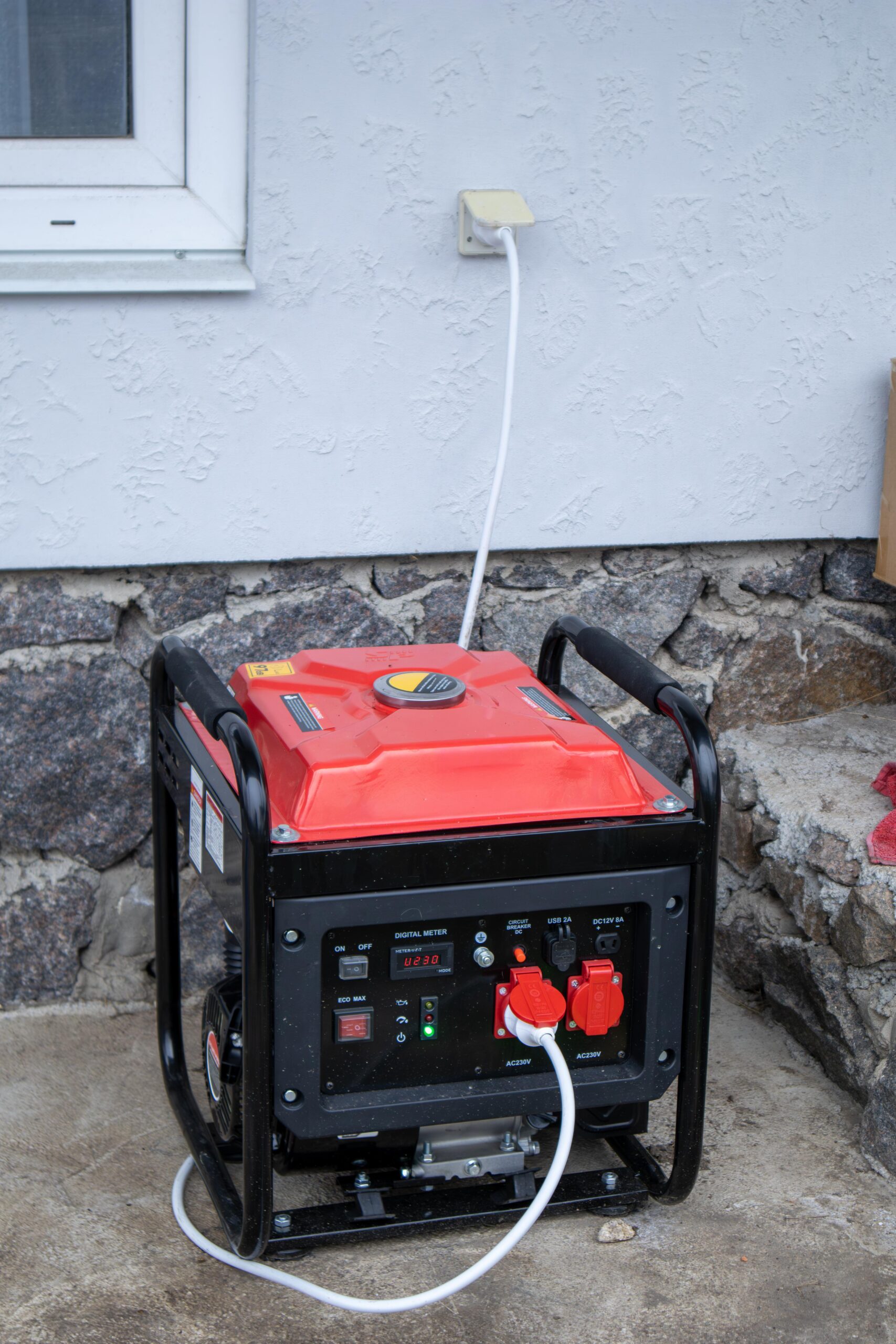
Extension cords are the most basic way to use a portable generator. You place the generator outside, run properly rated cords from the generator, and plug in individual appliances or devices.
Extension cords can work well for:
- Refrigerators
- Freezers
- Phone chargers
- Lamps
- Fans
- Small electronics
The downside
Extension cords do not power your breaker panel. That means they usually cannot power hardwired circuits like a furnace, well pump, central lighting circuits, or many sump pump setups unless those appliances have a normal plug connection.
Option 2: Generator Inlet Box
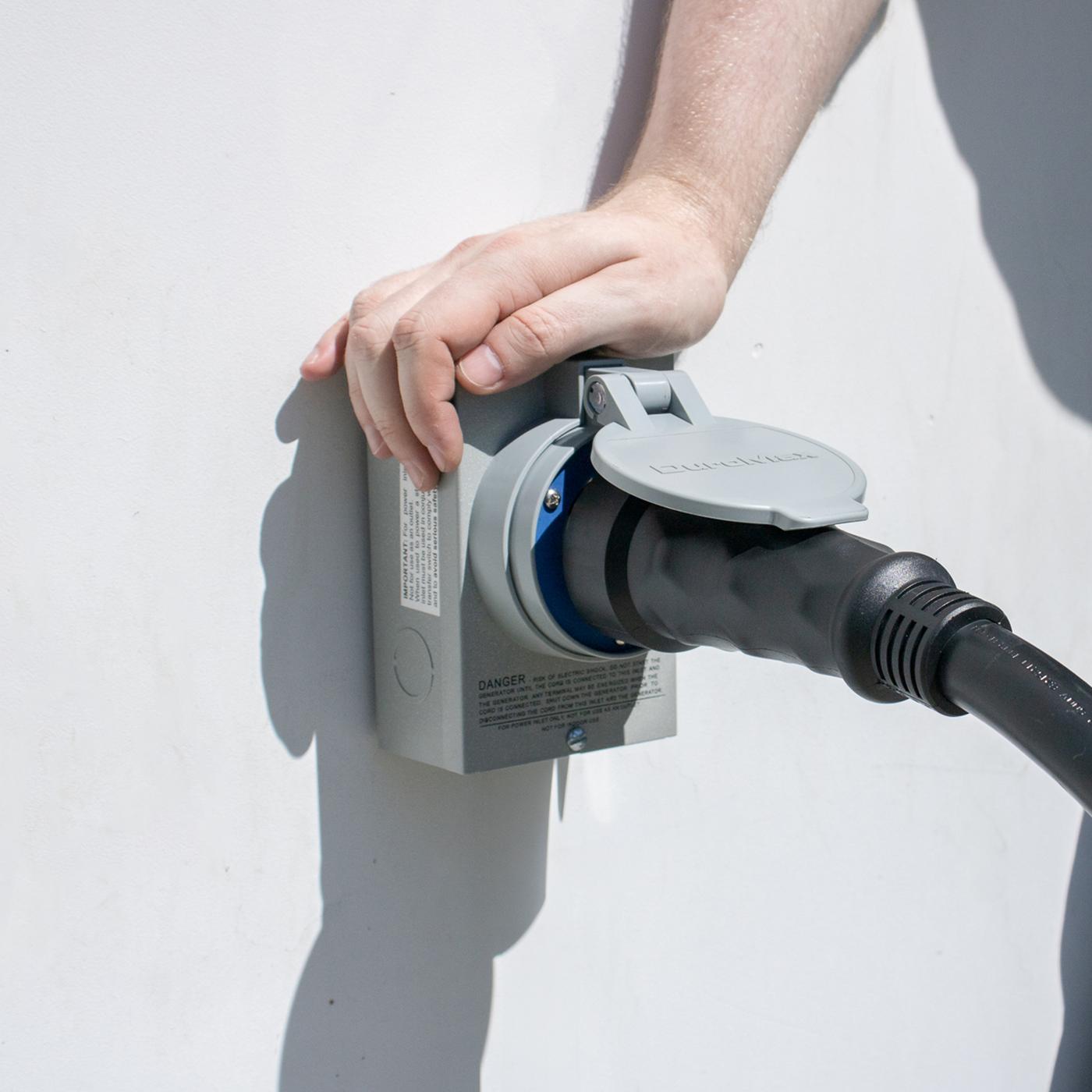
A generator inlet box is not usually the entire system by itself. Instead, it is the exterior plug-in point that connects your portable generator to an interlock kit or transfer switch setup.
This is important because homeowners often ask, “Where does the generator actually plug into the house?” In many permanent portable-generator setups, the answer is the inlet box.
A generator inlet box usually connects to:
- A generator interlock kit
- A manual transfer switch
- A properly sized generator cord
- A dedicated generator breaker or transfer equipment
Option 3: Generator Interlock Kit
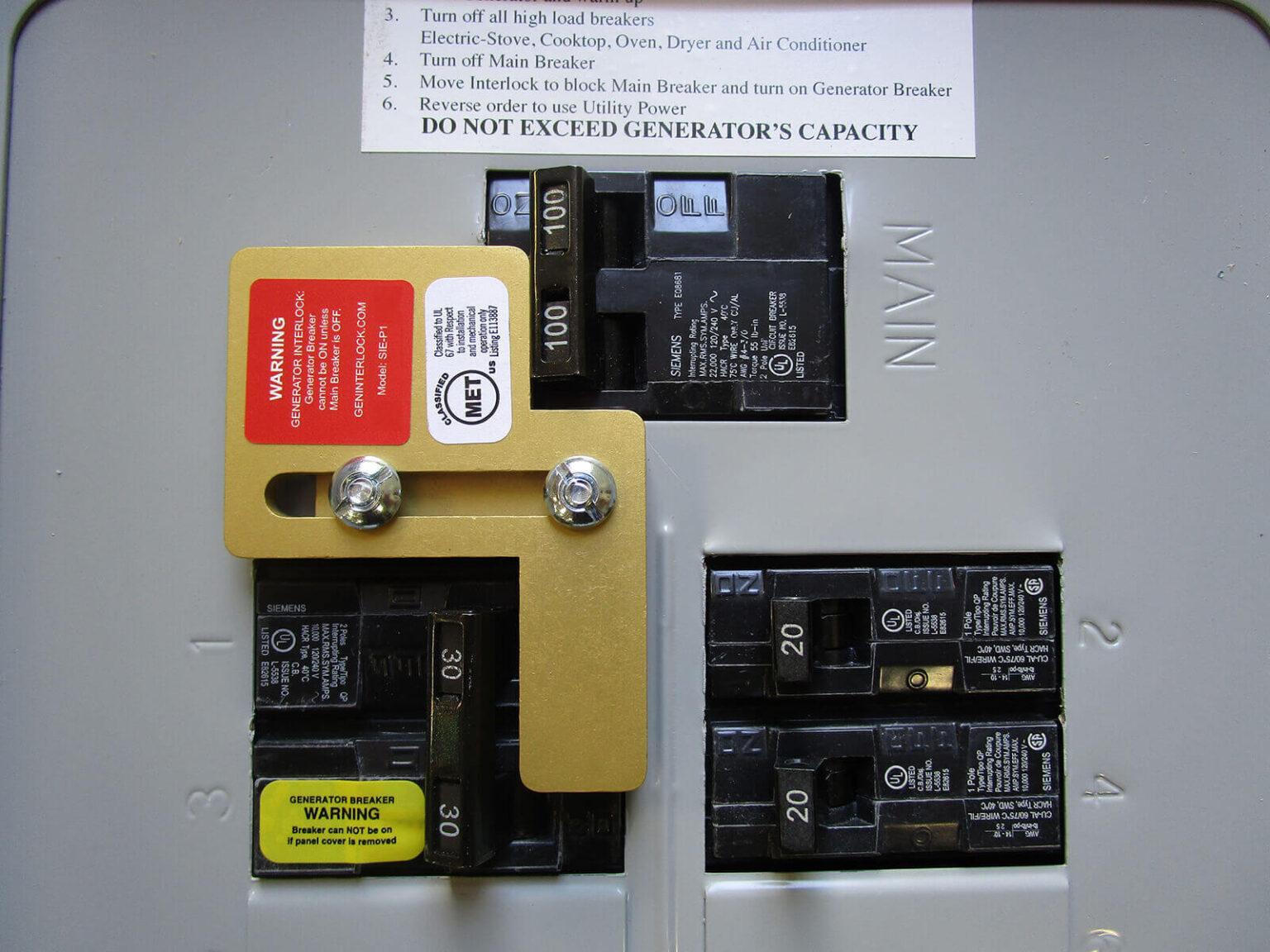
A generator interlock kit is a mechanical safety device installed on the main electrical panel. Its job is simple: it prevents the main breaker and generator breaker from being on at the same time.
When installed correctly, an interlock kit allows a portable generator to feed selected circuits in your home through the breaker panel. You decide which circuits to turn on, based on generator capacity.
Interlock kits are good for:
- Running selected household circuits
- Powering hardwired loads like certain furnaces or well pumps
- Using a portable generator more like a whole-home backup source
- Giving homeowners more flexibility than a transfer switch
The downside
Interlock kits are panel-specific. A Siemens kit will not automatically fit every Siemens panel. A Square D Homeline kit will not fit every Square D panel. You need the correct kit for the exact panel model, breaker layout, main breaker position, and approved breaker type.
Option 4: Manual Transfer Switch
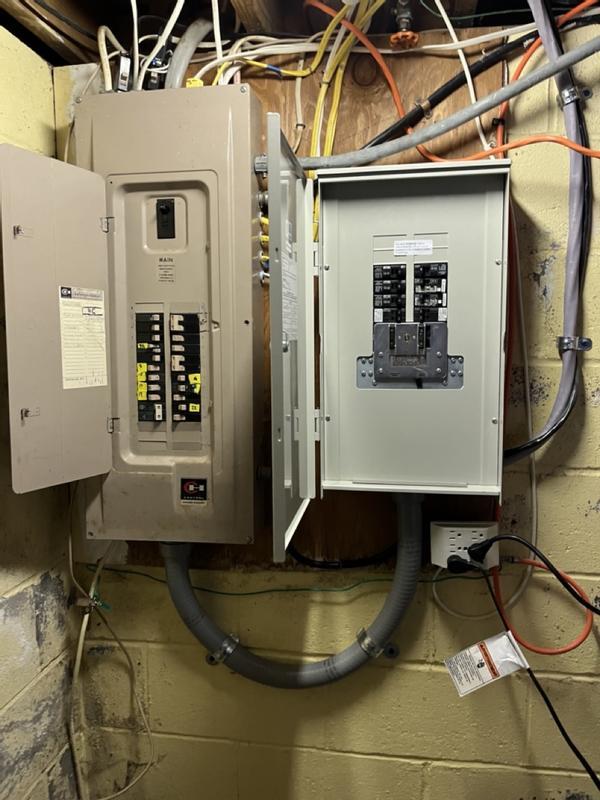
A manual transfer switch is a dedicated device that connects your generator to specific emergency circuits. Instead of choosing circuits from your main panel during an outage, the transfer switch is usually wired ahead of time for the circuits you want available.
Transfer switches are good for:
- Homeowners who want simple operation
- Pre-selected emergency circuits
- Less confusion during an outage
- Cleaner generator operation for non-technical users
The downside
A transfer switch is usually less flexible than an interlock kit. You are typically limited to the circuits connected to the transfer switch. If you later want different circuits available, changes may require additional electrical work.
Which Generator Connection Method Should You Choose?
Use extension cords if:
- You only need to run a refrigerator, freezer, lamps, chargers, or small appliances
- You want the cheapest setup
- You are comfortable managing cords during an outage
- You do not need to power hardwired circuits
Use an interlock kit if:
- You want to power selected circuits from your main panel
- You want more flexibility than a transfer switch
- You have a portable generator large enough for household loads
- You can verify the correct kit for your exact electrical panel
Use a transfer switch if:
- You want a simple emergency setup
- You only need selected circuits
- You want less decision-making during an outage
- You prefer a dedicated generator control box
The Biggest Mistake: Backfeeding the House
The most dangerous mistake is trying to power a home by plugging a generator into a dryer outlet, range outlet, or homemade cord. This is commonly called backfeeding, and it can create serious shock, fire, and utility-line hazards.
A safe generator setup should isolate the utility power from the generator power. That is the purpose of an approved interlock kit, transfer switch, or other approved transfer equipment.
Final Recommendation
For very basic emergency power, extension cords can be enough. For a more capable portable-generator setup, an interlock kit with an inlet box is often the best value. For homeowners who want a simpler pre-selected circuit setup, a transfer switch can be a cleaner option.
The right answer depends on your generator size, your electrical panel, the circuits you want to power, your budget, and whether you want temporary appliance power or a more complete home backup setup.
Need Help Choosing the Right Generator Setup?
Before buying an interlock kit, transfer switch, or inlet box, make sure your panel, generator size, and target circuits all match your backup-power goal.
Get Generator Installation QuotesDisclaimer: This article is for educational purposes only and is not electrical installation advice. Always follow local code, manufacturer instructions, and consult a licensed electrician before installing generator connection equipment.