
What Size Generator Do I Need for a 2,000 Sq Ft House? (2026 Guide)
Most 2,000 sq ft homes need 7,000 to 12,000 watts depending on what you want to power during an outage. If you only want essentials like a refrigerator, lights, and a few outlets, a smaller portable generator may work. If you want to run central AC or more of the house, you will usually need more capacity.
⚡ Quick Answer: Generator Size Chart
| Home Setup | Recommended Generator Size |
|---|---|
| Essentials only (fridge, lights, outlets) | 5,000 – 7,500 watts |
| Partial home backup | 7,500 – 10,000 watts |
| Whole home backup | 10,000 – 15,000+ watts |
The right generator size depends on which appliances you want to run, how many circuits you want to cover, and whether you are planning for essentials only or broader whole-home backup.
🔌 What Uses the Most Power in a 2,000 Sq Ft Home?
A few major appliances account for most of the power demand in a typical home. That is why generator sizing is less about square footage alone and more about what you want to keep running during an outage.
- Air conditioner: 3,000 – 4,000+ watts
- Refrigerator: 600 – 800 watts
- Furnace blower: 600 – 1,000 watts
- Lights and outlets: 500 – 1,000 watts
- Well pump (if applicable): 1,000+ watts
- Microwave, sump pump, freezer, and garage door opener can also add to your load
The goal is not always to power everything at once. In many homes, the smartest move is to identify your must-run appliances first and size the generator around them.
🧮 Example: Power Needs for a 2,000 Sq Ft House
Here is a simple example of what a 2,000 sq ft home might need during a power outage:
- Refrigerator: 700W
- Central air conditioner: 3,500W
- Lights and outlets: 1,000W
- Furnace blower: 800W
Total running watts: around 6,000 to 8,000 watts
That is why many homeowners with a 2,000 sq ft house end up looking at the 7,500 to 10,000 watt range for dependable partial-home backup. If you want more comfort, more circuits, or automatic operation, you may need to move higher.
🏠 Portable vs Whole House Generators
The best size also depends on the type of backup system you want:
- Portable generators: Lower upfront cost, manual setup, best for selected appliances or essential circuits
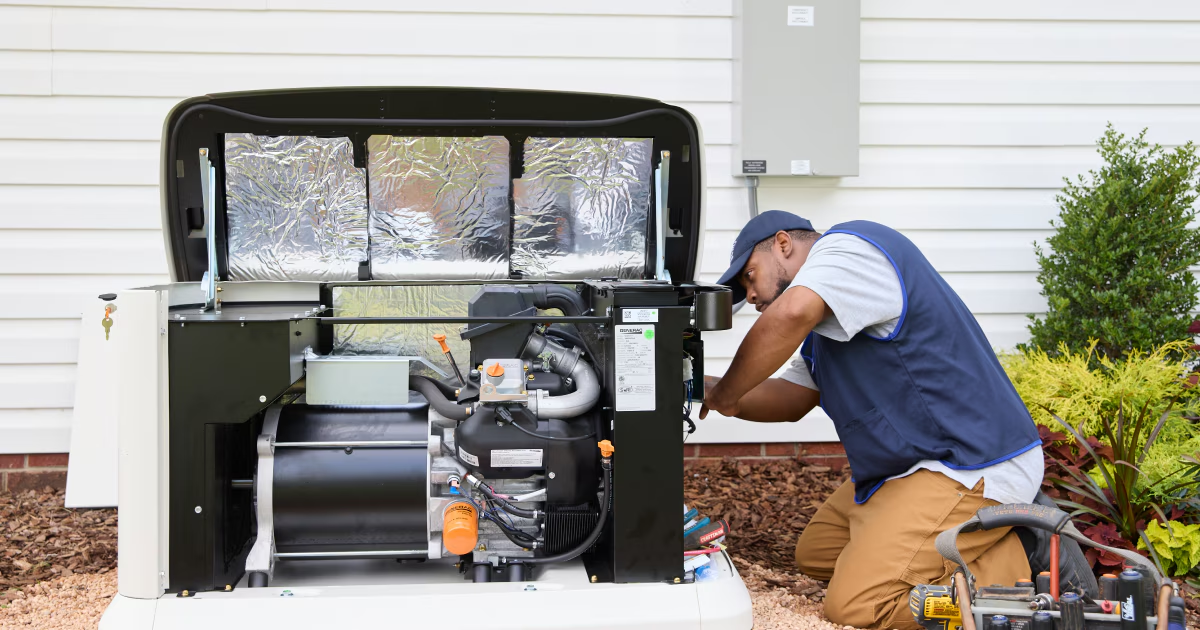
- Whole house standby generators: Higher upfront cost, automatic operation, better for seamless backup and broader home coverage
For many 2,000 sq ft homes, a portable generator is enough for essentials. A standby generator makes more sense if you want automatic transfer, less hassle, and better whole-home support.
👉 Read more: Portable Generator vs Whole House Generator
🛒 Best Generator Options for a 2,000 Sq Ft House
Budget Option: Essentials Backup
If your goal is to keep the refrigerator running, power a few lights, charge devices, and support a handful of key circuits, a portable generator in the 7,500W range is often enough for a 2,000 sq ft home.
Check PriceMid-Range Option: More Flexibility
If you want a bit more breathing room for larger appliances or additional circuits, a generator in the 9,000W to 10,000W range is often a better fit. This range is popular for homeowners who want stronger backup without jumping all the way to a full standby system.
Compare OptionsPremium Option: Automatic Home Backup
If convenience matters most, a standby generator can automatically keep your home powered during an outage. This option makes the most sense for homeowners who want less manual setup and a more seamless whole-home backup experience.
View Standby Generators⚠️ Common Mistakes to Avoid
- Buying a generator that only covers running watts and not startup watts
- Assuming square footage alone determines the right size
- Trying to run central AC and multiple large appliances on a small portable generator
- Forgetting to plan for transfer switch, fuel type, and extension-cord limitations
A little extra capacity can make a big difference in real-world use. Undersizing is one of the most common mistakes homeowners make.
📊 Not Sure What Size You Need?
Every home is different. The most accurate way to size a generator is to add up the appliances and systems you actually want to run during an outage.
Use the Generator Sizing Guide →