
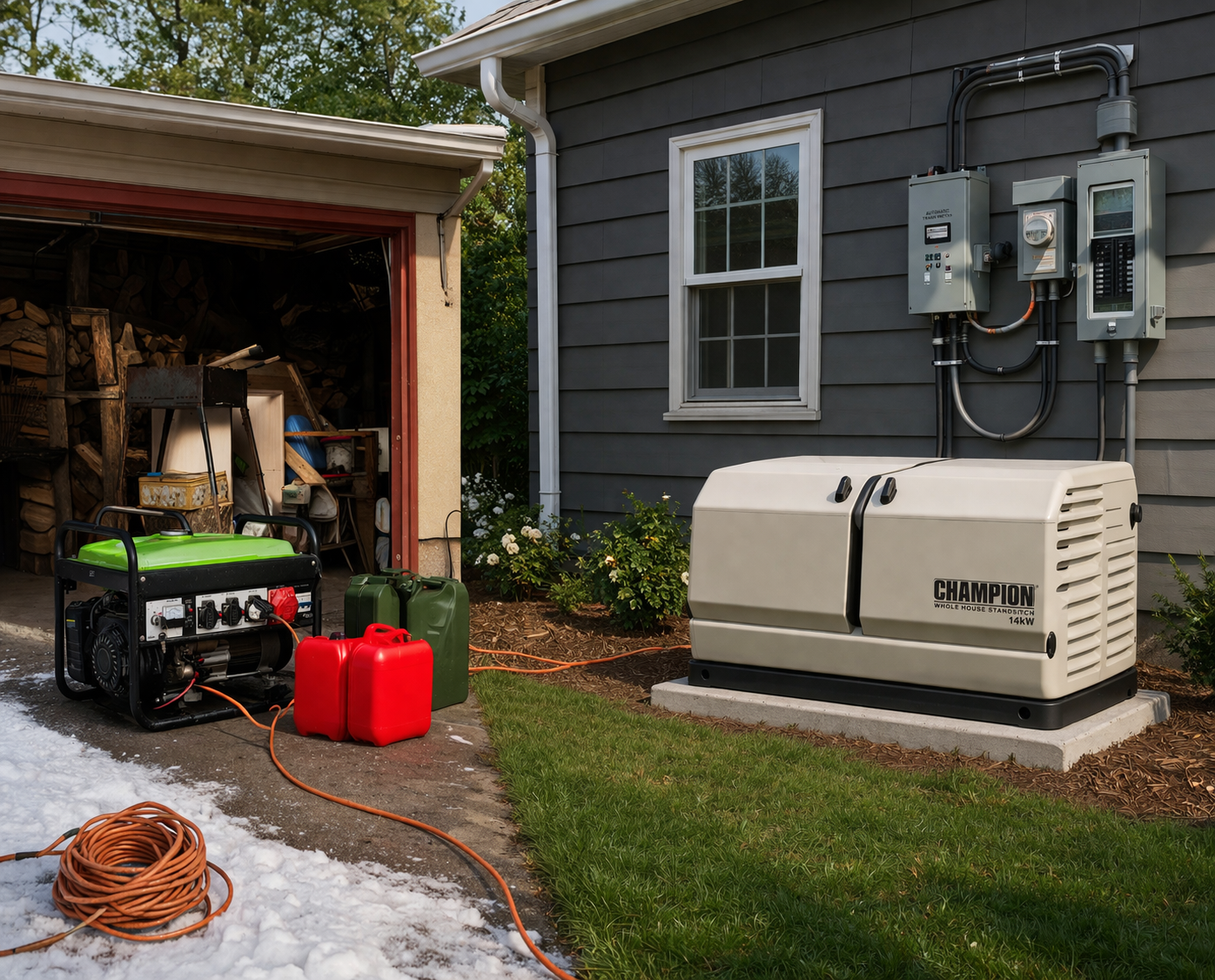
Portable Generator vs Whole House Generator: Which One Makes Sense for Your Home?
Most homeowners do not need the most expensive backup power setup. They need the setup that matches their home, outage risk, budget, and tolerance for inconvenience. That is where this decision usually gets messed up. Some people overspend on a standby system they may not actually need. Others buy a portable generator without understanding what it will and will not realistically run.
This guide compares portable generators and whole house generators in plain English so you can choose the backup power setup that actually fits your home.
The Short Answer
Best for lower cost and essential loads
A portable generator makes sense if you mainly want to keep essentials running and you are comfortable with manual setup, fuel management, and some inconvenience during an outage.
Best for convenience and automatic backup
A whole house generator makes sense if you want automatic protection, less disruption, broader coverage, and have the budget for a permanent installed system.
What Is a Portable Generator?
A portable generator is a movable generator that usually runs on gasoline, propane, or sometimes both. It must be started manually, connected safely, and refueled during an outage. Portable generators are the lower-cost entry point into backup power and can be a strong option for homeowners who only need to keep essential loads running.
Portable generators are usually best for:
- homeowners on a tighter budget
- short outages
- powering essentials instead of the whole home
- people willing to set up and manage the generator manually
What Is a Whole House Generator?
A whole house generator, often called a standby generator, is permanently installed outside the home and connected to the electrical system through an automatic transfer switch. It usually runs on natural gas or propane and starts automatically when utility power goes out.
Whole house generators are usually best for:
- homeowners who want automatic backup power
- longer outages
- homes with medical, heating, cooling, or well pump needs
- people who value convenience more than manual setup
The Biggest Difference
The biggest difference is not just power. It is automation and lifestyle.
A portable generator is a manual backup solution. A whole house generator is an automatic backup solution. That one difference affects almost everything else: price, convenience, fuel strategy, installation cost, maintenance expectations, and what parts of the house stay live during an outage.
1. Cost Comparison
Portable generators are far cheaper upfront. Many good units can keep essentials running without forcing you into a major home infrastructure project. But the real cost can also include cords, fuel storage, maintenance items, and a safe connection method like an inlet with an interlock or transfer switch.
Whole house generators cost much more because you are paying for the generator itself, the automatic transfer switch, electrical labor, gas work, permits, and installation complexity. A standby unit is a home upgrade, not just a product purchase.
Bottom line on cost: If budget is your main concern, portable wins by a mile. If convenience and automatic protection matter more than price, whole house starts making a lot more sense.
2. Convenience Comparison
You have to move it into position, start it manually, connect it safely, monitor fuel, refuel during the outage, and shut it down properly. That may be fine during a short daytime outage, but it gets old fast during freezing weather, overnight outages, storms, or when you are away from home.
A standby generator is built for convenience. Utility power goes out, the generator starts automatically, the transfer switch shifts the load, and your selected circuits or even the whole home stay powered. That is the real value: less disruption.
Bottom line on convenience: Portable generators require work. Whole house generators are built to remove work.
3. What Can Each One Realistically Power?
A portable generator can often run essential loads like a refrigerator, freezer, furnace blower, sump pump, some lights, internet equipment, and a few convenience items. Larger portable units can do more, but many homeowners still overestimate what they can power all at once.
A whole house generator is designed to power either the entire home or a selected set of priority circuits automatically. This becomes more valuable in larger homes, homes with central air, well pumps, multiple refrigerators, medical equipment, or people who simply do not want to juggle loads during an outage.
Bottom line on power: Portable usually means essentials plus load management. Whole house usually means broader coverage with less juggling.
4. Fuel and Runtime
Portable generators usually run on gasoline, propane, or dual-fuel setups. That gives flexibility, but it also means fuel storage and refueling become part of your outage plan. During longer outages, fuel logistics stop being a detail and start becoming the job.
Whole house generators usually run on natural gas or propane. If connected to natural gas, the convenience is hard to beat because you do not have to refuel manually. Propane standby systems can also work very well, but runtime depends on tank size and how much load you are carrying.
Bottom line on fuel: Portable generators are more hands-on. Whole house generators are more seamless, especially on natural gas.
5. Noise, Maintenance, and Durability
Portable units can be louder, especially open-frame models. They also demand regular exercise, oil changes, fuel management, and attention to carburetor problems if gasoline sits too long. Whole house generators also need maintenance, but they are built for permanent use and usually perform automatic exercise cycles.
Neither option is maintenance-free. The difference is that whole house systems are usually built for a more integrated and durable long-term role.
6. Installation and Safety
Portable generators can be used safely, but only if the setup is safe. That means no dangerous backfeeding, no indoor use, proper cords, proper inlet setups, and safe transfer methods like an interlock or transfer switch.
Whole house generators require professional installation and usually permits, but once installed they give you a cleaner, more permanent backup solution with fewer opportunities for homeowner error during the outage itself.
Bottom line on safety: Portable generators are cheaper, but safety depends heavily on setup and homeowner behavior. Whole house systems cost more, but the finished system is more streamlined.
7. Which One Makes Sense for Your Home?
A portable generator makes more sense if:
- your outages are occasional
- you mainly want to protect essentials
- your budget is limited
- you are comfortable with manual setup
- you do not need automatic power when you are away
A whole house generator makes more sense if:
- outages happen often or last a long time
- you want automatic backup power
- your home has critical systems that must stay live
- you have the budget for a permanent installed system
- convenience matters a lot to you
My Honest Recommendation
Most homeowners should not jump straight to a whole house generator unless they clearly need one. For many people, a properly sized portable generator with a safe connection setup is the better value.
But if you have repeated outages, a larger home, well water dependency, medical needs, or a very low tolerance for disruption, a whole house generator stops being a luxury and starts becoming a practical upgrade.
Final verdict: Choose a portable generator if you want the most affordable way to keep essentials running and you are comfortable managing the outage manually. Choose a whole house generator if you want automatic protection, broader home coverage, and the least disruption during outages.
Still Not Sure?
Before you buy anything, figure out what your home actually needs to run during an outage. That will usually make the portable vs whole house decision much clearer.