SOLAR PANEL BUYING & COMPATIBILITY GUIDE
Can You Use Any Solar Panel With a Portable Power Station?
A third-party solar panel may cost less or fit your space better than the power-station brand’s panel. But a matching plug and the right advertised wattage do not establish compatibility. You need to compare the complete electrical specifications and connection requirements.
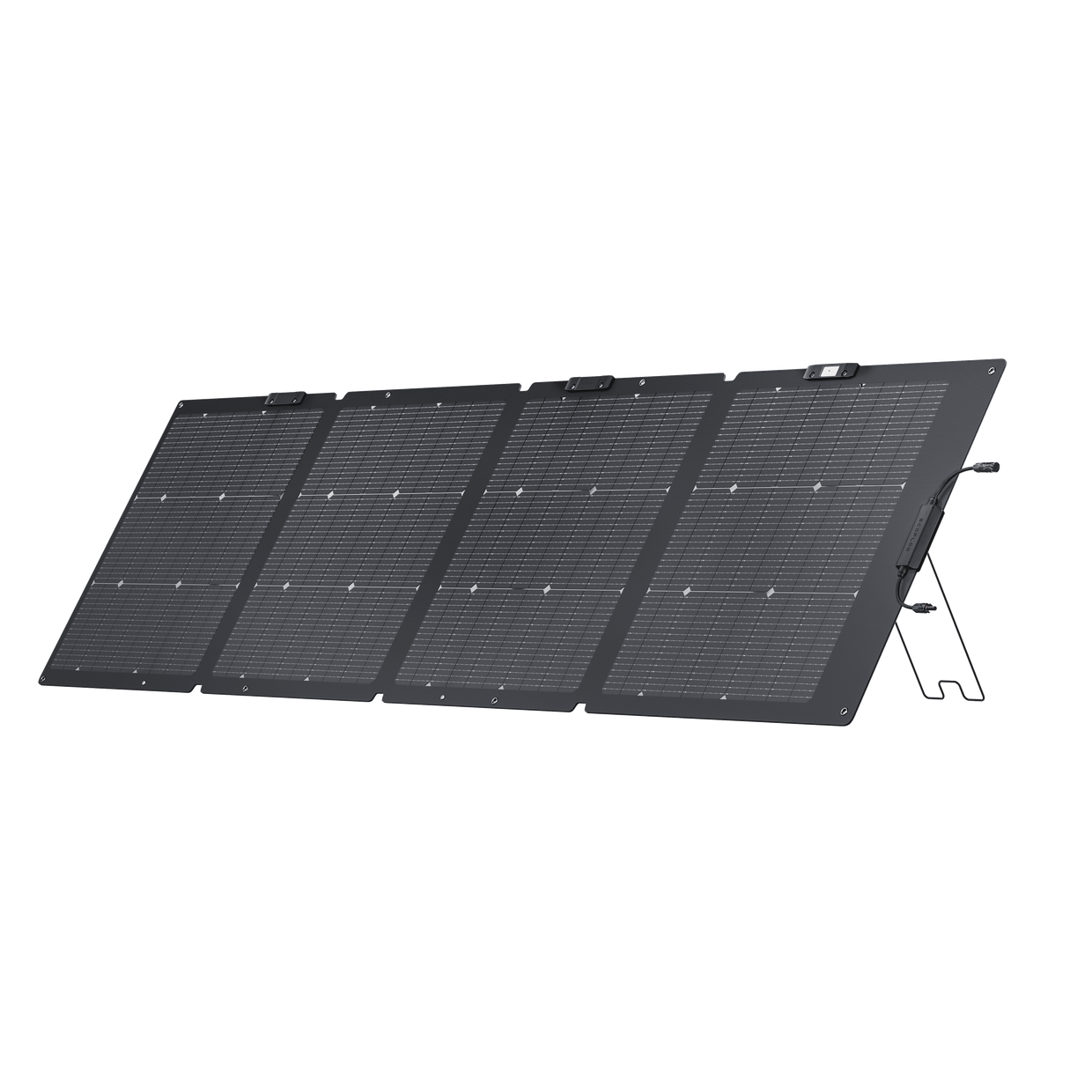
1. Identify the Exact Power Station and Input Port
Find the manual for the model, regional version, and revision you own. Similar product names can have different input specifications.
Record the solar operating range, startup requirements, absolute maximum voltage, input current, any maximum array short-circuit current, and allowed connected panel power. Identify the approved cable and port.
A shared car/solar input may behave differently with different cables. If the station has multiple inputs, check whether each has its own rating or whether a combined limit applies. Do not assume sockets are interchangeable.
2. Read More Than the Panel’s Wattage
| Specification | What it describes | Compatibility check |
|---|---|---|
| Voc | Open-circuit voltage. | Maximum array voltage, corrected for cold conditions. |
| Vmp | Voltage at maximum power. | Supported operating/tracking range. |
| Imp | Current at maximum power. | Operating-current requirements and limits. |
| Isc | Short-circuit current. | Maximum permitted array Isc and protection design. |
| Rated watts | Output under specified test conditions. | Allowed array power and realistic charging expectations. |
A panel marketed as “12V” does not produce a constant 12V. Use the actual Voc and Vmp values. Likewise, a larger wattage label does not tell you whether voltage or current is suitable.
3. Voltage Must Fit in Cold and Hot Conditions
The array must stay below the station’s maximum permitted voltage while meeting its startup and operating requirements. Do not compare maximum voltage only with Vmp; open-circuit voltage matters.
Cold cells generally increase Voc. Use the panel’s temperature coefficient and the required design-temperature method. Hot conditions can reduce operating voltage, which matters when an array is close to the minimum input requirement.
Combining panels changes the calculation. Series adds voltage; parallel adds current for matching panels. Read Series vs. Parallel Solar Panels for a Portable Power Station .
4. Check Current and Panel-Power Allowances Separately
Some controllers limit the current they draw. That does not automatically permit an array of any size. Maximum allowed array Isc, cable ratings, connector ratings, and connected panel-power restrictions remain separate checks.
Only overpanel when the station manufacturer explicitly permits the proposed arrangement. If the manual lists accepted operating current but leaves permissible array current unclear, request clarification.
Do not multiply maximum voltage by maximum current and assume that result is the permitted solar wattage. A manufacturer may specify a lower charging-power limit or a separate array-power allowance.
5. A Plug Adapter Does Not Solve Electrical Mismatch
Confirm the connector type, dimensions, mating family, polarity, and cable rating. Similar-looking barrel plugs or solar connectors may have different details.
An ordinary passive adapter changes the physical connection. It does not safely reduce excess voltage, reverse a design mismatch, or provide missing overcurrent protection.
Follow manufacturer guidance on mating connector brands. Stäubli warns that physically connectable third-party parts are not automatically compatible with its original MC4 connectors.
6. A Hypothetical Compatibility Check
Suppose a fictional station permits 15–60V operating input, a 60V absolute maximum, 12A operating input, 15A maximum array Isc, and 300W of connected panels.
A fictional 200W panel has Vmp 36V, Voc 44V, Imp 5.56A, and Isc 6A.
| Check | Finding |
|---|---|
| Operating voltage | 36V fits the stated range; verify hot-condition operation. |
| Open-circuit voltage | 44V is below 60V at its rated condition; cold correction still required. |
| Current | Listed Imp and Isc fit the fictional limits. |
| Panel power | 200W fits the stated 300W allowance. |
| Connector and polarity | Not established by these numbers; must be verified. |
| Two panels in series | 88V rated Voc exceeds 60V. Do not connect. |
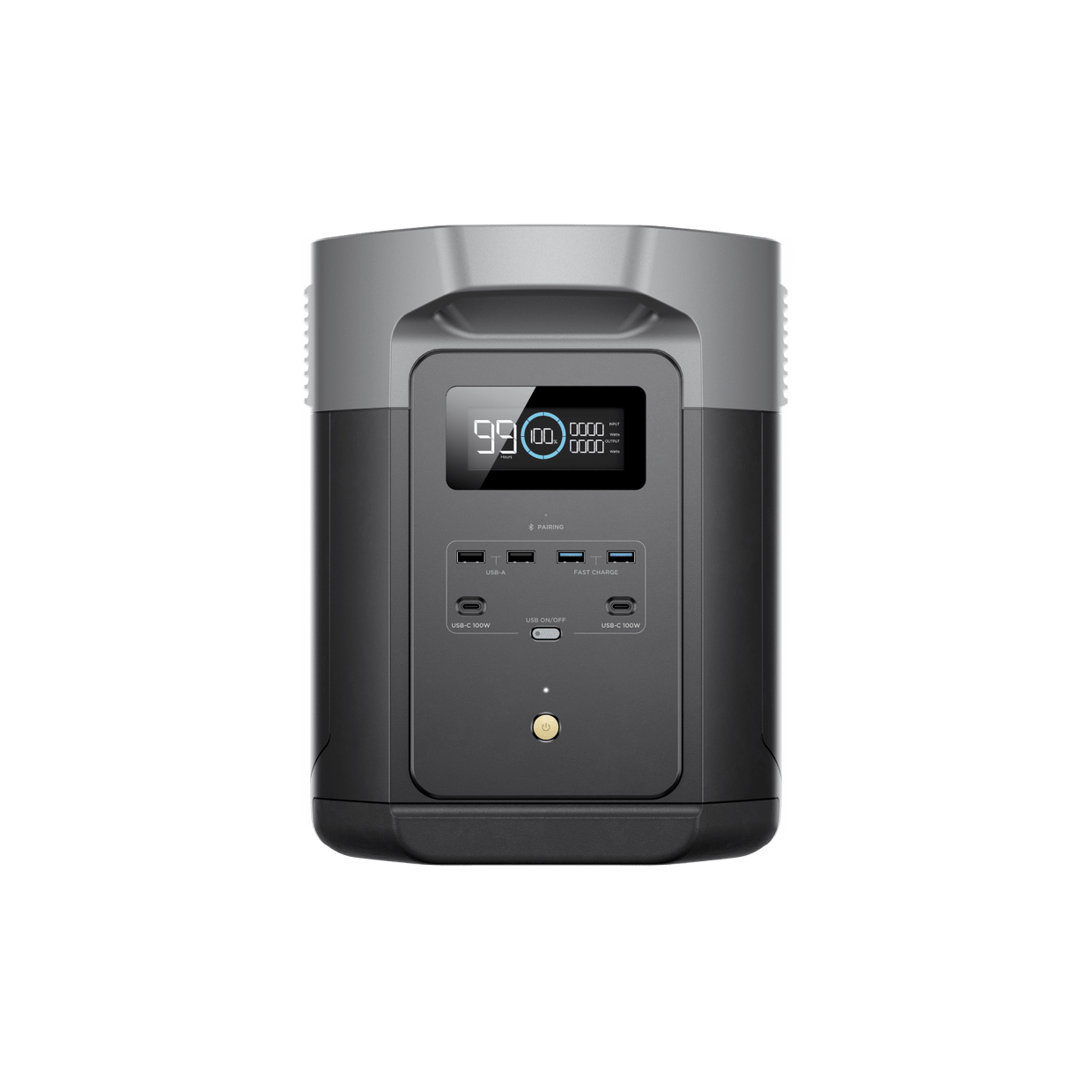
Even a numerical match needs confirmation of supported equipment, cables, protection, and warranty conditions. These examples are not specifications for the products pictured.
Before-You-Buy Compatibility Checklist
- Find the exact station manual and panel datasheet.
- Record the input’s voltage, current, Isc, and array-power limits.
- Check Voc, Vmp, Imp, Isc, and temperature information.
- Calculate the entire proposed array, not just one panel.
- Verify cold maximum voltage and hot operating voltage.
- Confirm connector type, polarity, cable capacity, and any required protection.
- Check whether third-party panels and the proposed arrangement are supported.
- Keep written compatibility guidance and review the return policy.
After connection, low charging watts alone do not prove incompatibility. See Why Are My Solar Panels Producing Less Power Than Rated?
Frequently Asked Questions
Must the panel and power station have the same brand?
Not always. Third-party panels may work when electrical and connection requirements are met. Manufacturer support and warranty treatment still need checking.
Can I use a rigid panel instead of a folding panel?
Possibly. The electrical ratings and installation requirements decide compatibility, not whether the panel folds.
Can I connect an existing rooftop solar array?
Do not assume so. Rooftop strings can have much higher voltage and different integration requirements. Have the installer and station manufacturer evaluate any proposed connection.
Do I need a separate charge controller?
Many power stations already have one. Use the designated solar input; add an external controller only if that exact arrangement is supported.
Why will a panel fit but not charge?
Possible causes include incompatible voltage, polarity, cable behavior, battery limits, or insufficient sunlight. See Why Does My Power Station Stop Charging From Solar?
Sources and photo credits
- Jackery: Third-party panel terminals, voltage, and current
- EcoFlow: Model-specific charging specifications
- Victron Energy: Temperature correction and MPPT matching
- Stäubli: Connector compatibility
- Stäubli: PV connector handling precautions
- EcoFlow panel photo
- EcoFlow power-station photo
Examples are hypothetical. Follow exact equipment instructions and obtain qualified help when specifications or protection requirements are unclear.