Can Solar Panels Power Your House During an Outage?
Many homeowners assume that if they have solar panels on their roof, they’ll automatically have electricity during a power outage.
Unfortunately, that’s usually not the case.
In fact, most grid-tied solar systems shut down completely when utility power goes out. This often surprises homeowners who invested thousands of dollars in solar panels only to discover they still lose power during storms, equipment failures, or other outages.
The good news is that solar panels can power your home during an outage—but only if your system is designed to do so.
In this guide, we’ll explain how solar power works during outages, why most systems shut down, and what equipment you need to keep the lights on when the grid goes down.
The Short Answer
Most solar panel systems cannot power your house during a power outage.
To have backup power during an outage, you’ll typically need:
- A solar battery system
- A hybrid inverter
- An off-grid solar system
- Or a generator as a backup power source
Without one of these solutions, your solar panels will shut off automatically when utility power is lost.
Why Do Solar Panels Shut Down During an Outage?
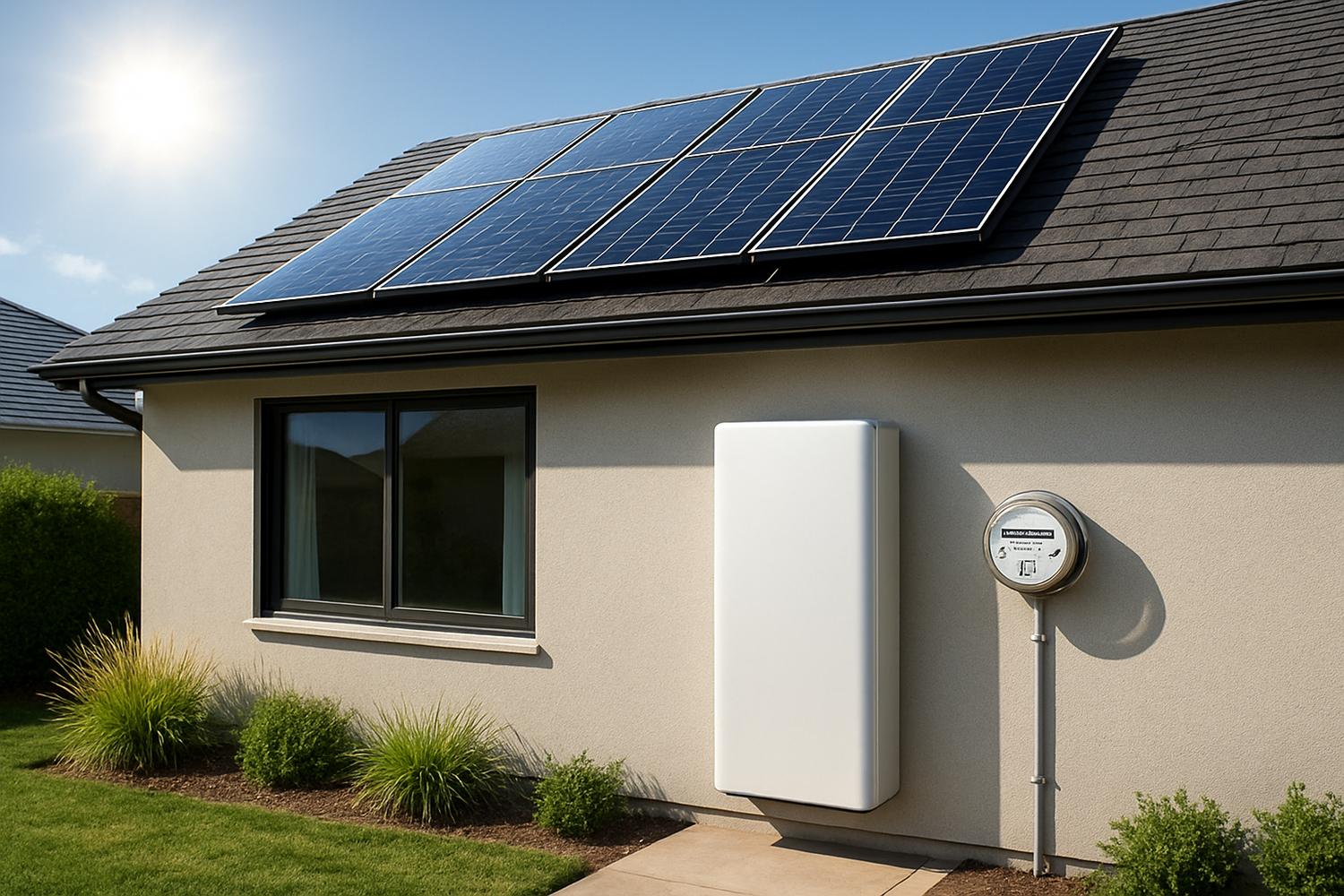
Most residential solar systems are connected directly to the electrical grid.
When the utility grid goes down, your solar inverter is required to shut off automatically. This safety feature is known as anti-islanding protection.
The purpose is simple:
Utility workers may be repairing power lines during an outage. If your solar system continued sending electricity into the grid, it could energize power lines that workers believe are de-energized.
To protect utility crews and prevent damage to equipment, grid-connected solar systems automatically disconnect when they detect a loss of utility power.
Even if the sun is shining brightly, your solar panels won’t produce usable power unless the system includes backup equipment.
When Can Solar Panels Power a House During an Outage?
Solar panels can provide electricity during an outage if they are paired with energy storage or designed for backup operation.
Option 1: Solar Panels with Battery Storage
This is the most common solution.
A battery stores excess solar energy during the day and provides power when the grid goes down.
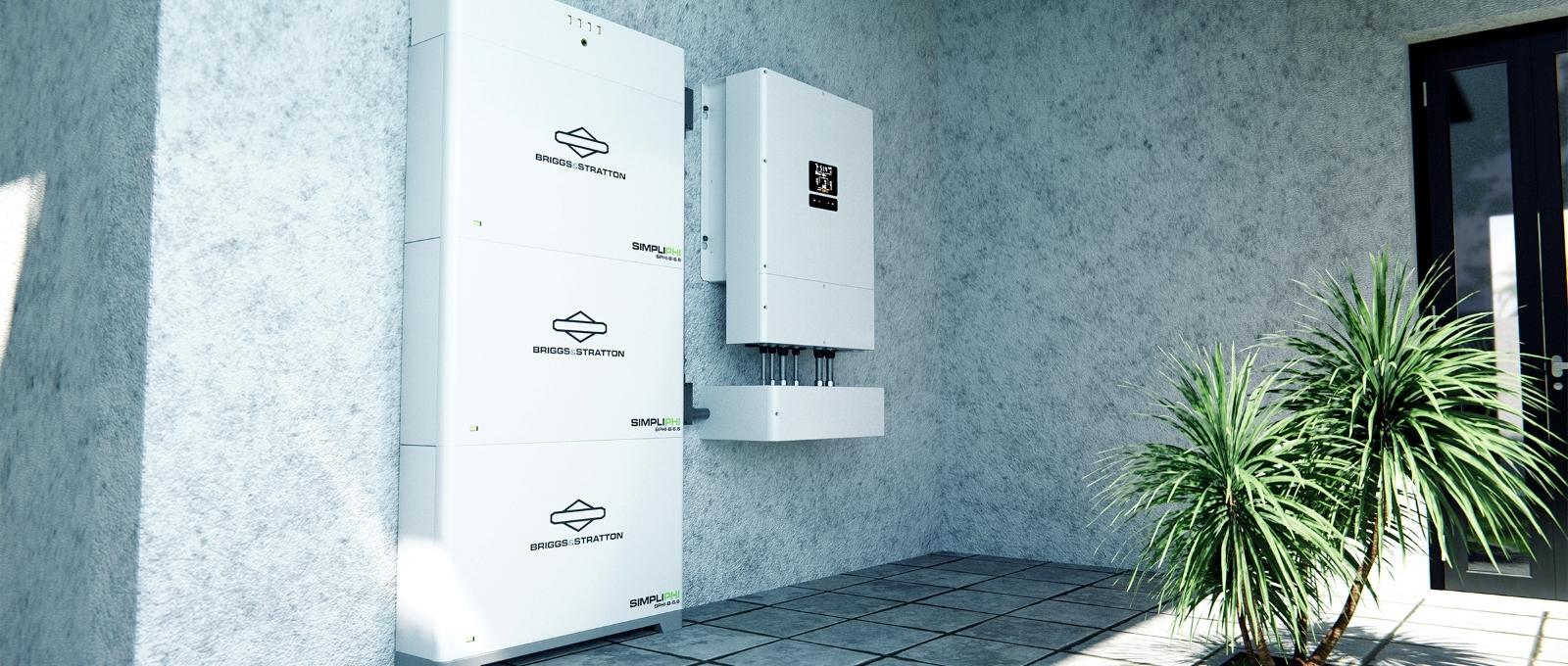
Popular home battery systems include:
- Tesla Powerwall
- Enphase IQ Battery
- FranklinWH Home Power
- Generac PWRcell
When utility power fails:
- The battery detects the outage.
- The inverter disconnects from the grid.
- The battery begins supplying electricity to your home.
- Solar panels recharge the battery during daylight hours.
This allows essential appliances to continue operating even during extended outages.
Option 2: Hybrid Solar Systems
A hybrid system combines:
- Solar panels
- Battery storage
- Utility grid connection
Hybrid systems provide the greatest flexibility because they can:
- Use solar power during the day
- Store excess energy
- Draw power from the grid when necessary
- Continue operating during outages
Many homeowners consider hybrid systems the best long-term solution for energy independence.
Option 3: Off-Grid Solar Systems
Off-grid systems are completely independent of utility power.
These systems include:
- Large solar arrays
- Battery banks
- Inverters
- Backup generators
Because they are not connected to the utility grid, they continue operating regardless of utility outages.
However, off-grid systems typically cost significantly more and require larger battery storage capacities.
How Much of Your House Can Solar Power During an Outage?
The answer depends on:
- Battery size
- Solar production
- Appliance loads
- Weather conditions
Many homeowners choose to back up only essential circuits, including:
- Refrigerator
- Freezer
- Internet equipment
- Lighting
- Furnace blower
- Well pump
- Sump pump
Attempting to run an entire house, including electric water heaters, electric ranges, central air conditioning, and electric vehicle chargers, requires a much larger and more expensive system.
Solar Battery Runtime Example
Imagine a home battery with 10 kWh of usable storage.
If your essential appliances consume approximately 1,000 watts:
10,000 watt-hours ÷ 1,000 watts = 10 hours
In reality, appliances cycle on and off, so actual runtime may be longer.
Solar production during daylight can further extend runtime by recharging the battery.
What About Cloudy Days?
This is one of the biggest limitations of solar backup systems.
Solar production can drop dramatically during:
- Heavy cloud cover
- Snow accumulation
- Rainstorms
- Winter months
For homeowners in northern climates such as Wisconsin, battery storage alone may not provide enough energy during multi-day outages.
This is why many homeowners combine solar batteries with a backup generator.
Solar Battery vs Generator
| Feature | Solar Battery | Generator |
|---|---|---|
| Noise | Silent | Moderate |
| Fuel Required | No | Yes |
| Maintenance | Low | Moderate |
| Long Outages | Limited | Excellent |
The Best Backup Solution for Most Homeowners
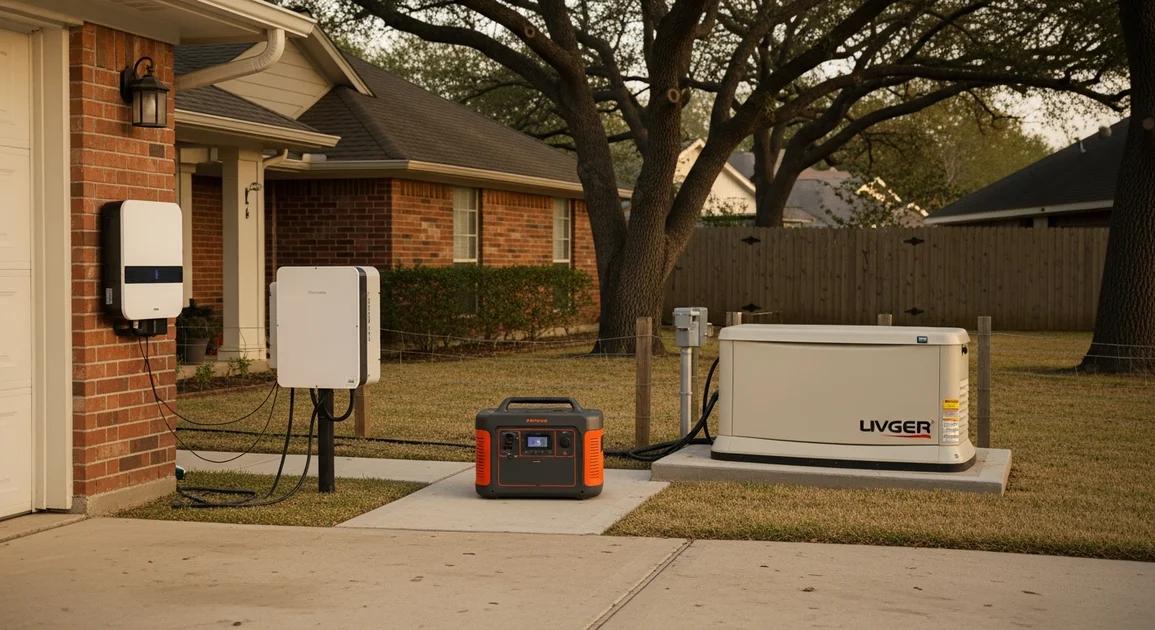
If your primary concern is emergency power during outages, a portable or standby generator is usually the most cost-effective option.
If you already have solar panels or want greater energy independence, adding battery storage can provide reliable backup power while reducing dependence on the utility grid.
For maximum resilience, many homeowners choose:
Solar Panels + Battery Storage + Backup Generator
This combination provides renewable energy during normal operation while maintaining reliable backup power during extended outages.
Final Thoughts
Solar panels can power your house during an outage—but only if your system includes battery storage or backup capabilities.
Most standard grid-tied solar systems automatically shut down when utility power is lost.
Before investing in solar for backup power, carefully evaluate your energy needs, expected outage duration, local climate, and budget.
For many homeowners, the ideal solution is a combination of solar panels, battery storage, and a backup generator that can keep essential appliances running no matter what the weather brings.