
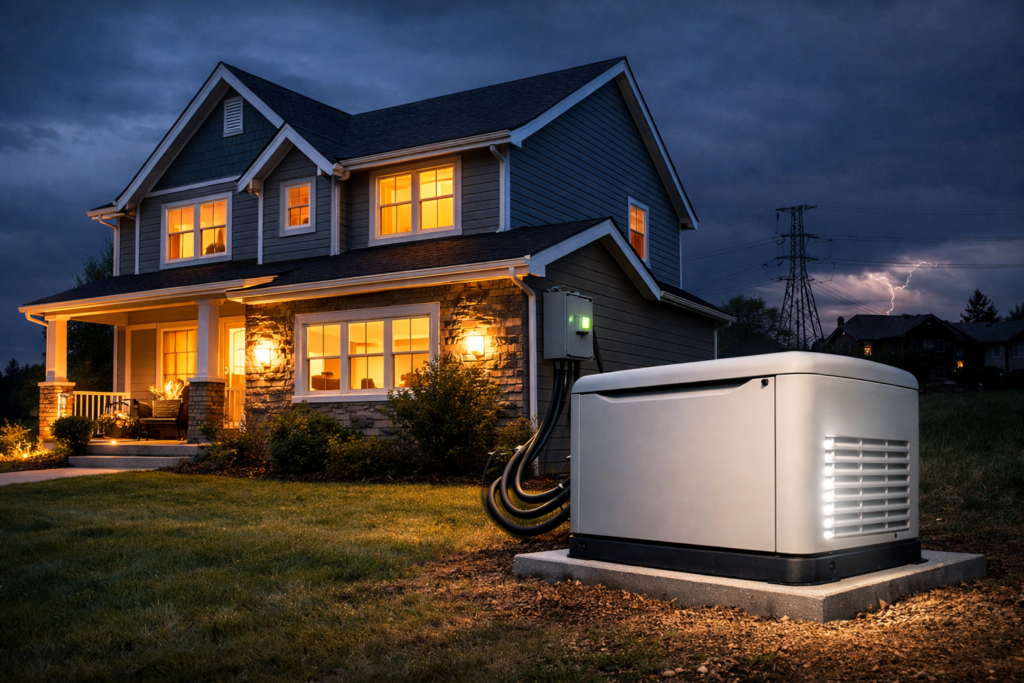
What is Backup Power?
Confirm your understanding before sizing or installing your system.
Take the quiz ↓
Backup power refers to systems that provide electricity when the utility grid fails. These systems keep essential equipment running — like refrigeration, climate control, medical devices, pumps, and communication tools — during outages.
This guide explains why backup power matters, when you need it, and the code-safe options available for homes of all sizes.
Why Backup Power Matters
- Keep food from spoiling during outages
- Maintain power for essential appliances
- Prevent frozen pipes in winter
- Support work-from-home equipment during storms
When Do You Need Backup Power?
- Frequent thunderstorm, hurricane, or storm outages
- Medical equipment requiring uninterrupted power
- Well pumps or sump pumps
- Long-duration outages from extreme weather
- Remote or rural locations
Backup Power System Types
| System Type | Best For | Typical Runtime | Power Source |
|---|---|---|---|
| Portable Generator | Emergency power, occasional outages | Hours | Gasoline or Propane |
| Standby Generator | Whole-home backup, frequent outages | Days or longer | Natural Gas or Propane |
| Battery Backup System | Quiet essential circuits, instant transfer | Minutes to hours | Stored electricity |
| Solar + Battery System | Extended outages with sunlight | Days (with sunlight) | Solar + battery storage |
| UPS | Protecting electronics | Minutes | Internal battery |
Portable Generators
- Short-term emergency power
- Infrequent or occasional outages
- Limited essential circuits
- Manual setup required
- Must operate outdoors
- Refueling required
- No automatic transfer
Standby Generators
- Automatic whole-home backup
- Long-duration outages
- Frequent outage regions
- Higher upfront cost
- Requires pro install
- Maintenance schedule required
Battery Backup Systems
- Instant essential electronics
- Quiet indoor operation
- No emissions
- Limited runtime without recharge
- Higher cost per hour
- Not ideal for motor loads unless oversized
Solar + Battery Systems
- Extended outages with sunlight
- Renewable resilience
- Partial grid independence
- Very high upfront cost
- Complex design
- Dependent on sunlight access
UPS (Uninterruptible Power Supply)
- Preventing data loss
- Protecting sensitive electronics
- Short interruptions
- Not for appliances
- Runtime too short for storms
Ready to Size or Install?
Your final system size and electrical connection should always be verified by a licensed electrician.
Code-Aligned. Math-Backed. Safety-First.
BackupPowerExplained.com exists to give homeowners the clarity the internet usually doesn’t: practical guidance for backup power systems built around electrical code, real load math, and safe installation decisions.
Quick Check Before You Size or Install
Test your understanding of essential loads, surge demand, and code-safe generator connections. When you’re done, you’ll know whether you’re ready to size your system or need a fundamentals refresh first.
Backup Power 101 — Quick Check Before You Buy
One question at a time. Choose, learn, and size smarter.