
Backup Power Basics
Types of Backup Power
Backup power keeps electricity flowing when the grid fails. The right system protects food, heating/cooling, medical equipment, communications, and basic home operations during outages.
New to the topic? Start with our beginner guide explaining what backup power is and when it’s needed. Read the beginner guide →
⚡ Portable Generators
Best for: affordability, flexibility, temporary essential loads
- Runs on gasoline, propane, or dual-fuel
- Common uses: refrigerators, sump pumps, furnace blowers, lights, small appliances
- Also useful for camping and job sites since they’re not permanently installed
Limitations & safety notes
- Must operate outdoors only (carbon monoxide risk)
- Requires hands-on operation
- Connects to the home using extension cords, or an inlet box + interlock, or a manual transfer switch
- Not ideal for whole-home backup; best for selected circuits and essentials
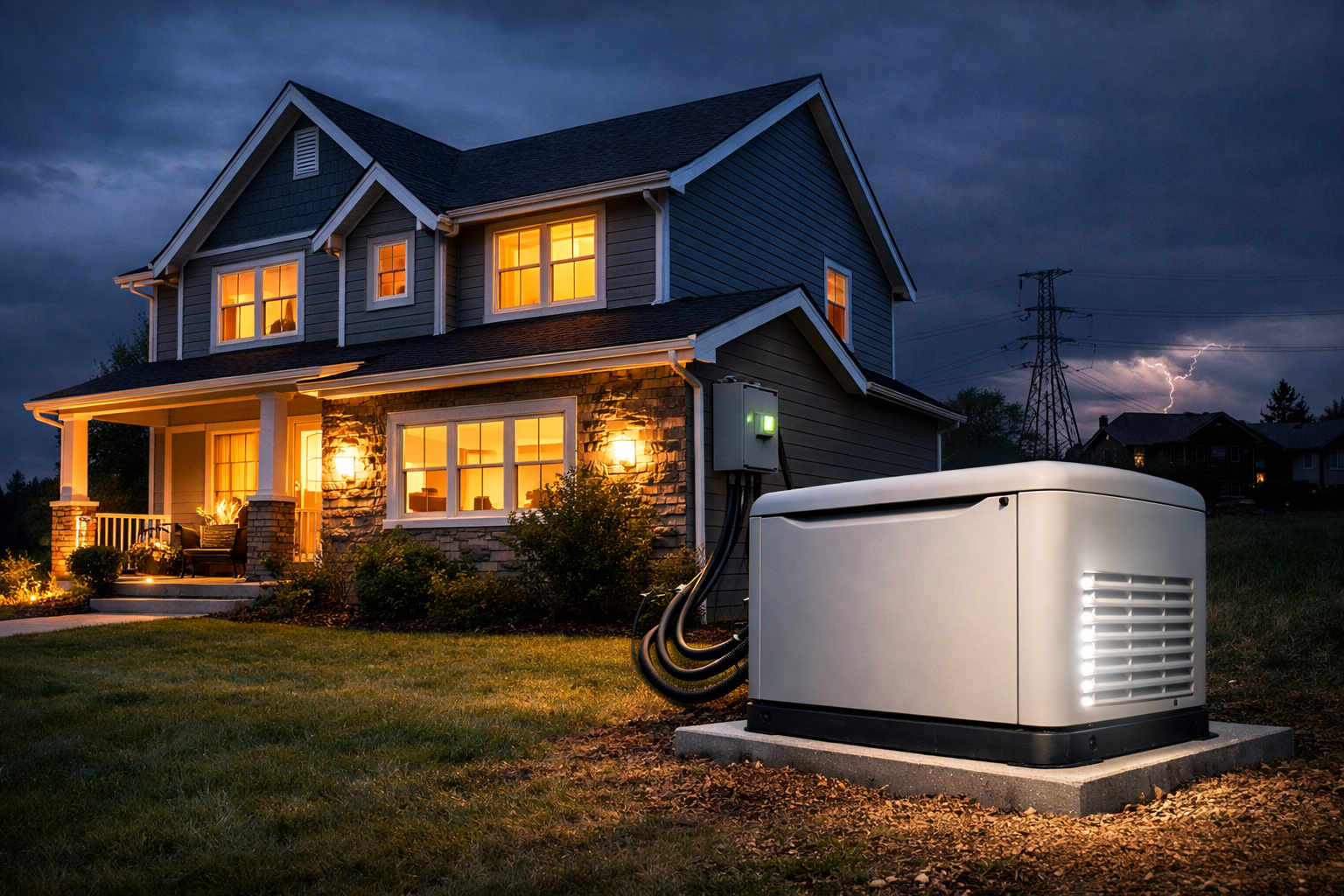
🏠 Standby Generators
Best for: automatic operation, long outages, whole-home or critical circuit coverage
- Permanently installed and hardwired
- Uses natural gas or propane
- Starts within seconds of power loss
- Can run for days or weeks if fuel supply is maintained
Trade-offs
- Higher upfront cost
- Requires licensed installation, permits, and inspections
- Needs routine maintenance
- Best for frequent outages or critical medical/heating/well needs
🔋 Battery Backup Systems
Best for: silent, clean, indoor-safe backup for short outages
- Stores electricity and delivers power with no exhaust and low noise
- Can be installed indoors
- Supports loads like: lights, Wi-Fi/modems, refrigerators, medical devices, security systems
Limitations
- Finite runtime until recharged
- Power stops when stored energy is depleted
- Great for short outages or noise-sensitive environments
☀ Solar + Battery Backup
Best for: long-term energy independence, renewable outage resilience
- Solar offsets grid use during normal operation
- Battery stores excess energy for outages
- Solar alone is not backup power unless paired with batteries
- Performance depends on sunlight availability
Considerations
- Requires careful load and runtime planning
- Higher upfront investment
- Strong option for energy independence
🖥 Uninterruptible Power Supplies (UPS)
Best for: protecting sensitive electronics and medical/office continuity
- Small, plug-and-play battery device
- Helps prevent data loss and protects against voltage spikes
- Common for: computers, networking gear, medical equipment, security cameras
- Runtime ranges from minutes to hours depending on load
Not designed for
- Large appliances
- Whole-home power
- Long-duration outages
Rule: A UPS is continuity and protection—not a generator replacement.
✔ Choosing the Right System
There is no one-size-fits-all answer. The right choice depends on your goals, budget, outage frequency, fuel access, noise tolerance, and installation constraints.
What to consider
- Power goals: essentials vs critical circuits vs whole-home
- Outage frequency & duration
- Fuel access and storage
- Noise tolerance and location
- Automation vs hands-on setup
- Installation constraints
Common winning combinations
- UPS + portable generator → electronics protection + basic appliances
- Solar + battery → renewable essential-load backup
- Standby generator + UPS → whole-home automation + device protection
- Battery + generator charging → silent power + extended runtime
🛠 Key Mistakes to Avoid
- Running a generator indoors or in garages
- Backfeeding a panel without a transfer switch or interlock
- Oversizing without load calculations → wasted fuel and money
- Undersizing → tripping breakers and failed startups
- Assuming solar alone equals backup power → it doesn’t without batteries
Types of Backup Power — Quick Quiz
Tap an answer for instant feedback. Your score updates automatically.
Your next step
Don’t wait for the next outage. Choose a setup that matches your goals: fast & affordable generator coverage, plus instant protection for sensitive electronics with a UPS.
Tip: Many homeowners use a combo — generator for big loads + UPS for internet/PC/medical continuity.