
How to Connect a Generator to a Transfer Switch
DIY-friendly. Code-safe. Life-safe. A clear guide to safer backup power setup for essential home circuits.
Why this matters
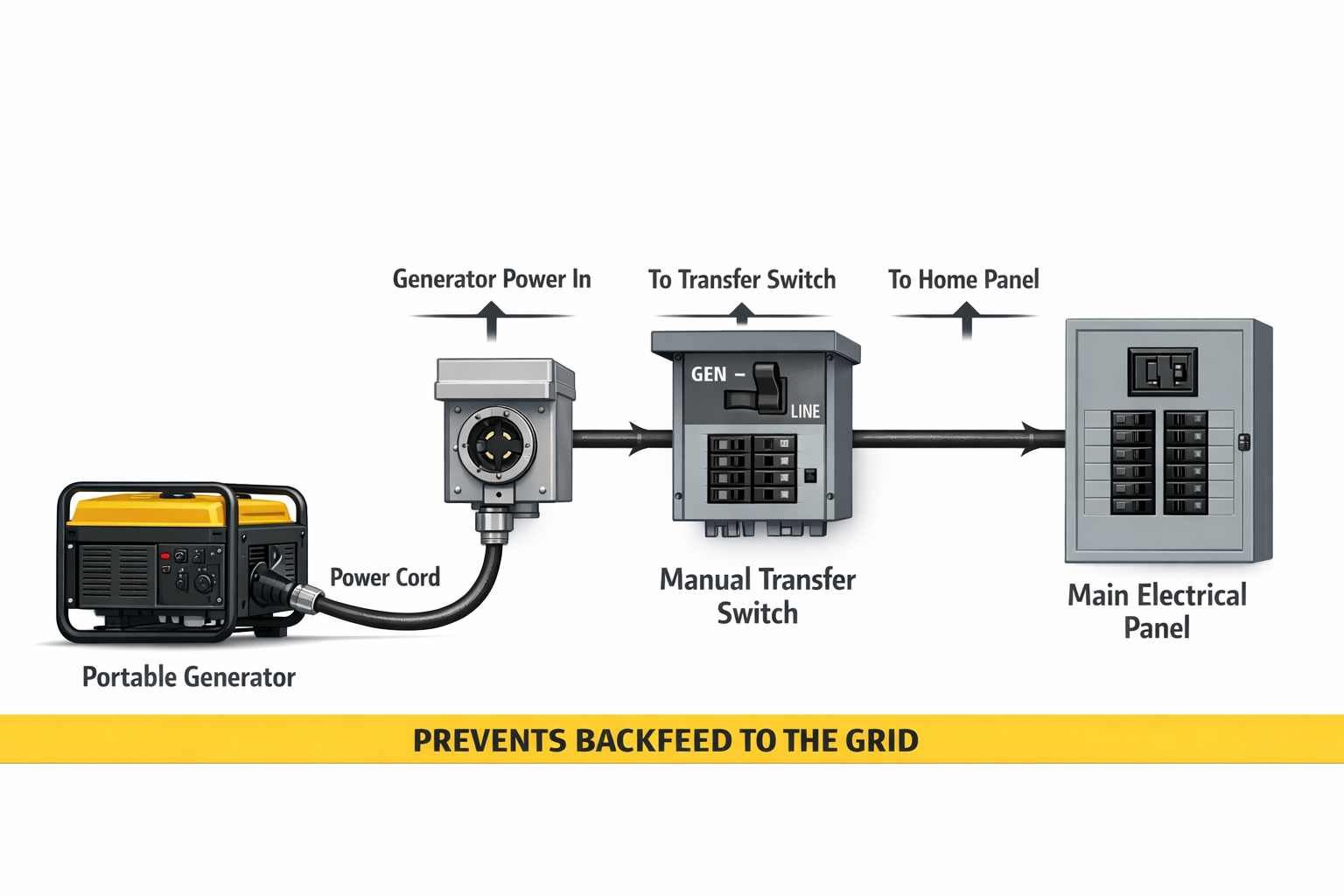
A manual transfer switch helps prevent illegal and dangerous backfeeding into the grid while allowing generator power to safely enter selected home circuits.
This method is widely accepted when installed correctly and inspected by your local AHJ.
Not sure whether a transfer switch is the best fit? Compare it with an interlock here: generator interlock guide .
What you need
- Portable generator (30A or 50A split-phase if powering 240V loads)
- Outdoor inlet box (commonly L14-30 or 14-50, depending on setup)
- Manual transfer switch installed at your main electrical panel
- Matching generator power cord
- Gloves and eye protection
- CO detector inside the home
- Fire extinguisher nearby (recommended)
Recommended transfer switch kits
The right kit depends on your generator size, inlet type, and the number of circuits you want to power.
- 30 Amp kits: Good for many homes running essential circuits like the fridge, furnace, and lighting
- 50 Amp kits: Better for larger loads or larger generator setups
- Pre-wired kits: Often easier for simpler installs and cleaner planning
Step-by-step connection process
1) Place the generator safely
Put the generator outdoors, well away from doors, windows, vents, and attached garages. A common safety rule is at least 20 feet from openings whenever possible.
2) Start the generator
Follow the manufacturer’s startup instructions and let the generator stabilize for about 30 to 60 seconds.
3) Connect the power cord
Connect the generator to the outdoor inlet box using the proper cord and plug configuration for your setup.
4) Isolate from the grid
Move the transfer switch from LINE to GEN before powering selected circuits. This isolation step is what helps prevent dangerous backfeed.
5) Turn on circuits one at a time
Bring loads online gradually instead of all at once. Start with essentials such as:
- Refrigerator
- Lights
- Furnace blower
- Sump pump
- Well pump
6) Monitor while running
Watch fuel levels, cord condition, and generator behavior. Shut down safely before refueling, and pay attention to heat, smells, or overload signs.
7) Switch back when utility power returns
Turn circuits off, move the switch back to LINE, unplug the generator connection, and then shut the unit down according to the manufacturer instructions.
Common dangerous mistakes
- Plugging the generator into a wall outlet
- Running a generator in a garage, basement, or too close to the home
- Forgetting to isolate from utility power before energizing circuits
- Turning on too many circuits at once and overloading the generator
- Using the wrong cord, inlet, or breaker configuration
Quick safety gate (60 seconds)
Your safest next step is to confirm local requirements with your AHJ or hire a licensed electrician. If you are still deciding between methods, compare your options here: panel-matched interlock guide .
You’ve covered the big safety points: CO risk, grid isolation, load discipline, and local compliance. Next step: follow manufacturer instructions carefully and stay within your generator’s limits.
Transfer switch vs interlock (quick comparison)
- Transfer switch: Easier to operate, beginner-friendlier, but often more expensive and limited to selected circuits
- Interlock kit: Usually lower cost and can power more of the panel, but requires stricter operating discipline
- Both: Must properly isolate utility power to prevent dangerous backfeeding