
Backup Power Safety & Code Fundamentals
A Homeowner’s Plain-English Guide to Running a Generator the Right Way
Power outages are stressful. Doing something unsafe during an outage can be deadly. Every year, homeowners are injured—not because they used a generator—but because they didn’t understand how backup power is supposed to work.
This guide explains the fundamentals so you can protect your family, your home, and the utility workers restoring power.
Why Backup Power Is Regulated in the First Place
When the grid goes down, utility workers assume power lines are de-energized. If a homeowner accidentally sends generator power back into those lines, workers can be exposed to lethal voltage without warning.
Backup power rules exist for one reason: life safety.
The Single Biggest Danger: Backfeeding
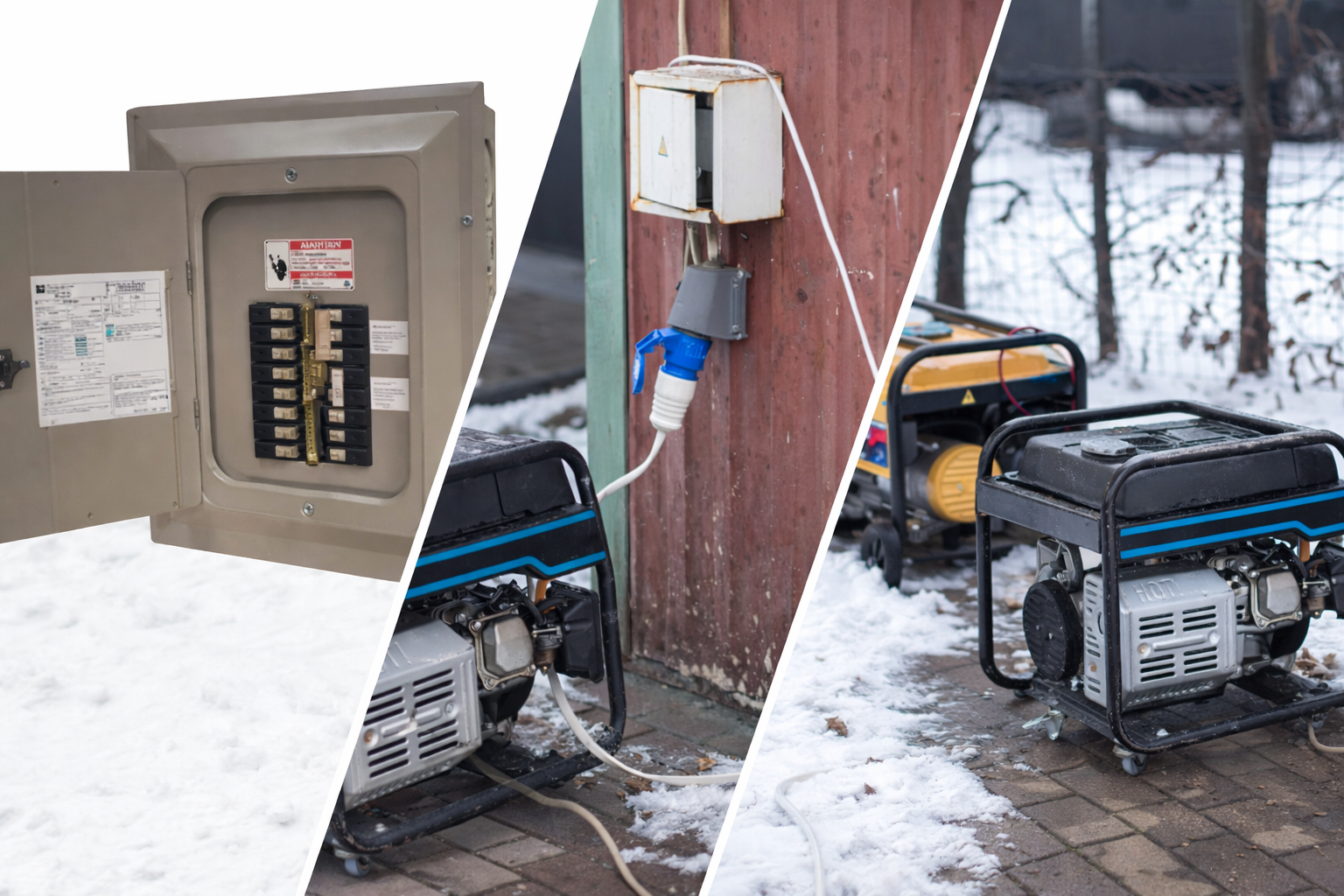
Backfeeding occurs when a generator energizes a home’s wiring without fully disconnecting from the utility grid.
- Plugging a generator into a dryer outlet
- Using a “suicide cord” (two male ends)
- Powering a panel without a transfer mechanism
Backfeeding is illegal in all 50 states and can:
- Energize utility lines outside your home
- Destroy your generator when grid power returns
- Start electrical fires inside the panel
The Only Two Code-Compliant Ways to Power a Home Panel
1. Manual Transfer Switch
A manual transfer switch isolates the utility and feeds selected circuits from a generator. It is clean, simple, and inspector-friendly.
2. Generator Interlock Kit
An interlock kit mechanically prevents the main breaker and generator breaker from being on at the same time. When panel-matched and UL-listed, it is fully code-compliant.
What Electrical Code Actually Requires (Plain English)
- Mechanical isolation between utility and generator
- Correct inlet, breaker, and wire sizing
- Proper neutral and grounding configuration
Most homeowner requirements come from NEC Article 702 (Optional Standby Systems).
Grounding vs Bonding (Simple Explanation)
Grounding connects systems to earth. Bonding keeps metal parts at the same voltage. Generators complicate this because some bond neutral internally while homes typically bond neutral only at the main service.
Incorrect bonding can cause shock hazards, nuisance tripping, or inspection failures.
Permits & Inspections: What to Expect
- Approved transfer mechanism
- Proper labeling
- Correct inlet installation
- No possibility of backfeeding
Inspections exist to prevent injuries—not to make your life harder.
Outdoor Generator Safety Basics
- Operate generators outdoors only
- At least 20 feet from doors and windows
- Never in garages—even with doors open
- Install carbon monoxide detectors indoors
Common Myths That Get People Hurt
- “It’s only temporary.”
- “My neighbor does it this way.”
- “I’ll fix it later.”
Emergencies are when safety matters most—not least.
Is My Backup Power Setup Safe?
Check all that apply. If you can’t check a required item, your setup needs correction before use.
🔌 Generator Connection Safety (Required)
⚡ Electrical & Code Basics (Strongly Recommended)
🌬️ Carbon Monoxide & Placement (Required)
🧠 Load Management (Recommended)
✅ If you checked the required items, you’re following the core safety fundamentals. If you couldn’t check them, fix the setup before operating—especially anything related to backfeeding or indoor operation.
Final Word
Backup power doesn’t need to be complicated or expensive—but it must be done correctly. With proper isolation, sizing, and basic understanding, a portable generator can be one of the most reliable emergency tools a homeowner owns.
This guide explains general code principles and does not replace local requirements. Always verify with your Authority Having Jurisdiction (AHJ).